
At-a-glance: supplier approaches to 20M availability
Contractors often need clarity about whether long-length reinforcement (20m nominal bars) is stocked or supplied only by request. Some Ontario reinforcing-steel suppliers list 20m sizes as available “on request” rather than as standard stock; when that is the case, obtain a formal quote so the supplier can confirm fabrication capability, transport and delivery options. This article outlines the contexts in which designers ask for long bars, compares long bars to spliced shorter bars and fiber alternatives, and gives a practical ordering and coordination checklist you can use when requesting 20m bars from a fabricator.
When designers ask for long-length bars: typical contexts to expect 20M requests
Design teams request long-length bars when continuity, reduced field splicing or specific constructability goals drive the reinforcement strategy. Typical contexts that lead to 20m requests include long continuous beams, deep pile cages, pile caps or heavily congested cages where fewer splices reduce inspection points or simplify sequence-critical erection. The designer’s structural analysis and constructability notes should determine whether full-length bars are required; contractors must treat any 20m note as an engineer-led requirement and verify whether approved mechanical couplers or field splices are permitted instead.
Because specifying 20m affects fabrication, delivery and on-site lifting, flag such requirements early — during tendering or coordination meetings — so the chosen fabricator can assess shop bending capacity, transport needs and placement sequencing before a firm quotation and shop drawings are issued.
Early coordination typically includes confirmatory discussions about allowed splice types (lap splices vs mechanical couplers), tolerance bands for cut-and-bend lengths, and whether any temporary bracing or handling fixtures are needed to keep long bars straight during installation. Raising these topics in pre-bid or pre-construction meetings reduces the risk of last-minute design clarifications that lead to costly rework or schedule slips.
20M bars versus spliced 10M/15M bars and fiber alternatives: decision criteria
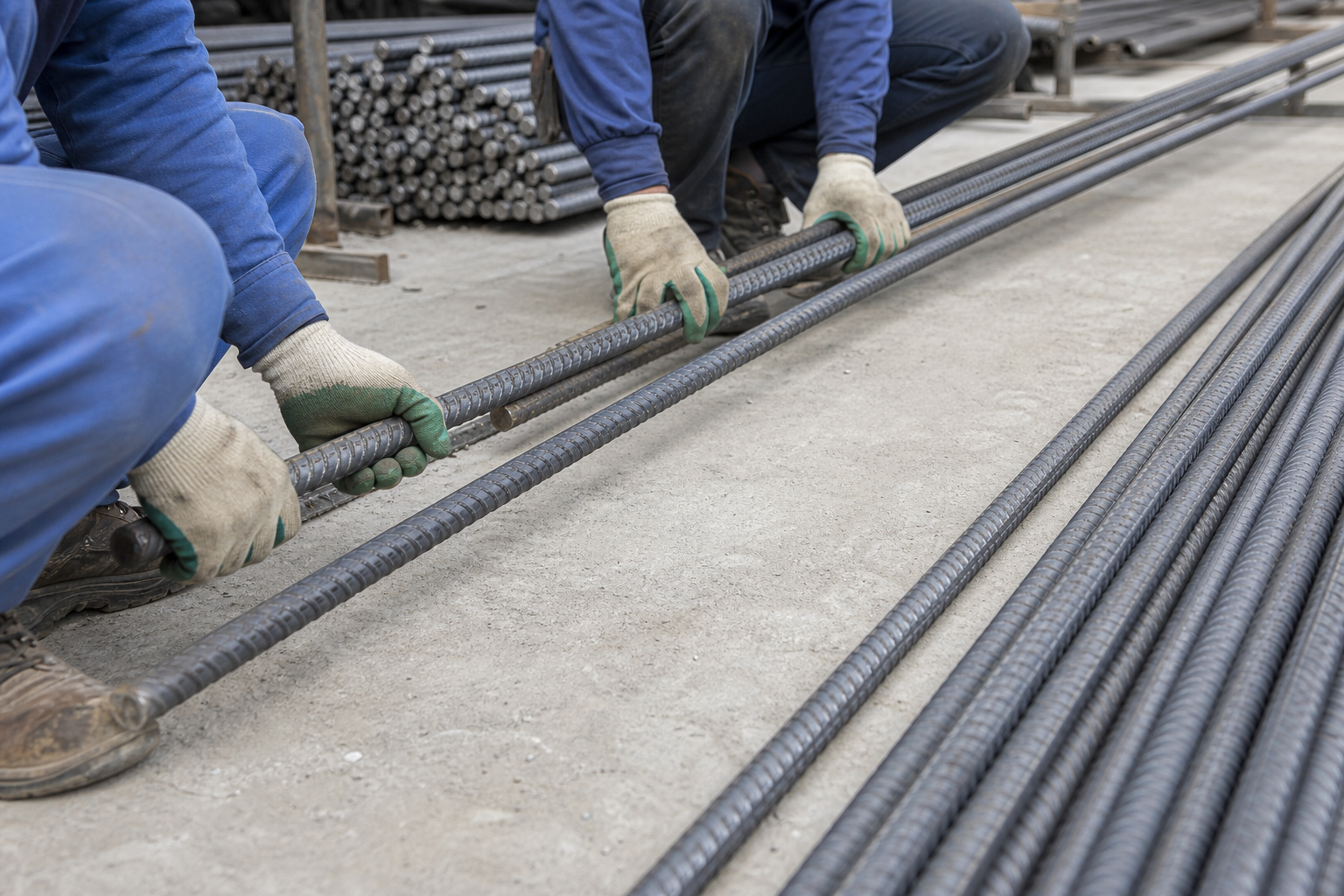
When deciding between long bars, spliced shorter bars and non-steel reinforcement, evaluate these practical decision criteria:
- Structural continuity and inspection: Long bars reduce the number of lap splices or couplers and can simplify inspection points. If the engineer specifies continuous bars for structural performance or durability reasons, follow that direction or obtain written approval for an alternative splice strategy.
- Constructability and labour: Shorter bars are easier to handle on congested or restricted-access sites and may reduce rigging requirements; however they increase onsite tying and splice labour. Long bars reduce some field labour but increase handling complexity, staging space and lift planning.
- Cost and total-installed trade-offs: Long bars can reduce coupler costs and decrease the number of onsite splices, but they may increase transport or special-handling charges. Always ask fabricators to compare system-level installed costs (material, transport, rigging and labour) rather than assuming longer is cheaper.
- Durability and coatings: If the specification requires coated reinforcement (for example epoxy-coated) or higher-strength grades, confirm whether the fabricator can supply those coatings in long lengths and whether shop bending will preserve coating integrity.
- Alternatives — GFRB and fiber mesh: Glass-fibre reinforcing bars (GFRB) and synthetic/polypropylene fiber admixtures play different roles from steel bars. Fibers help control surface cracking by distributing short fibers through the concrete, while bars (including long 20m steel bars) form predictable structural load paths. Use fiber-based options only where the project engineer accepts them for the intended structural function; they are usually complementary rather than a direct swap for designed steel reinforcement. For a plain-language comparison, see the fiber vs rebar explainer (Angi).
Fabrication, transport and on-site handling: what 20M changes on your job
Specifying 20m bars affects shop workflows, transport choices and on-site logistics. Consider and confirm the following items with your chosen fabricator and logistics team during procurement:
- Shop capability: confirm that the shop can bend, cut and store long-length bars without damaging coatings or compromising tolerances.
- Transport and securement: long bars typically require longer trailers and careful load securement; verify trailer types, weight limits and legal routing for your delivery window.
- Offload and lifting: plan for appropriate offloading equipment (mobile cranes, forklifts with spreaders or other rigging) and identify safe laydown areas that prevent bar deformation or corrosion.
- Staging and sequencing: pre-assemble cages or bundles where possible and align deliveries with pour sequences to reduce re-handling and on-site congestion.
There are additional practical site considerations that often get missed until late in procurement: route approvals for longer loads through local jurisdictions, temporary permits for oversized transport where applicable, and weather or seasonal handling strategies to protect coatings and prevent corrosion during interim storage. Make sure plans for protective coverings, drainage from stacked bundles and secured tie-downs are reviewed between the fabricator and the site superintendent before first delivery.
Good ground preparation, proper formwork and correct rebar placement remain essential to slab performance and finishing; those site practices work together with correct reinforcement scheduling to reduce cracking and avoid last-minute handling problems — see the site-prep guide (Family Handyman) for field-focused tips on concrete preparation.
Ordering checklist and shop-drawing inputs to request 20M from your fabricator

Provide a complete, unambiguous package so the fabricator’s estimating and detailing teams can produce accurate takeoffs and shop drawings. Use this checklist when requesting a quote or preparing a subcontract scope. For a supplier-side explanation of an “on request” 20m process, consult the 20m rebar guide.
- Project identifiers: project name, location and contract or PO number.
- Design documents: stamped drawings and reinforcing schedules showing bar marks, sizes, grades and any required coatings.
- Bar-specific data: mark number, nominal length (indicate 20m where required), specified grade, coating requirement (epoxy or uncoated), quantity and the full bending schedule (hooks, stirrups, custom bends).
- Splice and coupler details: indicate lap lengths, mechanical coupler types/locations, or whether engineer approval will allow splices instead of full-length bars.
- QA, mill certificates and tolerances: any required certificates, testing expectations or special tolerances that affect fabrication or delivery acceptance.
- Logistics constraints: site access, delivery windows, offload equipment and staging/storage constraints on site.
- Coordination requests: request shop drawings with dimensioned placement details and a cut-and-bend list; specify whether you want pre-assembled cages or cut-length bundles delivered to sequence.
- Digital files and revision control: include coordinated PDFs, DWG or IFC files where available, identify a single point of contact for RFIs and revisions, and specify desired turnaround expectations for shop-drawing approvals so the detailer can schedule work against project milestones.
- Cost-comparison inputs: if you want the fabricator to price alternatives (full-length bars, couplers, lapped splices or pre-assembled cages), ask for separate line-item pricing and note any constraints that would make an alternate unacceptable without engineer approval.
Frequently asked questions
Does the supplier typically stock 20M rebar or how should I request it?
Many suppliers treat 20m bars as special-order items and list them as available “on request” rather than as routine stock. Submit a formal quote with full bar marks, lengths, grades and coating requirements so the estimator can confirm availability, fabrication capacity and delivery options for your project. Including an anticipated installation sequence and any site access drawings speeds assessment of whether long deliveries are feasible.
When should an engineer specify 20M bars instead of using splices with 10M/15M?
An engineer will specify long bars to reduce splice count, maintain continuity or meet specific erection and inspection objectives. That decision depends on structural analysis and site constraints; do not substitute shorter bars or alternate splicing methods without written approval from the project engineer. If an alternative is proposed, record engineer concurrence in writing and reflect that approval in shop drawings before fabrication begins.
How do 20M bars change fabrication, transport and on-site handling compared with shorter bars?
Long bars require shop capacity for longer bends and storage, transportation on longer trailers with proper securement, and on-site offloading and staging with appropriate lifting gear and space. Shorter bars with splices can ease handling in tight sites but increase onsite tying and splice labour. Discuss trailer types, offload methods and staging plans with the fabricator during the quoting phase so rigging and lifting equipment can be planned as part of the contract scope.
Can GFRB or fiber-mesh reinforcement replace 20M steel bars for slab or structural reinforcement?
GFRB and fiber-mesh are different technologies. Fibers are effective at reducing surface cracking by distributing small fibers through the slab, while bar reinforcement forms predictable structural load paths. Use fiber-only approaches only where accepted by the engineer for the element in question; otherwise fibers are typically complementary to steel reinforcement. For a plain-language comparison, see the fiber vs rebar explainer (Angi).