
Choosing the right reinforcement bar supplier is the fastest way to prevent schedule slips and rework. A qualified partner provides accurate takeoffs, compliant materials, precise fabrication, and on-time delivery to your Woodbridge site—so your placements, pours, and inspections stay on track from day one.
By Navjot Dass • Last updated: 2026-07-06
Quick summary
A dependable rebar supplier aligns estimating, detailing, fabrication, logistics, and on-site assembly under one roof. This reduces field errors, keeps pours on schedule, and helps you pass inspections. For Ontario projects, prioritize MTO-approved materials, common sizes in stock, and a trucking fleet that hits your delivery windows.
Here’s what you’ll take away in minutes:
- What a reinforcement bar supplier actually does across your project lifecycle
- How supplier coordination prevents delays and change orders
- Which rebar grades, coatings, and mesh formats fit typical GTA work
- How Dass Rebar supports estimating, detailing, fabrication, delivery, and assembly
- Actionable checklists, a comparison table, and local tips for Woodbridge
What is a reinforcement bar supplier?
A reinforcement bar supplier provides steel reinforcing bars and related products—plus services like estimating, detailing, fabrication, delivery, and on-site assembly—to support concrete construction. The best partners integrate these functions so drawings, bends, tags, and loads arrive right, ready, and on time.
In practice, a supplier’s role spans far beyond stocking bars. It links design intent to field execution, translating shop drawings into fabricated bundles that match your sequence and pour breaks. When one team controls estimating through delivery, miscommunication drops and productivity rises.
Core functions you should expect
- Estimating and takeoffs: Quantify rebar, mesh, and accessories from plans for accurate ordering and phasing.
- Rebar detailing: Produce shop drawings that clarify bar marks, spacings, hooks, laps, and placement sequences.
- Fabrication: Cut and bend to spec (10M, 15M, 20M, etc.), tag bundles, and stage by zone or pour.
- Delivery: Coordinate trucking to match site readiness and crane windows across GTA traffic patterns.
- On-site assembly: Tie, set, and stage cages or mats so concrete teams can place without scrambling.
At Dass Rebar, those capabilities are in-house—estimating, detailing, project management, fabrication, delivery, and assembly—so Ontario contractors get a single accountable partner from first takeoff to final pour.
Why the right supplier matters
The right supplier reduces rework, compresses schedules, and improves inspection outcomes. When detailing, fabrication, and delivery are synchronized, crews spend less time sorting steel and more time placing it—cutting idle equipment time and avoiding pour-day surprises.
Everyone has a story about a truck that arrived with the wrong bends—or didn’t arrive at all. Those hours snowball into formwork delays and weekend pours. Selecting a reinforcement bar supplier with proven Ontario logistics, compliant inventory, and disciplined drawings is the simplest hedge against schedule risk.
Signals that predict project success
- MTO-approved materials: Essential for municipal and infrastructure work; a baseline for quality across projects.
- Common sizes on hand: 10M, 15M, and 20M demand is steady; welded wire mesh in 6×6 6/6, 9/9, and 10/10 keeps slabs moving.
- Integrated teams: Estimators, detailers, and fabrication planners under one roof shorten feedback loops.
- Dedicated trucking fleet: Predictable delivery windows are the difference between a clean pour and a split shift.
- Documented project track record: Completed Ontario sites show real-world coordination, not just catalog depth.
We’ve found that when drawings, bending schedules, and delivery tags match the sequence you planned, crews can set bars faster and inspectors can verify easier—two gains that echo through every slab and core wall.
How a supplier works across your project
A high-performing supplier mirrors your construction phases: precon estimating, constructible detailing, just-in-time fabrication, staged delivery, and assisted assembly. Each handoff is documented and scheduled so labor, cranes, and concrete align with steel arrivals.
Preconstruction: estimating and value alignment
- Scope clarity: Confirm structural notes (grades like 400W/500W, lap lengths, cover, couplers if specified).
- Phasing plan: Map bar lists to pour breaks and crane windows to avoid site congestion.
- Alternates: Consider epoxy-coated bars in aggressive environments and GFRB where non-corrosive reinforcement is preferred.
Shop drawings: rebar detailing that field crews trust
- Bar marks and bends: Clear tags and bend shapes reduce field guesswork.
- 3D coordination mindset: Even in 2D deliverables, think clash-free paths for congested cores and beams.
- Inspection-ready notes: Lap splices, hooks, and placement dimensions called out where crews need them.
Fabrication and load building
- Cut-and-bend accuracy: Precise 10M/15M/20M fabrication keeps tolerances tight and placements efficient.
- Staged bundles: Build loads by sequence and zone; tag to match shop drawings and pour breaks.
- Protection: Epoxy-coated bar handling to prevent coating damage before placement.
Delivery and on-site assembly
- Trucking fleet coordination: Hit early-morning delivery slots that match concrete pump schedules.
- Assembly support: Tie crews to build mats and cages, speeding up set-out and pre-pour checks.
- Feedback loop: Close gaps quickly when field conditions change or addenda land late.
This end-to-end approach is how our team supports Woodbridge and GTA projects—one schedule, one point of accountability, and fewer chances for rework.
Types of rebar and when to use them
Most Ontario projects rely on 400W and 500W steel rebar, often in 10M, 15M, and 20M sizes. Epoxy-coated bars add corrosion resistance, while GFRB offers non-corrosive reinforcement where magnetic neutrality or durability in harsh environments is key. Welded wire mesh speeds slab reinforcement.
Common grades and coatings
- Grade 400W: Workhorse for many slabs, beams, and footings; balanced strength and ductility.
- Grade 500W: Higher strength for heavily loaded members and tall cores.
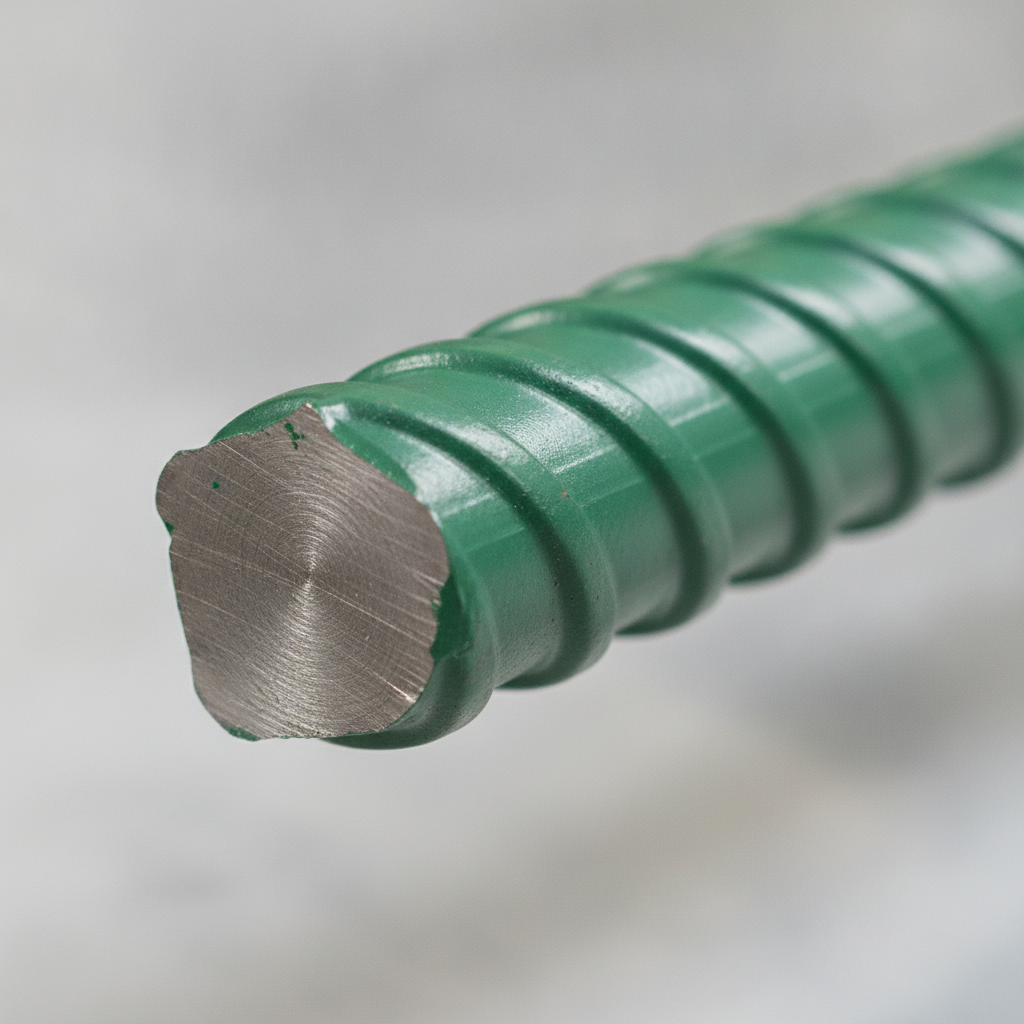
- Epoxy-coated: Green-coated steel that resists corrosion in deicing-salt or splash zones.
- GFRB: Glass Fibre Reinforcing Bars provide non-corrosive performance where steel rust is a concern.
Standard sizes and mesh formats
- 10M, 15M, 20M: Stocked sizes that cover most beams, slabs, and columns. 15M rebar often balances weight and strength in slabs-on-deck and walls.
- Welded wire mesh: 6×6 at 6/6, 9/9, 10/10 gauges—popular for slabs and toppings where speed matters.
Not sure which path fits your next pour? Our steel rebar guide and rebar supply guide explain selection tradeoffs with constructible examples tailored to Ontario conditions.
How to evaluate suppliers (with a 7-step process)
Evaluate a supplier by verifying compliance, in-house detailing, fabrication accuracy, inventory depth, trucking reliability, on-site assembly capability, and Ontario project experience. Use the steps below to confirm evidence—not promises—before your next award.
- Confirm compliance: Ask for MTO approval evidence and example submittals from recent Ontario jobs.
- Review takeoff samples: Spot-check a previous estimate for scope clarity and unit consistency.
- Assess detailing: Request shop drawing excerpts that show bar marks, hooks, laps, and sequencing.
- Visit fabrication: Inspect cut-and-bend accuracy and how bundles are tagged to drawings.
- Probe inventory: Ensure steady access to 10M, 15M, 20M, epoxy-coated, GFRB, and welded mesh.
- Test logistics: Validate the trucking fleet’s ability to hit your early-morning site windows.
- Check assembly: Verify crew availability for cages, mats, and complex placements when needed.
Supplier selection process table
| Step | What to verify | Why it matters | Proof you need |
|---|---|---|---|
| 1. Compliance | MTO-approved materials; standard submittals | Speeds approvals and inspections | Certificates; recent job submittal set |
| 2. Estimating | Clear takeoff format and alternates | Prevents scope gaps and late adders | Redacted sample estimate |
| 3. Detailing | Constructible shop drawings | Cuts field queries and rework | DWGs or PDFs with mark legend |
| 4. Fabrication | Accuracy and tagging system | Bundles are pour-ready | Plant tour; QC checklist |
| 5. Inventory | 10M/15M/20M; mesh 6/6, 9/9, 10/10 | Avoids lead-time spikes | Stock snapshot; reorder cadence |
| 6. Logistics | Dedicated trucking fleet | Protects pour windows | Dispatch plan; window adherence |
| 7. Assembly | Cage/mat build capability | Accelerates placements | Crew bios; safety training |
Want a deeper dive on selection factors? See our reinforcing steel guide and Ontario-focused rebar supplier guide.
Best practices that prevent rework
Lock in constructible shop drawings, sequence bundles by pour, and match deliveries to crane and pump windows. Standardize bar marks and mesh references so inspectors and crews read the same playbook. Small documentation wins compound into schedule protection.
Coordination patterns that work
- One bar list per pour: Reduce sorting with zone-based tagging.
- Standard mark legend: Keep tails, hooks, and laps consistent across drawings.
- Pre-pour huddles: Estimator, detailer, and field lead align on unique details before fabrication.
- Protective handling: Keep epoxy-coated bars off abrasive surfaces and out of standing water.
- Mesh staging: Stack 6×6 6/6, 9/9, and 10/10 where forklifts and crews can access safely.
These practices sound simple, but they prevent the classic scramble: hunting for a missing bar mark while the pump idles. In our experience on GTA sites, consistent documentation and early-morning deliveries are the twin habits that keep pours clean.
Tools and resources (Ontario-ready)
Use Ontario-ready checklists, submittal templates, and shop drawing standards to speed reviews. Pair them with supplier playbooks for epoxy handling, mesh staging, and bundled delivery tags. These lightweight tools remove friction between office and field.
- Submittal package template: Cover letter, product data, MTO credentials, and sample bar lists.
- Shop drawing checklist: Mark legend, lap schedule, cover requirements, and sequencing notes.
- Delivery playbook: Tag format, load order by zone, and sign-off steps at the gate.
- Epoxy-coated bar care: Handling and storage guidance to preserve the coating before placement.
- Mesh installation guide: 6×6 6/6, 9/9, 10/10 staging diagrams and tying patterns.
For broader context on framing systems within the JDASS network, see this practical steel framing channel guide and supplier updates on Dass Metal. They complement our rebar-specific resources: steel reinforcement suppliers guide and reinforcing bar suppliers guide.
Case studies and examples
Real Ontario projects show how integrated supply, detailing, and logistics reduce risk. When drawings, tags, and loads arrive aligned with pour sequences, inspectors clear faster and crews place more steel per shift—results you can replicate on your next build.
The Hawthorne Residences, Toronto
Residential work lives and dies by the pour calendar. For this type of schedule, steady access to 10M and 15M rebar and mesh (6×6 formats) avoids mid-week slips. Coordinated bundles by floor reduced roof-deck congestion and kept inspections punctual.
Hickory Terraces, Waterloo
Long runs of slabs benefit from welded wire mesh staged near the hoist. By tagging pallets to zones and calling out lap locations clearly, crews avoided re-cuts and inspectors verified spacing quickly. Early deliveries aligned with morning pump windows to keep crews productive.
The Grand at Universal City, Pickering
Heavier core walls lean on 500W bends and consistent mark legends across drawings. With loads built by sequence, crane picks were efficient and placements stayed aligned with form trades. The result: fewer RFI loops and tighter cycle times per level.
Want to align your next project the same way? Our rebar fabrication guide outlines plant-to-site coordination, and our steel bars for concrete guide breaks down grade and size choices, including where 15M rebar hits the sweet spot.

Local tips for Woodbridge
Plan deliveries around Woodbridge rush windows and coordinate staging near your hoist. Use a supplier with a GTA-ready fleet and crews comfortable with urban sites. Two smart moves: early-morning slots and zone-tagged bundles.
Local considerations for Woodbridge
- Schedule pre-7 a.m. drops to avoid congestion near Queen St / Highway 50; align with your concrete pump start.
- Winter placements need warm, dry storage for epoxy-coated bars; stage mesh away from plowed snow berms.
- For large deck pours close to Fogal Rd / Highway 50, request zone-tagged loads so traffic control and crane picks stay smooth.
Products and specs you’ll see most
Expect Grade 400W and 500W steel, epoxy-coated options, GFRB where specified, and welded wire mesh in 6×6 6/6, 9/9, and 10/10. Sizes like 10M, 15M, and 20M cover most structural needs, with 15M rebar balancing weight and strength for many slab and wall details.
- Steel rebar: 400W/500W with standard hooks and laps per shop drawings.
- Epoxy-coated: Green coating for corrosion resistance; handle with padded slings.
- GFRB: Non-corrosive reinforcement specified for certain exposures.
- Welded wire mesh: 6×6 6/6, 9/9, 10/10—faster slab reinforcement with consistent spacing.
For a side-by-side discussion of these products within Ontario contexts, our team’s rebar supply guide covers when to choose epoxy-coated steel versus GFRB and how welded mesh can accelerate recurring deck pours.
Get coordinated support from one team
If you need a single accountable partner for estimating through assembly, our in-house teams streamline takeoffs, detailing, fabrication, delivery, and on-site work across Ontario. That’s how we help crews place more steel with fewer surprises.
Working on a Woodbridge or GTA project? Our in-house estimating, detailing, fabrication, delivery, and assembly teams coordinate to your pour calendar. Explore how we keep schedules tight in our rebar supply guide or our Ontario-focused fabrication guide.
Glossary and practical resources
Standardize language between office and field. Shared definitions for bar sizes (10M, 15M), mesh formats (6×6 6/6), and common bends reduce misreads. Pair these with submittal and delivery templates so crews and inspectors see the same details.
Glossary (Ontario context)
- 10M / 15M / 20M: Nominal metric bar sizes used widely in Ontario structural work.
- 400W / 500W: Common steel grades specifying strength and weldability.
- Epoxy-coated: Green-coated steel rebar designed to resist corrosion in harsh exposures.
- GFRB: Glass Fibre Reinforcing Bars—non-corrosive reinforcement.
- Welded wire mesh: Prefabricated wire grids, often 6×6 at 6/6, 9/9, or 10/10.
For additional system context within the JDASS network, review supplier notes on Dass Metal. Then, align your plan using our supplier selection guide.
Frequently Asked Questions
Contractors ask about compliance, delivery timing, and which products fit typical Ontario conditions. These concise answers cover how to engage a reinforcement bar supplier so your pours proceed without last-minute surprises or rework.
What should I verify before awarding a rebar package?
Confirm MTO-compliant materials, in-house detailing quality, steady access to 10M/15M/20M and welded mesh, and a reliable trucking fleet that can meet your delivery windows. Ask for recent Ontario submittals and sample shop drawings to validate accuracy and sequencing.
When does epoxy-coated rebar make sense?
Use epoxy-coated rebar in environments with deicing salts, splash zones, or aggressive exposures where corrosion resistance is important. Handle and store coated bars carefully to protect the finish before placement, and coordinate inspection notes on cover and lap details.
How does welded wire mesh speed slab work?
Welded wire mesh arrives pre-spaced, so crews can place reinforcement faster and more uniformly than hand-tying individual bars. Common 6×6 6/6, 9/9, and 10/10 formats suit many slab applications and simplify inspections because spacing is consistent across the panel.
What does an integrated supplier change on site?
When estimating, detailing, fabrication, delivery, and assembly are under one roof, the plan-to-field handoff is tighter. Bundles arrive tagged to your sequence, fewer RFIs emerge during placement, and inspectors can clear faster because drawings and tags match what they see.
Conclusion and next steps
Select a reinforcement bar supplier that unites estimating, detailing, fabrication, delivery, and assembly. Verify MTO materials, inventory depth, and a GTA-ready fleet. With one accountable partner, you’ll place more steel per shift and keep pours predictable.
Key takeaways
- Integrated suppliers reduce rework, idle time, and inspection friction.
- Stock depth in 10M, 15M, 20M and mesh 6/6, 9/9, 10/10 protects your schedule.
- MTO-approved materials and proven Ontario jobs de-risk approvals.
- Early-morning GTA deliveries and zone-tagged bundles keep pours smooth.
Action steps
- Shortlist suppliers with in-house detailing and a dedicated trucking fleet.
- Request submittal samples and shop drawing excerpts from recent Ontario projects.
- Align bar lists and loads to your pour calendar before fabrication begins.
- Use our internal guides to finalize grade, size, and mesh decisions.
Ready to align your Woodbridge schedule with a single accountable partner? Explore our rebar supply guide to see how estimating through assembly comes together across Ontario jobs.