
Steel reinforcement supplies are the materials and services used to strengthen concrete, including rebar, welded wire mesh, and related fabrication, detailing, and delivery. In Woodbridge and across Ontario, contractors rely on stocked grades and precise logistics to keep pours on schedule. Choosing the right partner reduces rework, waste, and timeline risk on every build.
By Navjot Dass • Last updated: July 7, 2026
Quick Summary
Steel reinforcement supplies cover rebar, welded wire mesh, GFRB alternatives, and the services that make them build-ready: estimating, detailing, fabrication, delivery, and assembly. The fastest projects align specs early, lock logistics, and use one coordinated supplier for takeoffs, shop drawings, and just-in-time drops to each pour zone.
Use this complete guide to plan, specify, and stage reinforcement with fewer surprises. You’ll find practical checklists, process tables, Ontario-focused examples, and links to deeper resources.
- What counts as steel reinforcement supplies—and where each fits
- How rebar works with concrete and why detailing matters
- Types and grades: Grade 500W and 400W, epoxy-coated, 10M/15M/20M, welded wire mesh, and GFRB
- Scheduling, staging, and delivery tactics that prevent delays
- Procurement and submittal flow for MTO-compliant projects
Local considerations for Woodbridge
- Stage deliveries to avoid peak traffic near Queen St / Highway 50; early morning windows keep cranes and crews productive.
- Plan winter pours with heated enclosures; book reinforcement ahead so epoxy-coated rebar arrives dry and ready.
- Coordinate drop points close to Fogal Rd / Highway 50 to reduce on-site handling; clear access lanes for the trucking fleet.
What Are Steel Reinforcement Supplies?
Steel reinforcement supplies include reinforcing bars (rebar), welded wire mesh, accessories, and the professional services that turn raw steel into install-ready packages: estimating, detailing, cutting, bending, tagging, bundling, delivery, and on-site assembly support.
In our experience supporting GTA builders, you save the most time when materials and services move together. Dass Rebar’s in-house estimating, detailing, fabrication, delivery, and assembly eliminate handoff gaps, change-order lag, and jobsite confusion.
- Core materials: carbon steel rebar (Grades 500W/400W), epoxy-coated rebar, welded wire mesh (6″x6″x 6/6, 9/9, 10/10), and Glass Fibre Reinforcing Bars (GFRB).
- Service bundle: in-house estimating to fabrication, shop drawings, bar lists, tags, bundling, and coordinated dispatch.
- Sizes and designations: 10M (~11.3 mm), 15M (~16.0 mm), 20M (~19.5 mm) with standard bend radii and cut lengths per drawings.
- Compliance: MTO-approved materials and processes for Ontario infrastructure and municipal work.
Why this matters: concrete only performs as designed when reinforcement is the right grade, bent correctly, placed accurately, and delivered on time. A single miscut or missing bundle can idle a crew and pump for hours.
Why Steel Reinforcement Supplies Matter
Reinforcement controls cracking, increases tensile capacity, and improves ductility. On real jobs, accurate takeoffs, shop drawings, and just-in-time delivery prevent pour delays and costly rework—protecting safety, lifespan, and schedule.
Concrete is strong in compression but weak in tension. Steel bars and mesh carry those tensile forces, distributing loads and limiting crack widths so structural elements meet design life. The right supplier combines stock availability with precise logistics.
- Structural performance: correct bar size and spacing keep crack widths within service limits; welded wire mesh stabilizes slabs and toppings.
- Durability: epoxy-coated rebar reduces corrosion risk in deicing-salt or splash zones; GFRB avoids rust altogether in select applications.
- Schedule control: coordinated drops by pour sequence reduce site clutter and double-handling.
- Risk reduction: in-house detailing limits field fixes; tagged bundles align with drawings to speed placement.
We’ve found that pairing detailing with fabrication shortens submittals and cuts on-site RFI cycles. It’s the single most reliable way to maintain rhythm between excavation, forming, reinforcement, and pours.
How Steel Reinforcement Works in Concrete
Rebar bonds with concrete through mechanical interlock along its ribs and a compatible thermal expansion rate. This composite action lets steel resist tension while concrete takes compression, producing a durable, ductile element.
Here’s the simple science: concrete shrinks and expands similarly to steel with temperature swings, so the bond stays stable. Deformed bar ribs transfer loads across the interface. Proper cover, bar chairs, and spacers ensure the reinforcement sits where design assumes.
- Placement tolerances: maintain cover and spacing; deviations raise crack risk and reduce capacity.
- Anchorage and laps: lap lengths and hooks develop bar strength; miscuts change lap math and can require rework.
- Environmental exposure: epoxy or higher cover in corrosive zones; GFRB for non-magnetic or chloride-heavy areas.
- Inspection and QA: bar tags matched to bar lists; photos and checks before concrete placement.
For field crews, the most helpful resource is a clean bar list matched to color-coded bundles. That’s why we tag, bundle, and stage by pour zone so installers work faster with fewer layout questions.
Steel Reinforcement Supplies in Woodbridge: What to Know
In Woodbridge, the fastest reinforcement plans pair stocked 10M/15M/20M bars and welded wire mesh with in-house estimating, detailing, and trucking. Coordinated drops near key access routes keep crews productive and concrete pumps turning.
Steel reinforcement supplies are more than bars; they’re a workflow. Contractors in Woodbridge benefit from local stock, MTO-approved processes, and short-haul dispatch that aligns with site gates and crane time. The goal is simple: zero idle minutes when forms are ready.
- Local stock: Grade 500W and 400W, epoxy-coated options, and standard welded mesh ready for quick turns.
- Bundle-to-drawing alignment: tagged packages that read like the shop drawing index.
- Logistics: early windows near Queen St / Highway 50 reduce bottlenecks; coordinated laydown minimizes site moves.
- Support: in-house teams for estimating, detailing, fabrication, delivery, and assembly—one accountable chain.
For background on common spec choices and tradeoffs, see our steel rebar guide and this Ontario supply overview.
Types of Reinforcement and Approaches to Use
Most projects mix deformed steel rebar (10M/15M/20M), welded wire mesh for slabs, epoxy-coated bars in corrosive zones, and occasional GFRB for specialty conditions. Choosing the right combination balances durability, labor speed, and logistics.
We fabricate and stock common Canadian metric sizes and meshes so project teams can stage floors or zones without hunting for alternates.
- Deformed carbon steel rebar: primary reinforcement for beams, columns, walls, and footings; 15M (≈16.0 mm) is a frequent pick for slab-on-grade and walls.
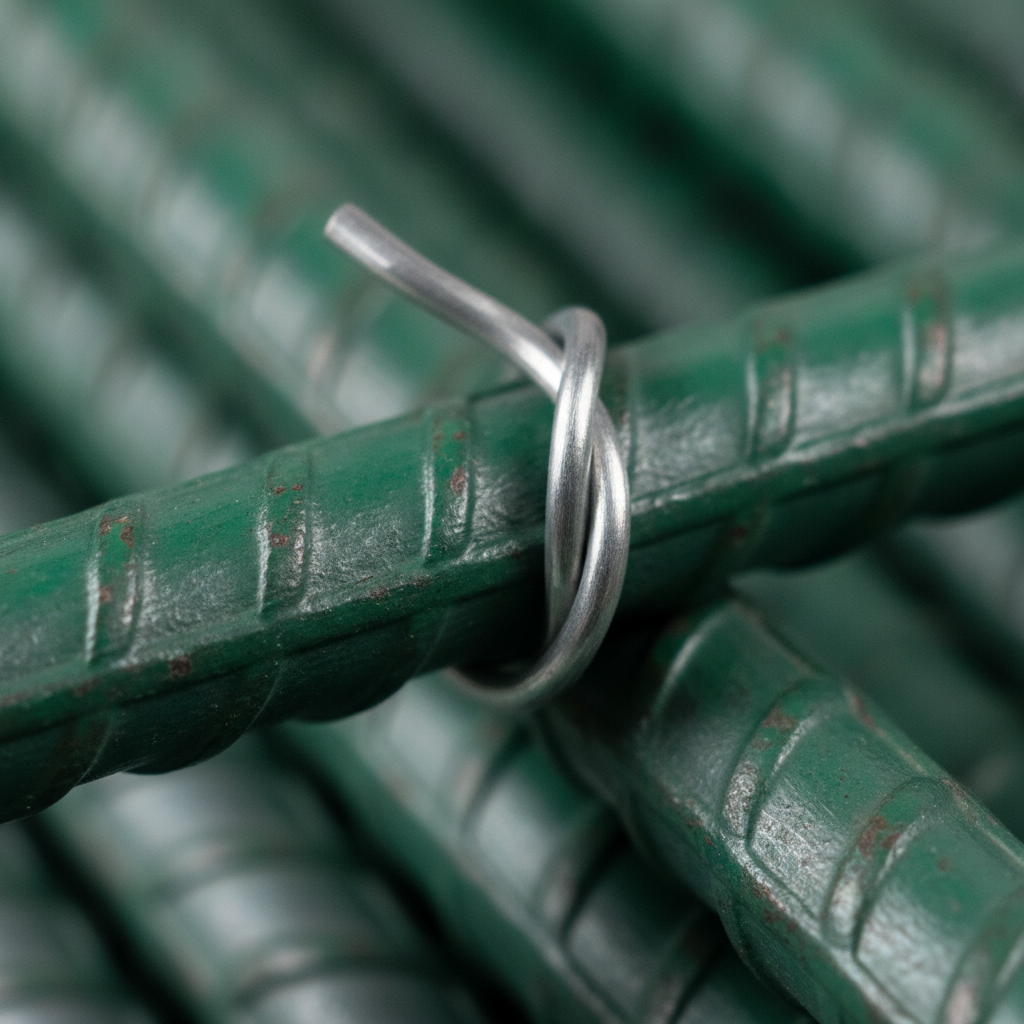
- Epoxy-coated rebar: green-coated for chloride exposure; often detailed in parkades, bridge decks, and splash zones.
- Welded wire mesh: standard sheets at 6″x6″x 6/6, 9/9, 10/10; speeds slab reinforcement and controls shrinkage cracking.
- GFRB (glass fibre bars): corrosion-proof, lightweight, and non-conductive for select design cases.
- Accessories: chairs, spacers, tie wire, and couplers—small items that keep placement accurate.
Tip: lock the bar marks and mesh sizes early in coordination meetings. That single step prevents downstream RFIs and resequencing.
Best Practices: Specifying, Detailing, Staging, and Delivery
The best projects finalize bar lists early, detail with constructability in mind, tag and bundle by pour sequence, and schedule just-in-time deliveries. This cuts site handling, prevents congestion, and keeps the pump, crane, and crew in sync.
Specification and submittals
- Confirm exposure class and select carbon, epoxy-coated, or GFRB accordingly.
- Use standard bends where possible; avoid custom radii that slow fabrication.
- Provide clear lap splices, hooks, and coupler locations in drawings.
- Package submittals with mill certs and MTO approvals when required.
Detailing and shop drawings
- Coordinate embeds, sleeves, and post-installed anchors before finalizing bar marks.
- Break out bar lists by pour zones; align bundle tags to plan sheets.
- Design for installation: minimize congestion at laps and intersections.
- Leverage our constructability checks to reduce field fixes.
Staging and delivery
- Sequence deliveries by the day’s pours; keep backup mesh on deck for minor changes.
- Use laydown areas that minimize re-handling; preserve epoxy-coated bars from abrasion.
- Confirm crane access and sling plans for heavy bundles; protect tags from weather.
- For deeper logistics tactics, see our local supplier guide.
On a typical mid-rise, these practices shave hours off each deck cycle. Over a schedule, that’s weeks saved—without cutting corners.
Procurement Workflow and Budgeting (No Pricing)
Streamline procurement by standardizing RFQs, aligning specs early, bundling services (estimating through delivery), and scheduling drops by pour sequence. This prevents change-order churn and reduces waste without discussing price points.
Procurement is about clarity and timing. The more complete your package—drawings, specs, exposure classes, and sequence—the fewer surprises you face on-site.
| Step | Owner | Deliverable | Risk Reduced |
|---|---|---|---|
| Issue RFQ with plans/specs | GC/Concrete | Scope, grades (500W/400W), exposure, sequences | Spec gaps and scope creep |
| In-house takeoff & bar list | Dass Rebar | Quantities by pour zone; mesh specs | Over/under-ordering |
| Shop drawings & submittals | Dass Rebar | Bar marks, bends, laps, approvals | Field RFIs and rework |
| Fabrication & bundling | Dass Rebar | Tagged bundles by sequence | Site congestion |
| Just-in-time delivery | Dass Rebar | Staged drops per deck/zone | Idle crews and pumps |
| On-site assembly support | Dass Rebar + Crew | Tie, chair, and inspect | Placement errors |
For a deeper dive on supplier selection and scheduling, review our suppliers guide and the 2026 partner checklist.
Share plans and pour sequences and we’ll return a bar list, shop drawings, and a dispatch plan staged to your site logistics—start to finish with one accountable team.
Tools and Resources for Planning Reinforcement
Use coordinated shop drawings, standardized RFQ templates, and delivery playbooks to compress timelines. Pair them with constructability reviews and MTO-compliant submittals to keep inspections smooth and pours on time.
- Shop drawing package: bar lists, bend schedules, lap tables, and tag maps for each pour.
- RFQ template: grades, exposure classes, mesh specs, and delivery constraints called out up front.
- Delivery playbook: laydown diagrams, crane paths, crew headcount, and drop schedules.
- Cross-trade coordination: align sleeves, embeds, and post-installs during detailing.
If you’re coordinating exterior framing on the same job, these broader resources on steel systems provide helpful context: an industry overview of steel framing choices, field notes on steel studs in the GTA, and why many Ontario builders trust integrated steel networks across Ontario.
Case Studies and Ontario Examples
Coordinated reinforcement—estimating through delivery—shortens cycles and reduces RFIs. On recent GTA and Ontario projects, bundled services, tagged packages, and just-in-time trucking kept decks, cores, and slabs moving to plan.
The Hawthorne Residences (Toronto): In-house estimating and detailing aligned bar marks with tight core schedules. Tagged bundles by floor allowed the crew to pick-and-place without hunting. Result: consistent deck cycles and predictable inspections.
Hickory Terraces (Waterloo): Epoxy-coated rebar in exposed areas shipped with protective spacers and wraps. Pre-approved submittals and lap tables minimized inspection hold points and kept pours sequencing as planned.
The Grand at Universal City (Pickering): Stacked pours across podium levels needed mesh and 15M bars staged days ahead. Dedicated trucking windows and laydown maps prevented congestion at the hoist.

Across these builds, one pattern held: when estimating, detailing, fabrication, and delivery live under one roof, schedule variation drops. That’s the value of an integrated, MTO-approved partner with a dedicated trucking fleet.
How It Works on Site: From Plans to Pour
Translate drawings into bar lists, bundle and tag by pour, deliver just-in-time, and install to tolerances. Photograph and verify before placement—then pour on schedule. Repeat per zone until the structure tops out.
- Plans to lists: our takeoff produces bar marks and mesh quantities by zone.
- Fabrication: cut and bend to spec; bundle by sequence with weather-resistant tags.
- Delivery: short-haul dispatch aligns with crane time and gate access.
- Placement & QA: tie, chair, verify cover and laps; sign off before concrete.
For a refresher on reinforcement fundamentals and site sequencing, review our reinforcing steel guide.
Quick Specs and Glossary (Ontario-Centric)
Ontario projects often specify metric 10M/15M/20M bars, Grades 400W/500W, and 6″x6″ welded wire mesh. Epoxy-coated bars are common in chloride exposure; GFRB appears where corrosion, conductivity, or weight are concerns.
- 10M: ≈11.3 mm nominal diameter; frequent in ties and light slabs.
- 15M: ≈16.0 mm; a workhorse in walls and slab reinf.
- 20M: ≈19.5 mm; heavier elements and higher loads.
- Grades: 400W and 500W; match design requirements and exposure.
- Mesh: 6″x6″x 6/6, 9/9, 10/10; select based on slab loads and joint spacing.
Need help turning specs into install-ready packages? Our team converts drawings into shop-ready lists and delivery plans.
Frequently Asked Questions
Here are concise answers to common questions about steel reinforcement supplies—covering lead times, substitutions, epoxy handling, and how shop drawings speed installation.
What counts as steel reinforcement supplies?
They include rebar (Grades 400W/500W), welded wire mesh, GFRB alternatives, and the services that make them install-ready: estimating, detailing, cutting, bending, tagging, bundling, delivery, and on-site assembly support.
When should I use epoxy-coated rebar?
Use epoxy-coated bars in chloride exposure zones like parking structures, bridge decks, or splash areas. The coating helps resist corrosion. Protect the coating from abrasion during handling and maintain cover per the drawings.
How do shop drawings save time on site?
Clear shop drawings convert design intent into bar marks, bends, laps, and quantities by pour zone. Tagged bundles that match the drawings reduce layout questions, speed placement, and minimize RFIs during critical pour windows.
Can you support multiple Ontario job sites at once?
Yes. With in-house estimating and detailing, fabrication, and a dedicated trucking fleet, we coordinate staggered drops across residential, commercial, and infrastructure projects while maintaining MTO-compliant quality control.
Conclusion and Next Steps
Treat steel reinforcement supplies as a single coordinated workflow—from takeoff to delivery and assembly. When one team owns drawings, fabrication, and dispatch, schedules stabilize and crews stay productive through every pour.
- Key takeaways:
- Lock specs early; align exposure classes and bar sizes.
- Bundle services—estimating through delivery—to cut handoffs.
- Tag and stage by pour; schedule just-in-time drops.
- Use MTO-approved processes and shop drawings to keep inspections smooth.
Ready to simplify reinforcement on your next Woodbridge or GTA project? Share plans and pour sequences, and our team will return a coordinated package—bar lists, shop drawings, fabrication, and delivery—so you can pour with confidence.