
Bending rebar into a circle is the controlled forming of reinforcing steel into uniform hoops or rings that meet minimum bend diameters and tolerances. This preserves bar strength, prevents surface microcracks, and speeds cage assembly. For contractors in Woodbridge, ON and across Ontario, Dass Rebar provides shop bending, detailing, and coordinated delivery to keep pours on schedule.
By Navjot Dass — Last updated: 2026-05-11
Summary and table of contents
This guide explains how to bend rebar into circles without cracks using approved radii, proper tooling, and step-by-step checks. You’ll learn prerequisites, methods (manual bender, ring roller, jig), QA tolerances, troubleshooting, and local considerations for Ontario projects, backed by Dass Rebar’s in-house detailing, fabrication, and delivery capabilities.
In a few minutes you’ll know how to plan, bend, and quality-check circular hoops for columns, piers, and shear reinforcement—while avoiding common mistakes that lead to cracking, out-of-round rings, or site delays.
- What circular rebar is and where it’s used
- Why bend radius and material grade matter
- Three proven bending methods and when to use each
- Prerequisites, safety, and tooling setup
- Step-by-step process and inspection checklist
- Troubleshooting out-of-round, springback, and cracking
- Ontario-focused notes for shop vs. site work
Local considerations for Woodbridge, ON
- Plan shop bending during winter cold snaps to avoid on-site delays; schedule our trucking window so hoops arrive just before cage tying.
- For GTA pours, coordinate circular stirrup spacing with rebar detailing in advance; last-minute changes often ripple across multiple trades.
- For infrastructure jobs, confirm MTO submittals and bar lists early; epoxy-coated or GFRB items may require larger bend radii and protective handling.
What is circular rebar (rings and hoops)?
Circular rebar refers to reinforcing steel bent into closed rings or hoops that confine concrete and hold longitudinal bars in place. Properly formed hoops control cracking, improve ductility, and simplify cage assembly in columns, piers, caissons, tanks, and shear-critical zones.
Circular hoops do three essential jobs. They confine concrete laterally, they tie vertical bars at exact spacing, and they resist shear. Those roles demand accurate diameters, repeatable geometry, and clean bends that don’t weaken the steel.
- Where hoops appear: column cages, drilled pier cages, pile caps, circular tanks, stair cores, and shear reinforcement around openings.
- Typical bar sizes: 10M, 15M, and 20M are common in Ontario; smaller diameters make tighter rings with less force.
- Materials in play: carbon steel (Grade 400W/500W), epoxy-coated rebar, and FRP variants like GFRB (glass fiber) with special bend guidance.
In our experience supporting Ontario column and pier work, repeatability is everything. A batch of 80 identical hoops saves hours of field adjusting, reduces ties per joint, and improves cover consistency. That’s why we pair bending with in-house shop drawings and bar lists.
Why bend radius, grade, and method matter
Correct bend radius prevents surface cracking and keeps steel properties intact. Grade 500W or 400W bars, epoxy-coated bars, and GFRB each have different minimum inside diameters and handling needs. Choose a method that delivers the specified radius and repeatability at your target volume.
Here’s the thing: rebar is strong but sensitive to tight radii, coating damage, and overworking. The wrong setup can create tiny fissures that grow under load. The right setup produces smooth arcs that pass inspection and tie quickly in the cage.
- Minimum inside diameter (ID): many specs reference multiples of bar diameter (db). For carbon steel hoops, a typical planning range is 6–10db; epoxy-coated or FRP often require larger.
- Grade implications: higher-strength steels can be less forgiving at tight bends; follow the project’s approved bend schedule.
- Volume and repeatability: hand benders are fine for short runs; ring rollers shine for dozens or hundreds of identical hoops.
We’ve found that pairing the method to the deliverable reduces rework. For example, a run of 120 identical 10M rings for a mid-rise core is ideal for a ring roller with a fixed stop and a go/no-go gauge.
How bending rebar into a circle works
Rebar bending relies on controlled plastic deformation around a form, pin, or roller at or above the minimum inside diameter. The bar yields at the bend line while adjacent segments remain elastic, which is why springback occurs and must be compensated.
When you form a hoop, three forces cooperate: a central pin (or roller) sets the radius, a reaction point keeps the bar seated, and a lever applies bending moment. If your pin is undersized or your lever jerks, you risk cracking or flat spots.
- Elastic vs. plastic zones: anticipate springback; a ring may open up by a few degrees after release—build this into the stop setting.
- Surface integrity: smooth dies and pins avoid scoring; this matters even more for coated bars.
- Form closure: for closed hoops, ends must meet with measured overlap or weld detail per drawings; tolerance drives fit-up speed on site.
On volume runs, we record compensations (for example, +2 to +4 degrees past target) so every subsequent ring lands on-size. That documentation travels with delivery notes to the site team.
Prerequisites: drawings, lists, and safe setup
Before bending, lock in approved shop drawings, bar lists, and bend schedules. Verify bar grade and coating, confirm minimum inside diameters, and inspect tooling. A clean, guarded workspace and PPE reduce risks and prevent coating damage.
Great bends start long before the first pull. The clarity of your rebar detailing, the completeness of your takeoff, and the condition of your tooling dictate the outcome. Miss one, and you’ll feel it at installation.
- Approved documentation: use clear shop drawings with ring IDs, target inside diameters, leg lengths (if any), and quantity per cage.
- Bar verification: check tags for 10M/15M/20M and grade (400W/500W); separate epoxy-coated and GFRB.
- Tooling inspection: confirm pin diameters, roller condition, and jig dimensions; replace worn components that could scar coatings.
- Work area: debris-free floor, stops set, and guards in place; stage cut lengths in FIFO order for traceability.
- PPE: gloves, eye protection, and safety boots; use padded cradles for coated bars to avoid nicks.
Need help upstream? Our rebar detailing and supply planning reduce ambiguity and shorten lead times, especially when circular stirrups control the cage geometry.
Methods and tools: manual bender, ring roller, and jig
Use a manual bender for small runs and tight site spaces, a ring roller for consistent, high-volume hoops, and a fixed jig when a simple, repeatable diameter suffices. Match the tool to the bar size, material, and production schedule.
Different tools excel at different jobs. Here’s a quick comparison to help you pick the right approach for your next batch of rings.
| Method | Best for | Pros | Watch-outs |
|---|---|---|---|
| Manual rebar bender | Short runs, on-site tweaks, 10M–15M | Portable, low setup time | Operator variability; harder to keep perfect circles |
| Ring roller (powered) | High-volume hoops, consistent diameters | Excellent repeatability; quick once set | Requires setup time and trained operator |
| Fixed jig (pin-and-form) | One or two standard diameters | Simple, durable, low-cost fixtures | Less adjustable; needs correct pin/form size |
For coated bars, use smooth, non-marring dies and inspect often. For GFRB, validate that your design calls for factory-formed hoops or alternative details—field bending may not be allowed.
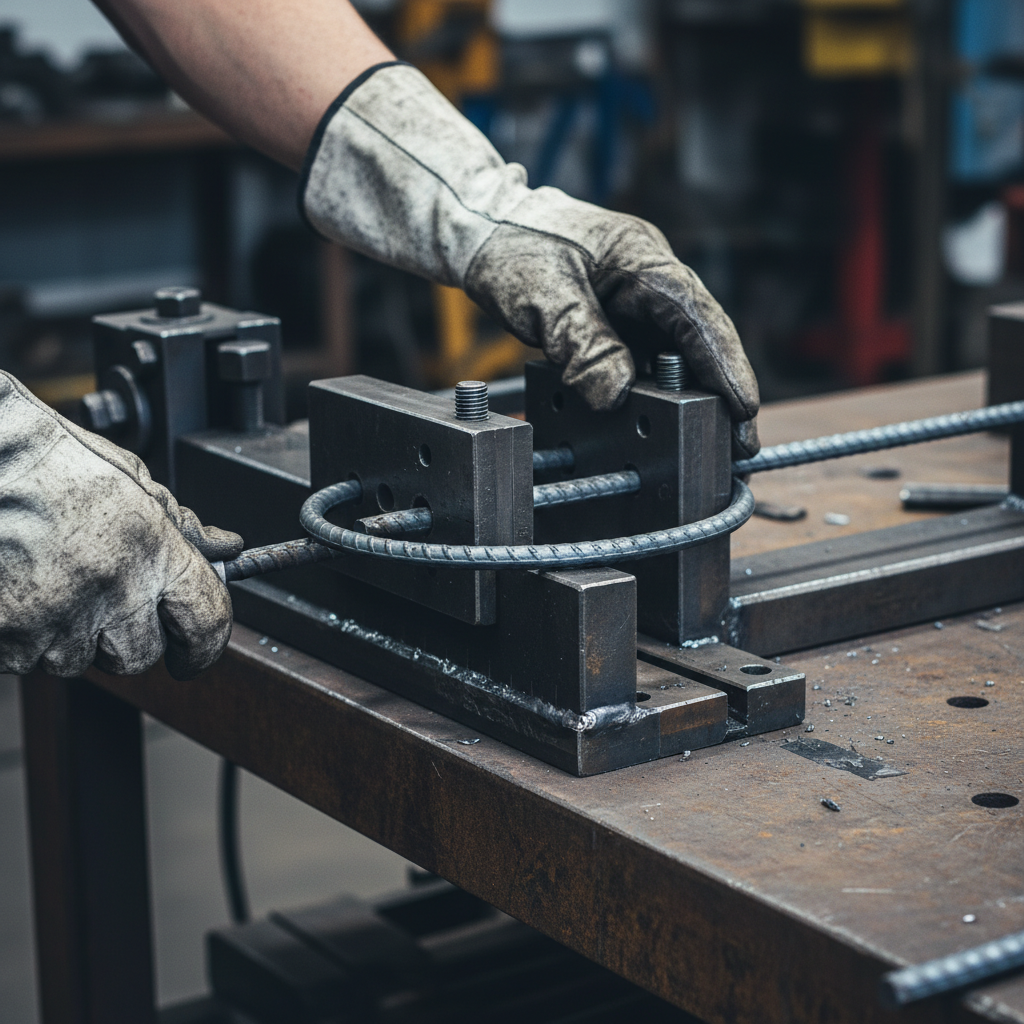
Step-by-step: bending a perfect circular hoop
Measure and cut to length, set the correct pin or roller radius, compensate for springback, form the circle smoothly, and verify diameter and roundness with a go/no-go gauge. Label, stack, and protect finished hoops for delivery or immediate cage tying.
Below is a field-tested workflow we use when producing circular rings for column and pier cages. Adjust bar lengths and losses per your drawings and actual tooling.
- Confirm the spec. Re-check inside diameter, bar size (e.g., 10M), and quantity. Note any coating or FRP requirements.
- Cut to starting length. Account for bend allowance and closure overlap; keep tolerances tight across the batch.
- Set the tool. Install the correct pin or roller spacing to achieve the specified ID; add your known springback compensation.
- Make the bend. Apply steady pressure. Avoid jerky motions that leave flats. For rollers, feed at a consistent rate.
- Close the ring. Bring ends together to the specified closure detail (tie, lap, or weld if detailed). Verify alignment.
- Gauge and mark. Use a ring template or go/no-go gauge to confirm the ID and roundness. Mark approved pieces.
- Stack and protect. Stack by diameter and bar size. Use separators for epoxy-coated bars; avoid contact damage.
For production runs, log your bend settings (pin size, roller offset, lever stroke) and compensate as needed to keep the set within tolerance across hundreds of units.
QA checks and tolerances for roundness
Check inside diameter, roundness (ovalization), surface condition, and closure alignment on each batch. Use templates or gauges, record pass/fail counts, and segregate rework immediately to keep installation moving without surprises.
Quality isn’t only about a pretty circle—it’s about geometry that installs fast and delivers design performance. Here’s how we keep it tight and traceable.
- Inside diameter: measure at two axes; acceptable variance is project-specific—stick to the drawing tolerance.
- Roundness: check ovalization; significant deviation slows tying and can reduce cover.
- Surface condition: look for scoring or coating damage; tag and segregate any suspect pieces.
- Closure alignment: ensure ends meet properly; misalignment compounds when stacking hoops in a cage.
- Batch records: keep simple logs—settings, inspector initials, and counts—to speed root-cause if something drifts.
Our teams often deliver hoops with labeled bundles and a quick QC slip. That documentation helps foremen stage material and build cages in the right sequence.

Safety and handling essentials
Protect hands and eyes, secure workpieces, and keep the bending area clear. For coated bars, use padded cradles and smooth dies to prevent nicks. Lift bundles with slings that protect coatings and never stand inside stacked rings during movement.
Safe bending is efficient bending. Clear paths reduce dropped loads and time-consuming resets. Coating care prevents costly rejections at inspection.
- PPE: gloves, safety glasses, and steel-toe boots are non-negotiable during cutting and bending.
- Work holding: clamp or fixture bars so they can’t kick out; confirm guards on powered rollers.
- Lifting: use appropriate rigging; protect rings from deformation during moves.
- Housekeeping: keep bins for offcuts; tripping on scrap is the fastest way to lose time.
When in doubt, slow down for a check. A 30-second pause beats a batch of damaged hoops and an hour of rework.
Material notes: 10M, 15M, 20M, epoxy-coated, and GFRB
Smaller bars like 10M form tighter circles with less force; larger 15M and 20M require larger pins and more careful springback control. Epoxy-coated needs non-marring dies, and GFRB typically follows manufacturer-formed shapes rather than field bending.
Ontario projects commonly specify metric bar sizes. Here’s how those practical differences play out at the bender.
- 10M: great for tight hoops and shear stirrups; ideal for manual benders or small ring rollers.
- 15M: common in columns; a powered roller speeds repeatable results.
- 20M: often shop-bent with dedicated setups; verify lift/handling plans for heavier bundles.
- Epoxy-coated: pad contact points, avoid chain marks, and check for chips after forming.
- GFRB: confirm if factory-formed hoops are specified; field bending policies vary and are often prohibited.
If you’re unsure which path fits your schedule, our fabrication guide walks through cutting, bending, and batch control for Ontario jobs.
Use cases and examples (Ontario focus)
Circular hoops speed assembly in column cages, drilled shafts, and tank walls. Pre-bent rings reduce on-site labor, improve cover, and increase consistency across dozens of identical lifts, especially on GTA mid-rise and municipal work.
Consider these scenarios pulled from the kinds of projects we support across Ontario.
- Mid-rise core: 120 identical 10M hoops staged by floor. Result: faster core cycles and fewer shim fixes during pour prep.
- Drilled shafts: large-diameter rings bundled with longitudinal bars labeled by cage segment; cranes pick and set by sequence.
- Water tank: continuous circular reinforcement benefits from consistent ring diameters to maintain cover at curved formwork.
For deeper planning on ring spacing and stirrup logic, see our rebar stirrups guide and foundational concepts in the foundation rebar guide.
Troubleshooting: roundness, springback, and cracking
If hoops are out-of-round, adjust pin size or roller spacing and recheck springback. For flat spots, slow the lever stroke or increase roller passes. If you see surface cracking, stop, inspect tooling, and increase inside diameter before proceeding.
Every shop and site hits snags. Here’s how we work through the usual suspects quickly.
- Out-of-round/oval: verify pin diameter and feed rate; add a light overbend and relax to size.
- Flat spots: reduce aggressive pulls; use smoother, continuous motion or additional roller passes.
- Ends won’t close: re-measure cut length and bend allowance; correct the fixture stop.
- Surface scoring: replace worn dies; protect coatings with non-marring contact surfaces.
- Cracking at the bend: increase inside diameter, warm cold stock if allowed, and re-verify bar grade/coating.
Document the fix so the next operator or shift keeps producing acceptable rings. That one-page “what worked” sheet saves hours on long runs.
Delivery, staging, and on-site assembly
Bundle hoops by bar size and diameter, label clearly, and time delivery to align with cage assembly. Staging near the pour area cuts handling time. Protect epoxy-coated hoops in transit and use padded slings during unloading.
Logistics can add or remove days from the schedule. Our dedicated trucking fleet lets foremen choose windows that match crane time and labor set-ups.
- Labeling: include ring ID, diameter, bar size, and cage segment.
- Staging: place bundles near tying stations; avoid double-handling.
- Protection: separators and covers for coated bars; inspect on arrival.
For a coordinated plan from estimating to the last tie, explore our rebar supply guide and how we synchronize detailing with delivery.
How Dass Rebar supports circular bending
We combine in-house estimating and detailing with shop bending, dedicated trucking, and on-site assembly support. You get accurate rings, labeled bundles, and punctual deliveries across the GTA and Ontario—aligned to your pour schedule.
Because we’re a one-stop reinforcing partner, our teams solve upstream and downstream issues, not just the bend itself. That reduces total project risk.
- Detailing + takeoffs: ring IDs, bar lists, and spacing logic prepared in-house.
- Fabrication: cutting and bending with batch QC and documented settings.
- Delivery: dedicated trucking windows reduce laydown congestion.
- Assembly: on-site support to stage and tie efficiently.
For more on mesh reinforcement in curved applications, see our overview of welded wire mesh.
Tools and resources checklist
Successful circular bending requires the right bender or roller, checked pin sizes, measuring tools, templates, PPE, and documented bend settings. A simple go/no-go gauge speeds inspection and keeps production consistent across shifts.
Here’s a compact checklist you can adapt to your shop or site kit.
- Manual rebar bender or powered ring roller with smooth dies
- Pin sets or roller spacers matched to target IDs
- Measuring tape, calipers, and ring templates or gauges
- Cut-off saw or shear with clean blades
- PPE: gloves, glasses, hearing protection, steel-toe boots
- Non-marring slings and separators for coated bars
- QC log sheets and markers for bundle labeling
If you need a broader material perspective, our sister brand provides a concise rebar product overview that’s helpful for junior crew onboarding.
Need shop-formed hoops on a deadline?
Send us your drawings and required diameters. We’ll detail, bend, label, and deliver circular hoops to your site window—so your crew ties cages faster and pours on time.
We help general contractors, concrete contractors, and developers across Ontario keep structures moving with coordinated detailing, fabrication, and delivery.
Frequently asked questions
These quick answers address common field questions about making, checking, and installing circular rebar hoops. Each response focuses on practical steps you can use today.
How do I bend 10M rebar into a circle without flat spots?
Use a correctly sized pin or rollers and apply steady force rather than short, aggressive pulls. Add a small overbend to compensate for springback. Verify the inside diameter against a template and adjust the stop once, then repeat for the batch.
What minimum bend radius should I plan for column hoops?
Follow the project’s approved bend schedule. As a planning rule, steel hoops often use a minimum inside diameter in the 6–10 times bar diameter range, while coated or FRP bars may require larger radii. Confirm with your drawings before production.
Can I field-bend epoxy-coated or GFRB hoops?
Epoxy-coated steel can be bent with smooth, non-marring dies and careful inspection for chips. GFRB policies vary; many designs use manufacturer-formed shapes instead of field bending. Always confirm material notes on your submittals.
Manual bender vs. ring roller—when should I choose each?
Use a manual bender for short runs and small diameters where portability matters. Choose a ring roller for high volume or when you need excellent repeatability across dozens of identical hoops. Fixed jigs work for one or two standard sizes.
How do I check if my ring is round enough?
Measure the inside diameter on two perpendicular axes and compare results. Use a go/no-go template for speed. If the difference is beyond your drawing’s tolerance, adjust pin size, add controlled overbend, or make an additional roller pass.
Related guides and next steps
If circular hoops are on your next pour, align detailing, fabrication, and delivery early. Explore focused guides on rebar sizing, stirrups, detailing, and foundational reinforcement to streamline your workflow.
For sizing and applications, dig into our 10M rebar guide. To tighten your drawings-to-delivery loop, review detailing best practices and our fabrication deep dive. If you’re preparing cages, the stirrups guide and foundation reinforcement overview can help you plan spacing and cover.
Key takeaways
Successful circular rebar bending comes down to three things: correct radius, consistent method, and clean QC. Lock those in, and your crew ties faster, inspections go smoother, and pours stay on schedule.
- Use approved inside diameters and protect coatings during forming.
- Match the tool to volume: manual (small runs), ring roller (production), jig (standard sizes).
- Gauge every batch for roundness and diameter; document the settings.
- Bundle, label, and time delivery to the cage build window.
Conclusion: make circles that install faster
Plan the diameter, pick the right method, and verify every batch. With detailing, shop bending, and punctual delivery aligned, circular hoops install quickly and perform as designed.
Need help converting drawings into ready-to-tie rings across Ontario? Send us your bar list. We’ll align detailing, fabrication, and delivery so your next column, pier, or tank pour runs cleanly.
For broader steel context across envelope and structure, see this perspective on steel framing systems from our network partner.