
Concrete rebar is steel reinforcement installed in concrete to resist tension, control cracking, and improve load transfer. In 370 New Enterprise Way and across Ontario, Dass Rebar delivers estimating, detailing, fabrication, delivery, and on-site assembly so crews place the right reinforcement on time while meeting project and compliance requirements.
By Navjot Dass • Last updated: 2026-05-14
Above the fold: Hook and table of contents
This practical guide shows Ontario builders exactly how to choose, detail, fabricate, and install concrete rebar the right way in 2026. Use it to prevent shortages, coordinate deliveries, meet specs, and speed pours—without rework. Jump to sizing, detailing, fabrication, delivery logistics, assembly, or QA checklists.
You’re managing tight schedules, changing specs, and multiple pours. The fastest way to stay on track is to reduce friction between design, shop, and site. That’s what this guide is for.
- What concrete rebar is and why it matters
- How reinforcement works inside concrete
- Types: black steel, epoxy-coated, GFRP, welded wire mesh
- Bar sizing: 10M, 15M, 20M selection and use
- Detailing and takeoff workflows that prevent change orders
- Fabrication, delivery, and site assembly best practices
- Quality checks, inspection prep, and common mistakes
For fast navigation, use these internal deep dives as needed: our rebar supply planning guide, the focused 10M rebar uses guide, and the fabrication how‑to.
What is concrete rebar?
Concrete rebar is deformed steel (or composite) reinforcement embedded in concrete to carry tensile forces, limit crack widths, and improve ductility. Bars are placed per design, tied, supported at correct cover, and cast into the slab, wall, beam, or column to create a composite structural system.
Concrete excels in compression but is weak in tension. Rebar adds the missing tensile capacity and holds cracks tightly so structures remain serviceable and safe.
- Materials: Carbon steel (uncoated), epoxy-coated steel for corrosion resistance, and glass fiber reinforced polymer (GFRP) for non-corrosive applications.
- Surface: Deformations (ribs) mechanically lock bars to concrete for bond strength.
- Strength grades: In Ontario work, common steel grades include 400W (400 MPa) and 500W (500 MPa). Composite options specify equivalent strength differently.
In our experience coordinating residential and commercial pours, the projects that set bar lists and placement drawings early avoid site improvisation and last‑minute substitutions.
Why rebar matters for concrete performance
Rebar transforms brittle concrete into a ductile, crack‑controlled composite. It limits crack widths at service loads, anchors shear transfer, and keeps deflection within targets. The result is safer slabs, stiffer frames, and longer durability—especially important in freeze‑thaw and deicing environments.
Here’s why this matters on your site:
- Serviceability: Proper steel area controls crack spacing and width under daily loads, improving appearance and durability.
- Strength and ductility: Bars carry tension after first crack, allowing warning before failure.
- Anchorage and shear: Stirrups, ties, and development lengths keep force paths continuous through joints and supports.
- Durability: Adequate cover plus corrosion protection (epoxy or GFRP) reduce spalls and repairs over the structure’s life.
The reality is simple: when reinforcement, cover, and placement tolerance are right, you pour once. When they’re wrong, you pour twice.
How rebar works inside concrete
Rebar resists tensile stresses, engages bond with concrete through deformations, and shifts neutral axis behavior. Bars in the tension zone take tension; concrete above carries compression. Proper development length, splice strategy, and cover ensure the composite acts as designed.
Think of a typical slab-on-grade or suspended slab:
- Tension zones: Bottom reinforcement in simple spans; top steel over supports and cantilevers.
- Bond: Ribs lock into the paste. Clean bars and correct consolidation are critical for bond.
- Continuity: Lapped or mechanical splices transfer force at joints; development length depends on bar size, coating, and concrete strength.
For footings, beams, and walls, the same principles apply—place steel where tension forms, maintain cover, and tie cages so geometry doesn’t shift during the pour.
Types of reinforcement: steel, epoxy-coated, GFRP, and mesh
Use black steel rebar for standard interiors, epoxy-coated steel where chloride exposure is likely, GFRP when you need non‑corrosive or electromagnetically neutral reinforcement, and welded wire mesh for temperature‑shrinkage control in slabs and toppings.
Each option has a place on Ontario jobsites. The key is matching performance needs to the environment and detailing.
- Black steel rebar: Versatile and strong; common choice for interior and many exterior elements with proper cover.
- Epoxy‑coated rebar: Polymer coating reduces corrosion initiation in deicing salt and marine splash zones. See our epoxy rebar guide for placement and handling tips.
- GFRP (glass fiber) bars: Non‑corrosive, lightweight, and non‑magnetic—used in parking decks, waterfront structures, and where electrical neutrality is required.
- Welded wire mesh (WWM): Factory‑welded grids (e.g., 6″ x 6″ in 6/6, 9/9, 10/10 gauges) speed placement and control shrinkage cracking.
For a quick refresher on mesh types and use cases, see our deeper dive on welded wire mesh.
Sizing and selection: 10M, 15M, 20M and beyond
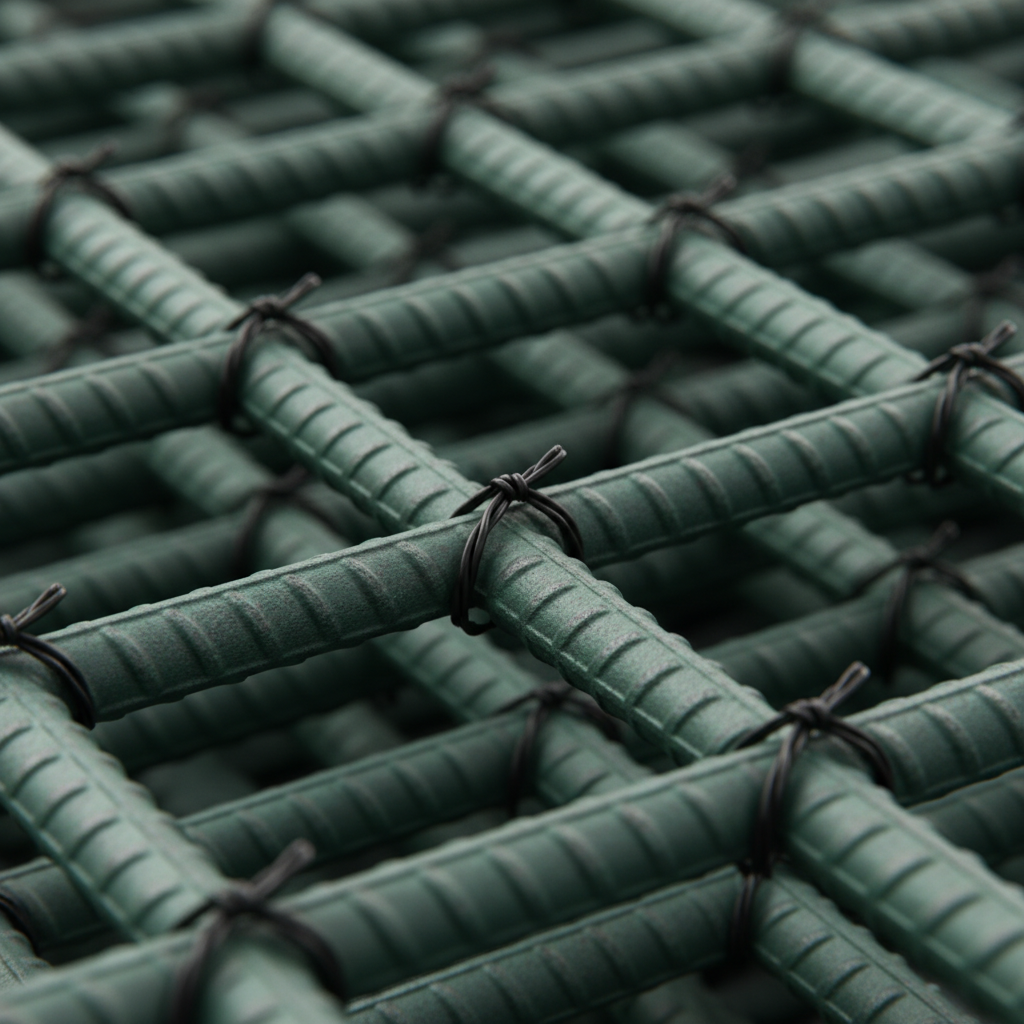
Select bar sizes by required steel area, spacing, and constructability. In Ontario metric sizing, 10M (~0.45 in), 15M (~0.59 in), and 20M (~0.79 in) cover most slab, wall, and beam needs. Balance bar count, spacing, and congestion to simplify placement and consolidation.
We frequently see 10M for slab temperature‑shrinkage steel, 15M for light beams and walls, and 20M where higher tension or development length constraints apply.
- 10M rebar: Good for slabs, steps, and residential reinforcing. Avoid over‑wide spacing to keep crack widths controlled. Explore our 10M rebar guide.
- 15M rebar: Common in walls, footings, and moderate beams; provides more area per bar at practical spacing.
- 20M rebar: Used when higher forces or fewer bars are desired; check development length and congestion.
Tip: When bar congestion fights cover and vibrator access, upsize a bar or adjust spacing on the shop drawings—before the bundle leaves the shop.
Detailing and shop drawings: getting it right before the pour
Accurate rebar detailing converts design intent into buildable bar lists, bends, laps, and placements. Clear shop drawings, bar marks, and schedules prevent field improvisation, reduce RFIs, and keep inspections smooth.
Our in‑house team turns structural drawings into bar lists, placing plans, and schedules tailored for installers.
- Constructability first: Sequence bars and laps so crews can place and tie without backtracking.
- Clarity: Call out covers, chairs, spacers, and splice types. Label every mat and cage.
- Change management: Lock revisions and issue transmittals so everyone builds from the same page.
If you’re new to our process, the rebar detailing guide shows how we coordinate with GCs and concrete subs to de‑risk installation.
Estimating and takeoffs: avoid overruns and shortages
A disciplined takeoff quantifies bar sizes, lengths, bends, laps, stirrups, mesh sheets, chairs, and wire—by pour and sequence. Accurate pre‑buying and phasing prevent site shortages and reduce carrying risk.
In our experience, bundling by pour sequence and tagging by area (e.g., levels, grid lines) saves hours during placement and simplifies QA.
- Scope definition: Confirm design sets and revisions before takeoff.
- Assumptions: Document cover, lap, and splice assumptions on the takeoff sheet.
- Phasing: Split deliveries by pour windows and crane availability.
For Ontario builders scaling up summer work, planning pre‑buys ahead of peak weeks can reduce site stress. A seasonal perspective is explored here: why May is a smart time to stock rebar.
Fabrication and delivery: from shop to site
Cut‑and‑bend accuracy, labeled bundles, and coordinated trucking make or break the schedule. Fabrication should follow approved shop drawings; delivery should align with crane time, pour windows, and laydown space to keep crews continuously productive.
Dass Rebar’s in‑house fabrication and dedicated fleet keep timing predictable across Ontario.
- Fabrication: Verify bend radii and hook dimensions per grade and bar size; protect epoxy coatings during handling.
- Labeling: Bar marks, bundle IDs, and zone tags speed staging and reduce sorting delays.
- Delivery: Stagger trucks by crane cycle time and pour sequencing; align mesh pallets and bar bundles with placement order.
For a deeper look at shop workflows and field handoffs, see our rebar fabrication guide and broader rebar supply planning resource.
On-site assembly and QA: ties, chairs, covers, and inspections
Quality assembly keeps bars at design cover and position during placement and vibration. Use the right tie types, chairs, spacers, and bar supports; protect coatings; and verify placement against shop drawings before the first yard hits the form.
On site, small habits prevent big fixes. We encourage foremen to run quick pre‑pour checks with the latest marked‑up drawings.
- Ties and supports: Choose tie type (snap, saddle, etc.) and spacing to resist float during vibration.
- Cover control: Use compatible chairs and spacers for slab, wall, and column conditions; avoid dissimilar metal issues with GFRP.
- Protection: Keep epoxy intact; repair nicks per manufacturer guidance before placing concrete.
- Inspection: Confirm bars, laps, splice lengths, bar marks, and mesh lap directions match the drawings.

Best practices and common mistakes to avoid
Lock drawings early, stage by pour, protect coatings, and keep cover consistent. Avoid unplanned bar swaps, insufficient lap lengths, and mesh placed in the wrong orientation. A few disciplined checks save hours of rework across a multi‑pour schedule.
Best practices we coach across GTA sites:
- Single source of truth: Issue controlled PDFs with revision clouds; collect superseded sets from the site.
- Pre‑pour walk: Confirm embeds, sleeves, and penetrations won’t clash with cages or mats.
- Mesh laps: Keep factory cross wires in the correct direction; respect minimum laps per gauge.
- Environmental: In freeze‑thaw or deicing exposure, prefer epoxy‑coated steel or GFRP with proper cover.
For foundations and grade beams, our foundation rebar detailing guide consolidates layout tips, lap tables, and anchor coordination.
Tools, standards, and resources
Standard‑driven detailing, protected handling, and coordinated logistics turn drawings into durable structures. Use checklists, lap tables, and handling guides; align deliveries to crane and pour windows; and document inspections for smooth turnover.
Helpful resources for teams scaling projects in Ontario:
- Product overview: See related reinforcement options at Dass Metal — rebar products.
- Trust signals: Learn why many Ontario builders rely on our MTO‑approved supply in this overview of why builders trust Dass Rebar.
- Seasonal planning: Review timing guidance in May pre‑buy strategy for summer projects.
Local considerations for 370 New Enterprise Way
- Plan deliveries around regional rush hours and site access windows so rebar trucks stage close to the crane pad without blocking pours.
- Account for spring thaw and winter freeze‑thaw cycles; epoxy‑coated steel or GFRP with proper cover helps mitigate deicing exposure.
- During peak GTA summer schedules, lock shop drawings and bundle tags earlier to secure fabrication slots and predictable delivery windows.
Case studies and examples
Coordinated detailing, fabrication, and delivery compress schedules. On Ontario builds, we’ve seen early takeoffs, bundled deliveries by pour, and on‑site assembly checklists eliminate rework and speed inspections—from mid‑rise residential to municipal infrastructure.
Here are condensed insights from projects our team supported across Ontario:
- Mid‑rise residential (Toronto): Early slab mat detailing with clear 10M spacing kept crack widths in check and simplified placement. Bundles staged by gridline reduced crane idle time across multiple pours.
- Townhome structures (Waterloo): 15M wall and footing cages prefabricated with labeled stirrups improved dimensional control and reduced field bending, accelerating inspections.
- High‑rise podium (Pickering): Epoxy‑coated top steel over supports limited corrosion risk near exposed edges. Strict cover chairs and epoxy repair protocol passed inspections without delays.
Across these sites, the common thread was simple: shop‑floor accuracy plus predictable trucking equals fewer on‑site decisions and faster pours.
Concrete rebar FAQ
Quick answers to the questions we hear most on Ontario jobsites: what rebar does, when to use epoxy or GFRP, how to choose bar sizes, and how detailing and delivery sequencing prevent delays. Each answer is concise and practical for field teams.
What does rebar actually do in concrete?
Rebar carries tensile forces that concrete can’t, controls crack widths, and increases ductility. Placed at the right cover and spacing, it keeps slabs, beams, and walls serviceable and safe under everyday loads and during extreme events.
When should I choose epoxy‑coated rebar?
Use epoxy‑coated steel when chloride exposure is likely—parking decks, bridge decks, and areas exposed to deicing salts or splash. The coating delays corrosion initiation. Handle with care, repair nicks before placing, and maintain specified concrete cover.
Is GFRP a replacement for steel rebar?
GFRP doesn’t corrode and is non‑magnetic, making it ideal in aggressive or electromagnetically sensitive environments. It behaves differently from steel—check design assumptions, anchorage details, and manufacturer guidelines rather than assuming a one‑for‑one swap.
How do I pick between 10M, 15M, and 20M bars?
Match the required steel area to constructability. 10M suits many slab and light wall uses; 15M covers walls, footings, and moderate beams; 20M handles higher forces with fewer bars. Avoid congestion by balancing size and spacing on shop drawings.
What site checks matter before concrete arrives?
Verify cover, bar positions, laps, and splice types against the latest drawings. Confirm chairs and spacers are correct, coatings are intact, mesh lap direction is right, and embeds won’t clash with mats or cages. Document with photos for inspection.
Key takeaways
Plan early, detail for constructability, and align fabrication with crane and pour windows. Protect coatings, keep cover consistent, and verify placement before trucks arrive. These habits compress schedules and reduce rework across Ontario builds.
- Rebar turns brittle concrete into a ductile, crack‑controlled composite.
- Match reinforcement type to exposure: black, epoxy‑coated, GFRP, or mesh.
- Choose 10M/15M/20M based on required area and congestion risk.
- Detail, label, and deliver by pour sequence to eliminate sorting delays.
- Run disciplined pre‑pour checks to pass inspection the first time.
Conclusion: build it right, once
Concrete rebar choices ripple through schedules and long‑term durability. When design, detailing, fabrication, delivery, and assembly are aligned, pours move faster and finishes last longer. Use this guide to align teams and eliminate rework from the first takeoff to turnover.
If you’re coordinating multiple pours in 370 New Enterprise Way or anywhere in Ontario, we can help you lock the plan and keep steel moving. Our integrated approach—estimating, detailing, fabrication, delivery, and assembly—removes friction between design and field.
Ready to de‑risk your next pour? Reach out to our team via the website to review drawings, set phasing, and schedule deliveries. We’ll help you hit dates with the right steel, staged the right way.
Soft CTA: Want a fast second set of eyes on a slab mat or wall cage? Send your latest drawings through our contact form at dassrebar.com and we’ll outline a practical sequencing plan.
| Reinforcement | Typical uses | Key advantage | Watch‑outs |
|---|---|---|---|
| Black steel rebar | General slabs, beams, walls, foundations | High strength, versatile, widely available | Needs proper cover in exposure conditions |
| Epoxy‑coated rebar | Decks, parkades, splash and deicing zones | Corrosion delay in chloride exposure | Handle gently; repair coating nicks |
| GFRP bars | Marine, waterfront, EM‑sensitive areas | Non‑corrosive, non‑magnetic, lightweight | Different anchorage; follow manufacturer |
| Welded wire mesh | Slabs, toppings, sidewalks, toppings | Fast placement; crack control | Correct laps and orientation critical |