
Construction sand delivery is the scheduled supply of graded sand to active jobsites for concrete, mortar, bedding, and backfill. It includes material selection, moisture control, transport, and safe placement. From our Woodbridge hub at 370 New Enterprise Way, Dass Rebar coordinates sand logistics alongside reinforcing steel so GTA and Ontario crews pour sooner with fewer site delays.
By Navjot Dass • Last updated: 2026-06-13
Overview: construction sand delivery for Ontario jobs
Construction sand delivery streamlines concrete and utility work by matching the right sand type, moisture, and truck to the job window. In Woodbridge and the Regional Municipality of York, tight streets and active corridors demand precise staging, clear access paths, and synchronized drops that align with rebar placement and formwork cycles.
Here’s the thing: sand only speeds a schedule when logistics, safety, and specs move in lockstep. This complete guide shows how to pick the right material, prep the site, book the right truck, and coordinate with rebar so finishing crews stay productive.
At a glance
- Define material needs (concrete, masonry, bedding) and verify gradation windows.
- Plan access, laydown, and surface protection to avoid rework and contamination.
- Book the proper delivery method (bulk, live-bottom, super sacks) for site realities.
- Coordinate with rebar delivery, mesh, and formwork cycles to compress time.
- Control moisture and dust, and document silica controls to protect crews.
Quick table of contents
- What is construction sand delivery?
- Why it matters to your schedule
- How sand delivery works
- Sand types and delivery approaches
- Specifications and quality control
- Delivery equipment and logistics
- Jobsite prep, dust, and safety
- Coordinating with rebar and mesh
- Pricing considerations (no numbers)
- Best practices checklist
- Tools and resources
- Case studies and examples
- Frequently asked questions
- Conclusion and next steps
What is construction sand delivery?
Construction sand delivery is the end-to-end process of sourcing graded sand, scheduling transport, staging laydown, and placing material where crews can use it immediately. The process balances gradation, moisture, and trucking method so concrete, masonry, and utility teams hit their production targets.
In our experience, definitions are only helpful if they connect to practice. On structural pours, sand supports slab base prep, pump pad stabilization, and mortar work—often within the same 24–48-hour window.
- Core uses: slab base, trench bedding, paver bedding, mortar and grout, pump pad stabilization.
- Adjacent workflows: rebar placement, welded wire mesh, formwork, and ready-mix sequencing.
- Time windows: many crews plan 24–72 hours ahead and stage 1–3 drops per day.
Dass Rebar aligns sand drops with reinforcing steel so base prep finishes as steel shows up. That reduces idle time, minimizes rework, and keeps finishers moving.
Why sand delivery matters to your schedule
Well-planned sand delivery removes bottlenecks by ensuring bedding and base layers are ready when forms and steel arrive. Coordinated drops shrink wait time, prevent contamination, and reduce re-handling that can cost crews hours per shift.
When sand staging slips, everything behind it slows. Crews lose compactable lifts, pump pads settle, and reinforcement placement gets pushed. We’ve found that clear staging maps and truck time windows keep productivity high.
- Less double-handling: placing near point-of-use cuts loader cycles and fuel hours.
- Cleaner base: defined stockpile pads reduce fines, clays, and organic contamination.
- Synchronized trades: rebar, mesh, and forms roll in as the base reaches spec.
For contractors juggling multiple GTA sites, this planning is the difference between a smooth pour and a scramble. Our team at 370 New Enterprise Way builds delivery windows into your reinforcing schedule.
How construction sand delivery works
The delivery process moves from material spec to booking, to site prep, then to controlled placement. Each step locks in quality and keeps trucks cycling quickly, so crews spend time compacting and forming—not waiting on material.
Step-by-step flow
- Confirm the spec: define use (concrete, masonry, bedding) and performance targets.
- Book transport: select dump, live-bottom, or super sacks based on access and tonnage.
- Prep the pad: install a clean, firm laydown area and mark stockpile limits.
- Verify moisture: request recent moisture readings or plan for on-site checks.
- Stage equipment: loaders, compactors, and protection mats ready before arrival.
- Control dust: water source and routing to minimize airborne silica.
- Document: delivery tickets, gradation data, and moisture notes filed daily.
With this flow, contractors often report faster base prep and steadier finishing rates. It also creates a paper trail for quality records and post-pour reviews.
Sand types and delivery approaches
Choose sand by end use: washed concrete sand for slabs, masonry sand for mortar, and bedding sand for utilities and pavers. Then match the delivery approach—bulk, live-bottom, or super sacks—to site access, required tonnage, and contamination risk.
Common sand types
- Concrete sand (washed): coarser, well-graded material suitable for slab base and concrete mixes; often targeted within mid-range fineness.
- Masonry sand: finer, uniform sand that trowels cleanly for mortar and grout.
- Bedding/paver sand: clean, consistent sand supporting compaction and drainage around utilities and segmental pavers.
Delivery approaches
- Bulk dump: fast and efficient; common tri-axle capacities service most pads and trench runs in a few cycles.
- Live-bottom trailer: safer near overhead lines and bridges; controlled flow minimizes pile height and segregation.
- Super sacks: 1–1.5-ton bags for tight urban sites, high-rise interiors, or rooftop staging with cranes/hoists.
If you’re balancing reinforcing steel and sand on one crane, super sacks allow precise lifts without flooding the deck. Our project managers coordinate lifts with steel bundles and welded wire mesh to keep decks tidy.

Specifications and quality control
Quality sand meets stated gradation, cleanliness, and moisture targets. Consistency supports compaction, reduces bleed water, and protects finish quality. Tracking gradation and moisture on each drop prevents surprises that slow pours and rework base layers.
On structural jobs, crews watch gradation windows and cleanliness indicators. Moisture swings change density and water demand; consistent supply reduces trial-and-error on site.
- Gradation: maintain a predictable curve to avoid segregation and ensure compaction uniformity.
- Cleanliness: low fines, clays, and organics reduce bleed and improve bond with cement paste.
- Moisture: steady readings help crews hit compaction targets and keep slump adjustments small.
We stage sieve stacks and handheld moisture meters when needed, especially for slabs and pavers where uniformity shows in the finish. That attention pays off in flatter floors and fewer callbacks.
Delivery equipment and logistics
Select delivery equipment by access, volume, and drop location. Dump trucks excel for speed, live-bottoms control flow in tight or overhead-constrained areas, and super sacks reach high or interior placements with cranes and hoists.
Different trucks change how your crew moves material. Choosing the right option keeps loaders cycling and reduces handwork.
| Method | Best for | Key advantages | Watch-outs |
|---|---|---|---|
| Bulk dump | Open pads, exterior stockpiles | Fast unloads; common capacity windows; easy scheduling | Higher piles; segregation risk if dropped from height |
| Live-bottom trailer | Tight sites; overhead constraints | Controlled flow; low pile height; safer near lines | Needs straight approach; longer vehicle length |
| Super sacks | Urban, interior, or elevated work | Precise placement; clean decks; staged lifts | Requires crane/hoist plan; bag disposal logistics |
| Rail/transfer | High-volume, long-run supply chains | Stable pricing and volumes; less trucking | Longer lead times; offloading infrastructure |
Our logistics team books the right truck for your drawings and access notes, then aligns the slot with rebar deliveries and welded wire mesh drops to keep your field team focused.
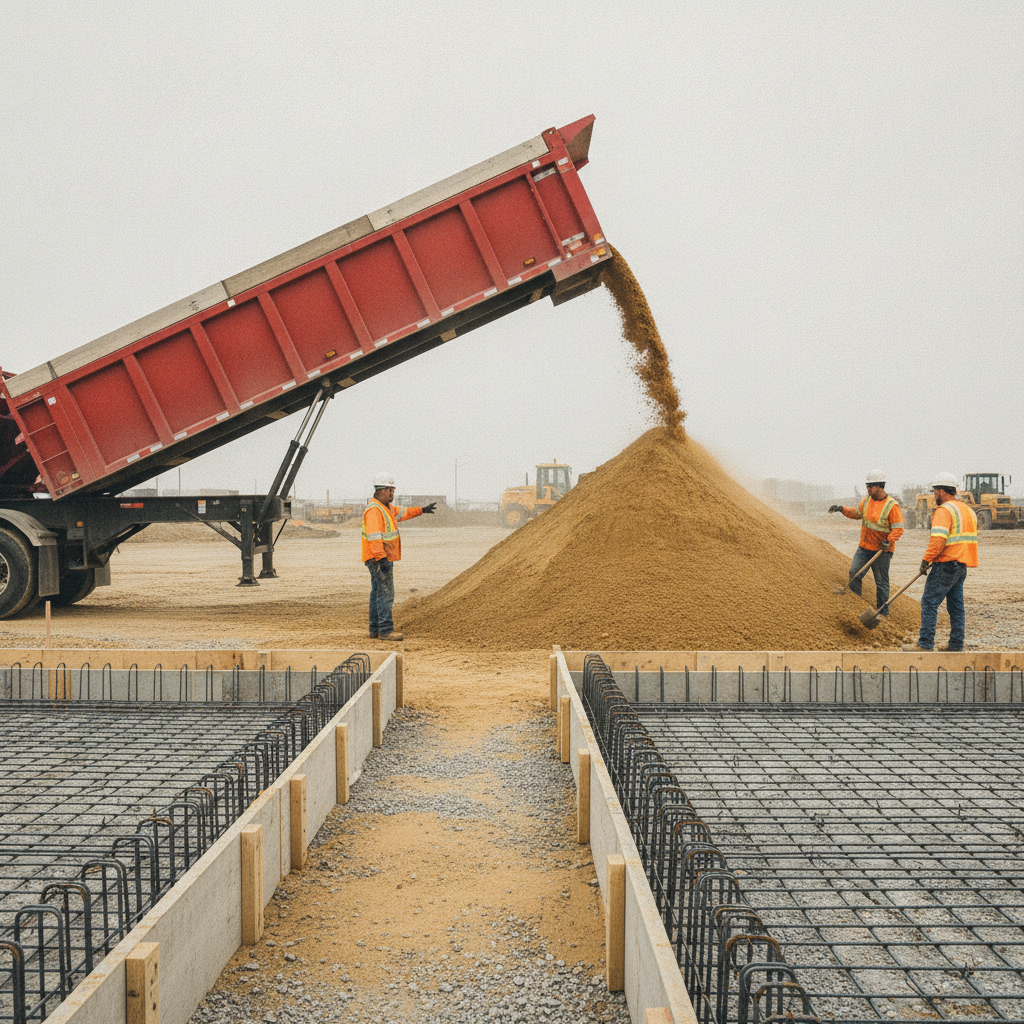
Jobsite prep, dust control, and safety
Prep a firm, clean laydown pad, route trucks on stabilized paths, and control dust with water. Document respirable crystalline silica controls and ensure PPE, signage, and spotters are in place. This preparation protects crews and prevents rework.
Safety and productivity rise together. Good pads and clear routing keep trucks moving and loaders efficient. Documenting dust controls and required PPE protects teams and keeps inspections simple.
- Laydown: geotextile or stone pads prevent mud pumping and contamination.
- Routing: stabilize entry/exit to minimize tracking and airborne dust.
- Silica controls: water application, HEPA vacuums on saws, and respiratory protection as required by task.
- Signage and spotters: reduce backing risks and keep pedestrians out of the drop zone.
Crews should record daily controls and keep delivery tickets with compaction notes. That simple packet often closes punch-list items faster.
Coordinating sand with rebar and mesh
Tie sand delivery to rebar and mesh schedules so base prep completes hours—not days—before placement. Integrating estimating, detailing, and trucking creates a single plan that reduces idle time and change orders.
Dass Rebar integrates estimating, detailing, fabrication, delivery, and on-site assembly. That means the same team planning your reinforcing steel also sequences sand drops, so crews compact, place steel, and form without gaps.
- Estimating linkage: quantities for slab base, trench runs, and pavers align with reinforcing takeoffs.
- Detailing linkage: shop drawings and rebar detailing define base thickness, chairs, and clearances that influence sand quantities.
- Field linkage: welded wire mesh, 10m, 15m, and 20m rebar bundles, and sand lifts arrive in a staggered, predictable rhythm.
For high-rise decks, super sacks staged with steel reduce clutter and help hoist coordinators keep lifts flowing. For grade-level pads, live-bottoms reduce pile height so mesh placement starts sooner.
Local considerations for Woodbridge
- Plan truck routing around peak times near Highway 50 corridors; staged windows keep sites near Highway 50 – Zum Queen Stop EB moving.
- Winter freeze-thaw swings affect moisture; pre-wet dry stockpiles and test moisture before compaction during cold snaps.
- Urban pads are tight; coordinate crane picks when sacks share lift plans with steel bundles near Fogal Rd / Highway 50.
Pricing considerations (without numbers)
Sand delivery budgets hinge on volume, distance, access complexity, and handling method. Clean pads, clear routes, and synchronized drops reduce re-handling, which often matters as much as the sand itself. Focus on total install efficiency, not the ticket alone.
We don’t publish prices, but we do help you optimize the whole workflow so the delivered ton actually becomes a spec base quickly. Here are the levers that most influence spend without quoting numbers.
- Volume and lead times: steadier demand and realistic windows tend to secure better availability.
- Access and handling: tight sites, interior lifts, or night work call for specialized equipment.
- Quality controls: consistent gradation and moisture guard against costly rework.
- Backhauls and routing: efficient routing shortens cycle times and increases reliability.
Our coordination with reinforcing steel reduces duplicate mobilizations. One plan, one schedule, fewer variables.
Best practices that hold on busy jobs
Write a single logistics plan that covers sand, steel, forms, and ready-mix. Map pads and routes, assign windows, and capture quality data on every drop. This integrated approach preserves productivity on complex urban sites.
Checklist
- Define sand type by use and verify gradation windows.
- Mark stockpile pads and protected routes on a site plan.
- Pre-stage loaders, compactors, and water for dust control.
- Book delivery methods that fit access and tonnage.
- Align slots with fabrication and delivery windows.
- Test moisture on arrival and record lift thickness and passes.
- File delivery tickets with gradation/moisture notes daily.
Teams that follow this checklist report steadier field output and fewer late-day surprises. It’s simple, and it works.
Need help sequencing sand with reinforcing steel? Our project managers can review your drawings, access notes, and pour schedule, then build one logistics plan that covers sand, mesh, and rebar delivery.
Tools and resources
Use simple tools—site plans, delivery windows, moisture meters, sieve stacks, and checklists—to keep quality and pace consistent. Pair these with clear communication to drivers and foremen, and you’ll see smoother days on site.
- Moisture meter: handheld devices help normalize compaction targets across drops.
- Sieve set: quick gradation checks keep the base uniform.
- Routing plan: one page with gates, pads, spotters, and time windows.
- Foreman’s checklist: a daily list that captures arrivals, tests, and issues.
For planning context, you can review a general construction management overview to see how logistics tools fit into broader project controls. For landscape bedding references, this paver sand tips article explains why consistent bedding matters to finish quality.
Case studies and examples
Coordinated sand and steel deliveries shorten cycles and simplify days. By sequencing base prep ahead of steel, crews often gain hours per pour and reduce loader travel by staging material near point-of-use.
High-rise deck with sacks
A downtown deck needed precise lifts. We staged super sacks with welded wire mesh and rebar bundles on the same hoist plan. Result: clean placements, quick compaction, and tidy decks for formwork the next morning.
Slab-on-grade with live-bottom
On a large pad, we used live-bottoms to limit pile height and segregation. Mesh followed within hours, and finishers hit target flatness. Delivery tickets and moisture notes documented a smooth day’s output.
Multi-site municipal work
Across municipal sites, synchronized sand and timely rebar delivery reduced idle equipment. One logistics plan set windows and routes, and crews kept compacting and placing without gaps.
If you’re planning complex commercial scopes, our commercial construction supplies guide explains how an integrated material plan reduces site risk.
Frequently asked questions
Most delivery questions center on access, moisture, and timing. The answers below cover lead times, delivery methods, quality checks, safety, and how to sync with reinforcing steel so field crews keep moving.
What lead time should I plan for construction sand delivery?
Plan 24–72 hours for most bulk deliveries, with longer windows during peak season or for specialty sands. If your site has tight access or requires super sacks, book earlier and include crane or hoist notes so the sequence is clear to all crews.
How do I choose between dump trucks, live-bottom trailers, and super sacks?
Match the method to access and tonnage. Use dumps for speed and open pads, live-bottoms for low piles and overhead constraints, and super sacks for interior or elevated placements. Your logistics plan should state gates, routes, spotters, and time windows.
What on-site tests matter most for sand quality?
Perform quick gradation checks with a sieve set and verify moisture with a handheld meter. Keep results with delivery tickets. Consistent gradation and moisture support uniform compaction, steady finishing rates, and better slab or bedding performance.
How do I coordinate sand drops with reinforcing steel?
Sequence base prep to complete shortly before steel arrives. Work with one planner who handles rebar estimating, detailing, fabrication, and delivery. This integrates drops with mesh and formwork so placement starts as soon as compacted lifts pass checks.
Conclusion and next steps
Treat construction sand delivery as part of one materials plan with steel and forms. Define specs, prep pads, book the right trucks, and record quality. The result is fewer delays, cleaner bases, and shorter cycles from base prep to pour.
Key takeaways:
- Pick the right sand for the use, then match the delivery method to access and tonnage.
- Prep clean pads, stabilize routes, and document moisture and gradation every drop.
- Integrate sand with reinforcing steel, mesh, and formwork to compress schedules.
Ready to align sand with your reinforcing plan? Start with our material management guide and book a coordination call with our team in Woodbridge.