
Fibreglass reinforcement bar (GFRP) is a non-corrosive, high-strength rebar made from glass fibers and resin. It is about one-quarter the weight of steel and won’t rust, making it ideal for chloride and moisture exposure. From our Woodbridge hub at 370 New Enterprise Way, Dass Rebar supplies and supports GFRP across Ontario.
By Navjot Dass — Dass Rebar
Last updated: 2026-06-15
At a Glance
GFRP rebar is a corrosion-proof, lightweight alternative to steel that reduces maintenance risks in chloride, moisture, and de-icing environments. Contractors choose it for bridge decks, parking structures, and wastewater facilities where durability and non-conductivity matter most.
This complete guide explains what GFRP is, why it matters, how it works in concrete, installation best practices, design checks, common applications, and procurement logistics. It also shows how Dass Rebar’s in-house estimating, detailing, fabrication, delivery, and on-site assembly help teams move from takeoff to pour without delays.
- What GFRP is and where it excels
- Design, detailing, and installation essentials
- Comparison: GFRP vs. black steel, epoxy-coated, stainless
- Spec checklist, cover/splice notes, and QC tips
- Procurement flow: estimating → shop drawings → fabrication → delivery
- Local insights for Woodbridge and the Regional Municipality of York
Table of Contents
Use this table of contents to jump to design, installation, comparison, or procurement sections. Each H2 provides a short featured answer so you can scan quickly and still get complete, stand‑alone guidance when you need detail.
- What Is Fiberglass Reinforcement Bar (GFRP)?
- Why GFRP Matters for Ontario Projects
- How GFRP Works in Concrete
- Types, Surfaces, and Splicing Approaches
- Specifications and Standards Checklist
- Design and Installation Best Practices
- Tools and Resources for Teams
- GFRP vs. Steel, Epoxy-Coated, and Stainless
- Use Cases and Mini Case Examples
- Pricing and Procurement Considerations (No Numbers)
- Frequently Asked Questions
- Conclusion and Key Takeaways
What Is Fiberglass Reinforcement Bar (GFRP)?
GFRP rebar is a composite reinforcement made of glass fibers embedded in a polymer resin. It is lightweight, non-corrosive, and electrically non-conductive, making it a durable alternative to carbon steel in chloride-rich or magnetically sensitive environments.
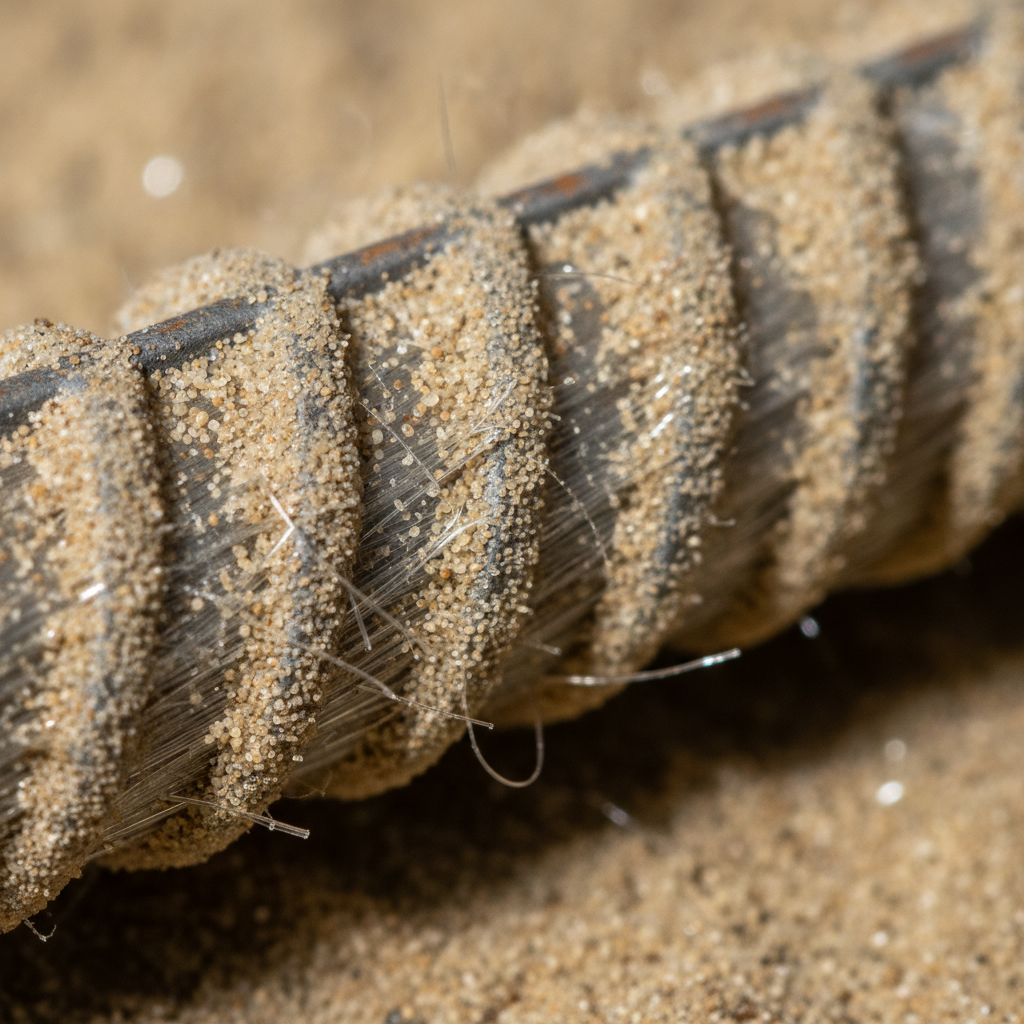
When you hear “fibreglass reinforcement bar,” you’re talking about GFRP, often informally called fiberglass rebar. It’s produced by pulling continuous glass fibers through a resin bath and die, then forming a sand-coated ribbed surface for concrete bond. Typical diameters correspond to familiar rebar sizes.
- Core materials: E-glass fibers + vinyl ester or epoxy resin matrix.
- Bond surface: Sand-coated or deformed profile for mechanical interlock.
- Weight: Roughly 70–80% lighter than steel for the same length.
- Corrosion: Will not rust; ideal around chlorides and moisture.
- Magnetism: Non-magnetic; good for MRI rooms and labs.
- Conductivity: Electrically non-conductive; reduces stray current issues.
Dass Rebar supports GFRP alongside conventional products and services such as rebar fabrication, in-house detailing, project management, and coordinated delivery. That integration reduces submittal loops and helps pours stay on schedule.
Why GFRP Matters for Ontario Projects
GFRP reduces corrosion risk, lowers handling strain, and improves lifecycle performance in freeze–thaw and de-icing salt conditions. In Woodbridge and the Regional Municipality of York, it helps extend service life for bridges, garages, and water facilities exposed to chlorides.
Ontario crews work through harsh winters, frequent freeze–thaw cycles, and de-icing salts. In those conditions, corrosion can drive premature repairs. GFRP’s non-corrosive nature directly tackles that risk while its lighter weight speeds handling and placement on congested decks.
- Durability uplift: No rusting, no spalling from corrosion expansion.
- Placement speed: Lower weight can reduce crew fatigue and crane picks.
- Service life: Helps preserve cover and reduce patch cycles in salt exposure.
- Non-metallic: Useful near utilities, electrified systems, or MRI facilities.
- Thermal behavior: Expansion compatible with concrete in typical ranges.
Local considerations for Woodbridge
- Plan deliveries to avoid peak traffic near Queen St / Highway 50; our trucking fleet coordinates time windows for predictable drops.
- Winter pours need blankets, heated enclosures, and moisture controls; schedule GFRP shipments alongside curing accessories before storms.
- For fast turnarounds near Fogal Rd / Highway 50, share bar lists early. Our in-house detailing compresses review cycles for municipal work.
For teams weighing coated steel alternatives, our overview on epoxy-coated reinforcing steel explains where coatings still shine and where GFRP’s non-corrosive matrix is the safer long-term bet.
How GFRP Works in Concrete
GFRP bonds to concrete through a sand-coated or profiled surface, transferring tension while concrete carries compression. Its non-corrosive fibers and resin matrix protect reinforcement from chloride attack, reducing the crack-and-spall cycle common with carbon steel.
Concrete excels in compression but needs reinforcement for tension and crack control. GFRP bars provide that tensile role with a ribbed or sanded surface that keys into the paste. Because there’s no iron to oxidize, you avoid the expansive corrosion products that fracture cover and accelerate repairs.
- Bond mechanics: Surface texture provides mechanical interlock; proper consolidation ensures full contact.
- Modulus: Lower modulus than steel; designs often use slightly more reinforcement or adjusted spacing for deflection criteria.
- Thermal expansion: Similar to concrete in common ranges, helping limit thermal stresses.
- Alkalinity: Resin systems are formulated for alkaline concrete environments.
- Electrical/EM: Non-conductive and non-magnetic; reduces interference issues.
On live projects, we align detailing early with our reinforcing steel guide principles: bar spacing for serviceability, splice strategy, and concrete cover by exposure class. That front-loading prevents field changes that can bog down pours.
Types, Surfaces, and Splicing Approaches
Most GFRP bars are sand-coated for bond and come straight or pre-bent from approved fabricators. Splicing uses lap lengths set by design; mechanical couplers are application-specific. Use non-metallic chairs and nylon ties to avoid galvanic pairing.
While “GFRP” sounds singular, you’ll see nuances that affect handling and design submittals. Choosing the right surface, shapes, supports, and splicing approach ensures performance and inspection clarity.
Common options
- Surface: Sand-coated or deformed profile for bond.
- Shapes: Straight lengths, stirrups, and pre-bent bars where permitted by supplier capabilities.
- Supports: Plastic/non-metallic chairs and spacers to maintain cover without corrosion risks.
- Ties: Nylon or approved non-metallic ties; avoid steel tie wire where it can introduce galvanic couples.
- Splicing: Designer-specified lap lengths; mechanical couplers by system approval.
Submittal tips
- Include manufacturer datasheets, tensile properties, modulus, guaranteed strength, and surface spec.
- Provide bar lists keyed to drawings with clear size mapping to GFRP equivalents.
- Note cover, minimum bend radius, and handling/storage instructions (no sharp bends on site).
- Call out non-metallic accessories and inspection points (pre-pour checklists).
Our teams coordinate these details alongside supplier comparison guidance so your inspector knows exactly what to expect at placement.
Specifications and Standards Checklist
Designers typically cite FRP design guides, material standards for GFRP bars, and project exposure classes. Include datasheets, bar markings, and quality records in submittals, and align shop drawings to the final mix design and cover requirements.
Well-structured specs reduce RFIs and accelerate approvals. A practical checklist helps:
- Material standard: Specify bar construction, surface (sand-coated), guaranteed properties, and environmental durability notes.
- Design methodology: Reference the project’s accepted FRP design approach for serviceability and strength checks.
- Exposure classification: Clarify chloride exposure, freeze–thaw, and chemical influences (e.g., wastewater).
- Cover and splices: State required cover and lap/anchorage assumptions used in design.
- Quality control: Include lot traceability, inspection criteria, and pre‑pour checklists.
For background context on reinforcement options you can share with stakeholders, see our overview of rebar and welded wire mesh types (external resource from our network).
Design and Installation Best Practices
Plan for GFRP’s lower modulus with serviceability checks, use non-metallic accessories, and protect bars from sharp bending. Coordinate early takeoffs, shop drawings, and delivery windows so reinforcement arrives packed by pour sequence.
Design and takeoff
- Confirm strength and serviceability criteria; adjust bar area or spacing where needed.
- Choose bar sizes that simplify placement and reduce congestion at intersections.
- Account for minimum bend radii in shape selections.
- Build a bar list aligned to pour breaks and site logistics.
Detailing and shop drawings
- Map steel sizes to GFRP equivalents clearly on the drawings.
- Call out splices, bends, cover, and non-metallic accessories.
- Bundle bars by zone; tag for quick identification on site.
- Run an RFI pass to preempt field questions.
Fabrication, delivery, and assembly
- Use approved fabricators for straight and pre-bent bars.
- Stage deliveries to match pour sequence; minimize site double-handling.
- Store off the ground on timber dunnage; avoid point loads and sharp edges.
- Use plastic chairs/spacers and nylon ties during placement.
In our experience, pairing these steps with our Ontario rebar planning guide reduces rework and inspection friction. For coated-steel alternatives, see our epoxy-coated steel guide to compare detailing impacts.
Tools and Resources for Teams
Use a consolidated submittal package: datasheets, bar lists, shop drawings, storage/handling instructions, and pre‑pour checklists. Organize files by pour sequence and zone so field teams and inspectors can verify quickly.
- Editable templates: Bar list CSV, submittal cover sheet, and pre‑pour checklist.
- Design references: Project-approved FRP design approach, exposure notes, and cover tables.
- Fabrication notes: Minimum bend radii, straight vs pre-bent availability, and labeling scheme.
- Logistics plan: Delivery windows, crane picks, and laydown areas with weather contingencies.
Need a hand pulling these pieces together? Our in-house estimating and detailing teams build submittal-ready packages that integrate with your schedule and on-site workflows.
Talk to a specialist. If you’re evaluating GFRP on a live job, we’ll review drawings, exposure class, and pour sequence, then return a buildable bar list and delivery plan.
GFRP vs. Steel, Epoxy-Coated, and Stainless
Use GFRP where corrosion risk, non-conductivity, or weight reduction are priorities. Choose coated or stainless steel where modulus matching, high-temperature performance, or legacy specs require metallic reinforcement.
Each reinforcement family trades off different properties. This comparison highlights practical factors crews weigh in preconstruction.
| Property | GFRP (Fiberglass) | Black Steel | Epoxy-Coated Steel | Stainless Steel |
|---|---|---|---|---|
| Corrosion behavior | Non-corrosive; no rust | Corrodes in chlorides | Improved, coating dependent | Excellent corrosion resistance |
| Weight per length | ~25% of steel | 100% baseline | 100% baseline | ~98–100% baseline |
| Electrical/magnetic | Non-conductive, non-magnetic | Conductive, magnetic | Conductive, magnetic | Conductive, low magnetic grades |
| Modulus (stiffness) | Lower than steel | High | High | High |
| Thermal expansion | Similar to concrete | Close to concrete | Close to concrete | Close to concrete |
| Typical uses | Bridge decks, waterfront, MRIs | General purpose | Parking, bridges (legacy specs) | High-chloride, premium specs |
| Field handling | Light; no sparks | Heavy; weldable | Heavy; coating care | Heavy; cut, not weld |
For broader reinforcement selection context, our complete reinforcing guide explains how exposure class, serviceability, and constructability drive material choice.
Use Cases and Mini Case Examples
GFRP shines anywhere chloride and moisture exposure jeopardize steel. We see strong fit in bridge decks, parking structures, waterfront walls, and wastewater facilities—plus specialty zones like MRI suites where non-magnetic reinforcement is required.
Bridge and roadway decks
- Non-corrosive performance under de-icing salts and spray.
- Lower weight helps with manual placement on tight closures.
- Non-conductive properties can be beneficial around utilities.
Parking structures
- Reduced rust-driven spalls on top mats and parapets.
- Less maintenance disruption over the garage lifecycle.
- Suitable for parapets, barrier walls, and topping slabs.
Water and wastewater
- Chloride and chemical environments favor non-corrosive reinforcement.
- Use for tanks, channels, decks, and equipment pads.
Dass Rebar supports these applications with coordinated planning and a dedicated trucking fleet. Our Ontario portfolio includes residential towers like The Hawthorne Residences (Toronto), The Grand at Universal City (Pickering), and Hickory Terraces (Waterloo)—experience that translates into predictable reinforcing delivery even on city-center sites.
Pricing and Procurement Considerations (No Numbers)
Focus on lifecycle value, not just unit rates. Align GFRP’s durability benefits with exposure class and maintenance risks, then coordinate bar lists, shop drawings, and staged deliveries to protect schedule and reduce field handling.
- Value framing: Weigh corrosion risk, downtime from repairs, and inspection load vs. material option.
- Lead times: Share sizes and shapes early; pre-bent bars may require additional fabrication windows.
- Submittals: Include datasheets, guaranteed properties, storage/handling notes, and non-metallic accessories.
- Delivery plan: Stage by pour sequence; lock delivery windows to crew availability.
For an overview of why builders lean on an MTO-approved partner, see this background piece on trusted reinforcing supply (external). It outlines supply assurance and coordination practices used across Ontario jobs.
Frequently Asked Questions
These quick answers address the most common questions we get from Ontario contractors about GFRP—covering where it fits, how it installs, and what to consider during design and procurement.
Where should I prioritize GFRP over steel?
Use GFRP in chloride or moisture-heavy zones like bridge decks, parking structures, waterfront walls, and wastewater facilities. It’s also useful in MRI suites or labs where non-magnetic, non-conductive reinforcement is required.
Can I bend GFRP on site like steel?
No. Follow the minimum bend radius rules and order pre-bent pieces from approved fabricators. Avoid sharp on-site bends; coordinate shape approvals during detailing to keep inspections smooth.
Do I need special chairs and ties?
Yes. Use plastic or other non-metallic chairs and spacers, plus nylon or approved non-metallic ties. This prevents galvanic pairing and protects the non-corrosive reinforcement system.
How does GFRP affect deflection checks?
GFRP has a lower modulus than steel, so serviceability checks are important. Designers may adjust bar area or spacing to manage deflections while meeting strength and crack control targets.
Can I mix GFRP with steel in the same element?
It depends on design intent. Mixed systems appear in some details, but you must consider different stiffness, thermal behavior, and splicing. Keep the spec clear and align inspections to the final plan.
Conclusion and Key Takeaways
GFRP rebar delivers non-corrosive durability, low weight, and non-conductivity—advantages that map directly to Ontario’s salt and freeze–thaw realities. With integrated estimating-to-assembly support, Dass Rebar helps teams implement GFRP without schedule drag.
- GFRP eliminates corrosion-driven spalls and reduces maintenance interruptions.
- Plan for serviceability with thoughtful bar area and spacing choices.
- Use non-metallic accessories and protect bars from sharp bending.
- Coordinate submittals and deliveries by pour sequence to keep crews moving.
- Lean on integrated services—estimating, detailing, fabrication, delivery, and assembly—for predictable results.
Next steps: Share drawings and exposure class, request a submittal-ready bar list, and align delivery windows with your pour plan. Our Woodbridge team is ready to help.