
Galvanized reinforcing steel is carbon-steel rebar coated with bonded zinc to resist corrosion in concrete. The zinc layer provides barrier and sacrificial protection, extending service life for decks, garages, bridges, and seawalls. From our Woodbridge yard at 370 New Enterprise Way, Dass Rebar supports Ontario teams with detailing, fabrication, delivery, and on-site assembly for durable, compliant work.
By Navjot Dass • Last updated: 2026-06-17
Overview
Galvanized reinforcing steel uses a metallurgically bonded zinc coating to shield rebar from chlorides and moisture. It combines tough handling performance with corrosion resistance, making it ideal for winter-salted structures and marine splash zones. This guide explains what it is, how it works, when to specify it, and how to install it right.
Here’s what you’ll learn in this complete, contractor-focused guide:
- What galvanized rebar is, where it excels, and how hot-dip galvanizing bonds zinc to steel
- How to compare galvanized rebar with epoxy-coated steel and GFRP for real projects
- Detailing, handling, storage, and inspection practices that prevent rework
- Submittals, approvals, and logistics that keep pours on schedule
- Ontario-grounded examples and checklists you can use this week
Local considerations for Woodbridge
- Plan truck windows near Queen St / Highway 50 to avoid peak inbound congestion to job sites.
- Account for winter deicing programs across the Regional Municipality of York when setting exposure classes.
- Stage galvanized accessories at our Woodbridge yard for pre-inspection before sequence-labeled drop-offs.
What is galvanized reinforcing steel?
Galvanized reinforcing steel is deformed or plain steel rebar with a continuous zinc coating—most commonly via hot-dip galvanizing—that resists chloride-driven corrosion in concrete. Zinc forms intermetallic layers that bond to the steel, delivering both barrier protection and sacrificial (galvanic) defense at coating holidays.
In practical terms, you’re getting familiar rebar—with the same steel core strength—wrapped in a bonded zinc system that slows rust formation when chlorides or carbonation are present. For northern climates and waterfront work, that extra layer delays corrosion initiation and reduces section loss over time.
- Typical use cases:
- Bridge decks, parapets, and barriers exposed to deicing salts
- Parking podiums and ramps with frequent salt carry-in
- Marine and waterfront elements in splash and spray zones
- Foundations and retaining walls adjacent to salted roadways
- How it aligns with Dass Rebar’s services:
- We provide in-house estimating and detailing to place galvanized bars where they add the most value.
- Our fabrication and delivery teams label bundles by pour sequence to simplify placement.
- On-site assembly support helps protect coatings and verify cover before concrete.
For design teams comparing reinforcement options, galvanized rebar offers a solid mix of durability and constructability. It’s still steel, so you keep conventional anchorage, bar bending, and inspection practices, while gaining resistance to chloride attack.
Why galvanized rebar matters
Galvanized rebar reduces corrosion risk in chloride-exposed concrete by combining barrier and sacrificial protection. It tolerates jobsite handling better than fragile film coatings and helps owners hit service-life targets, reducing unplanned closures and extending repair intervals for high-use assets.
Here’s the thing: decks and podiums see concentrated chlorides every winter, then spring thaw pushes moisture into cracks. That’s the perfect recipe for rebar corrosion. A bonded zinc layer delays that first rust event and slows the reaction if the surface is nicked during placement.
- Why owners care
- Fewer maintenance cycles and disruptive closures over the life of the structure
- Smoother inspections and easier visual checks pre-pour
- Better alignment with long-term durability goals and asset plans
- Why contractors care
- Coating resists typical abrasion during tying and placement
- Field cuts and small holidays can be repaired with zinc-rich products
- Scheduling flexibility improves when coatings aren’t overly delicate
- Why designers care
- Steel properties and detailing rules remain familiar
- Barrier plus sacrificial action suits chloride-heavy exposure classes
- Compatible with standard concrete cover and crack-control strategies
For Ontario jobs, we’ve seen the galvanized option perform well on podium slabs that see heavy winter salt tracking. When coordinated with crack control and proper cover, it’s a pragmatic way to push out repair timelines.
How hot-dip galvanizing works
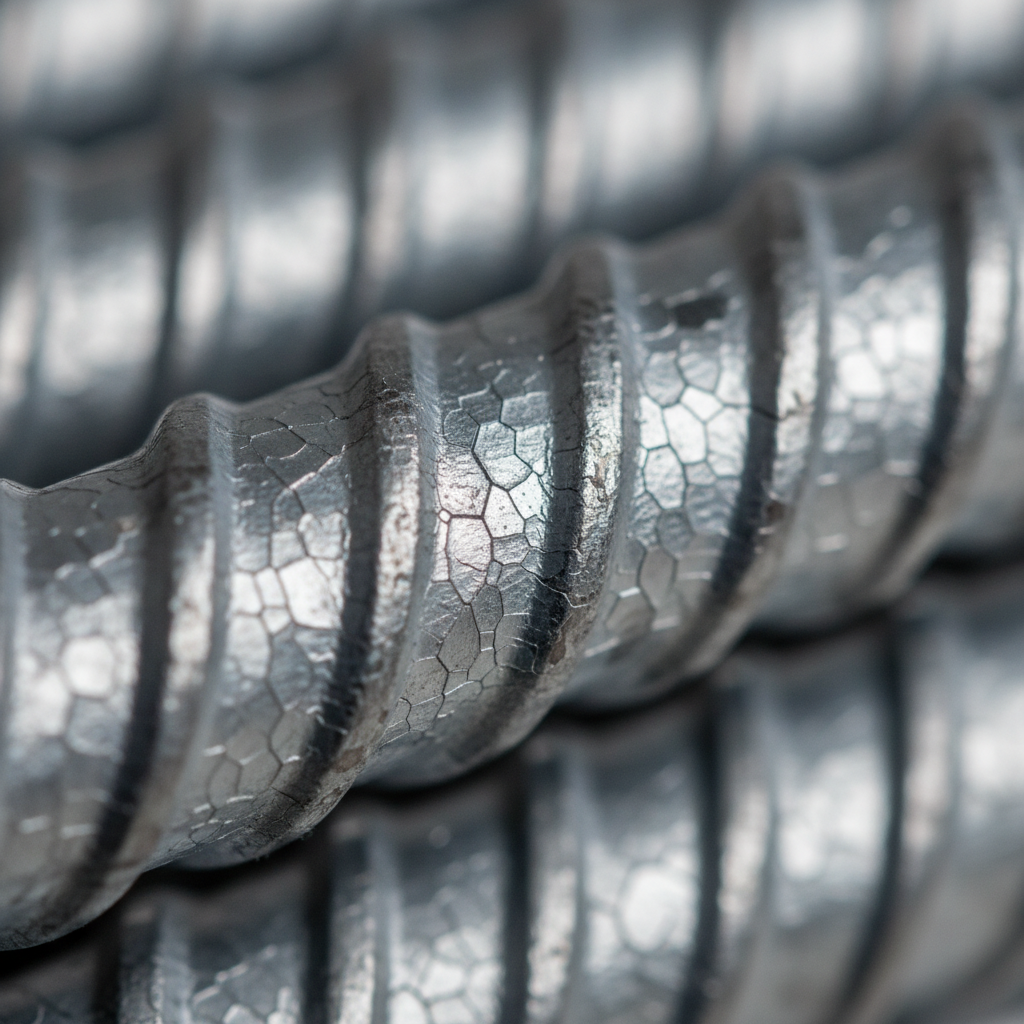
Hot-dip galvanizing immerses cleaned steel in molten zinc to form zinc–iron intermetallic layers topped by pure zinc. The metallurgical bond resists abrasion during fabrication and placement. If the coating is breached, zinc acts as a sacrificial anode, protecting the underlying steel in concrete’s alkaline environment.
Process overview—what matters for reinforced concrete:
- Surface prep: degreasing, pickling, and fluxing remove oils and oxides.
- Immersion: bars dip into a controlled-temperature zinc bath for full coverage.
- Alloy formation: zinc and iron react to create graded intermetallic layers.
- Cooling: excess zinc drains; bars cool to stabilize the coating.
- Inspection: coating continuity and mass are verified against the spec.
Why this works in concrete:
- Galvanic defense: zinc corrodes preferentially at small defects, protecting steel.
- Patina formation: in high-pH pore solution, zinc carbonate forms and slows kinetics.
- Bond: rib geometry and surface profile maintain reliable bond to concrete.
In our shop, bend radii, bar marks, and delivery order are set during detailing so galvanizing and fabrication align with schedule realities. That planning limits on-site touch-ups and speeds inspections.
Types, approaches, and alternatives
Most chloride-exposed projects use hot-dip galvanized rebar. Alternatives include epoxy-coated steel and GFRP, each with trade-offs. Choose based on exposure class, target service life, constructability, inspection tolerance, and approvals. Galvanized offers robust handling; GFRP provides corrosion immunity with different design rules.
Common reinforcement options for chloride exposure
| Option | Corrosion behavior | Handling/abrasion | Magnetic/electrical | Typical uses |
|---|---|---|---|---|
| Hot-dip galvanized steel | Sacrificial zinc + barrier | High toughness in handling | Magnetic, conductive | Decks, podiums, seawalls |
| Epoxy-coated steel (ECR) | Barrier film | Sensitive to nicks; inspect closely | Magnetic, conductive | Bridge decks, barriers |
| GFRP (glass fiber) | Corrosion-immune composite | Rigid; no rusting | Non-magnetic, non-conductive | Parapets, transit, MRI zones |
| Stainless steel rebar | Passive film; high resistance | Good handling resistance | Magnetic varies | Premium/critical elements |
To dive deeper on coatings, see our in-depth comparison in the epoxy-coated reinforcing steel guide and our overview of fiberglass reinforcement (GFRP). For broader context, our reinforcing steel guide summarizes how each option affects constructability and schedule.
When galvanized makes the shortlist
- Parking podiums and ramps with heavy winter salt tracking
- Bridge parapets and barriers with spray and splash exposure
- Seawalls, piers, and bulkheads in tidal splash zones
- Retaining walls near salted roadways and parking entrances
What to confirm in specifications
- Coating class and inspection acceptance criteria
- Field-repair product data for cuts and abrasion points
- Sequence: bend-before vs. bend-after galvanizing requirements
- Compatible tie wire, chairs, and spacers to avoid bimetallic issues
Best practices for detailing, handling, and installation
Coordinate bend radii and bar marks, protect coatings during handling, and use compatible accessories. Repair field cuts with zinc-rich products, verify cover, and document checks pre-pour. Tight coordination across estimating, detailing, fabrication, delivery, and assembly prevents delays and touch-up churn.
Detailing and fabrication
- Call out bend radii and bar codes so fabrication aligns with galvanizing steps.
- Note inspection points and repair procedures on shop drawings for clarity.
- Bundle and label by pour sequence; preload delivery order to match crane picks.
- For complex cages, consider prefabrication to reduce on-site abrasion risk.
Handling, storage, and jobsite practices
- Store off-grade on dunnage with airflow; keep bundles drained and clean.
- Use nylon slings or padded forks; avoid dragging across abrasive decks.
- Keep wet cement paste off stored bundles; place soon after forming.
- Repair visible holidays immediately with approved zinc-rich materials.
Inspection and quality control
- Log coating checks and touch-ups by grid location; photo before pours.
- Verify cover, chairs, and tie wire compatibility in high-chloride zones.
- Confirm crack-control steel and joints match durability assumptions.
Need a framework to align teams? Our rebar basics guide outlines terminology, drawings, and mark systems that reduce field confusion. It pairs well with this article when onboarding new crew members.
Need help translating a spec into sequence-ready deliveries? Our in-house estimating, detailing, fabrication, delivery, and assembly teams work as one unit—so your galvanized mats arrive labeled, inspected, and ready to tie.
Tools, standards, and resources
Use clear standards for galvanizing, bond, and inspection; align submittals to the spec; and train crews on handling and repair. For broader galvanized steel practices across trades, consult established primers that reinforce best-in-class corrosion thinking.
- Drawing notes and submittals that call out coating class, inspection, and repair materials
- Crew briefings on storage, lifting, and touch-up methods before the first pour
- Visual checklists for coating continuity in high-traffic zones and congested cages
For additional galvanized steel fundamentals and jobsite handling outside of rebar-only contexts, see these primers on framing and installation logic from our sister brand: the galvanized steel studs guide, a reference on heavy-gauge framing best practices, and this overview of 16 gauge metal studs. While focused on framing, the handling principles echo what keeps zinc coatings intact on rebar too.
Case studies and field examples
Across podiums, seawalls, and bridge barriers, galvanized reinforcement helps crews move faster with fewer coating repairs. These scenarios show how sequencing, accessories, and QC combine to keep projects on schedule while protecting the zinc layer that safeguards the steel.
Parking podium over retail
- Challenge: Weekly winter salt loading and tight weekend pour windows.
- Approach: Pre-approved shop drawings; galvanized tie wire and chairs; bundles kitted by bay.
- Result: Predictable deck turnovers; minimal touch-ups logged pre-pour.
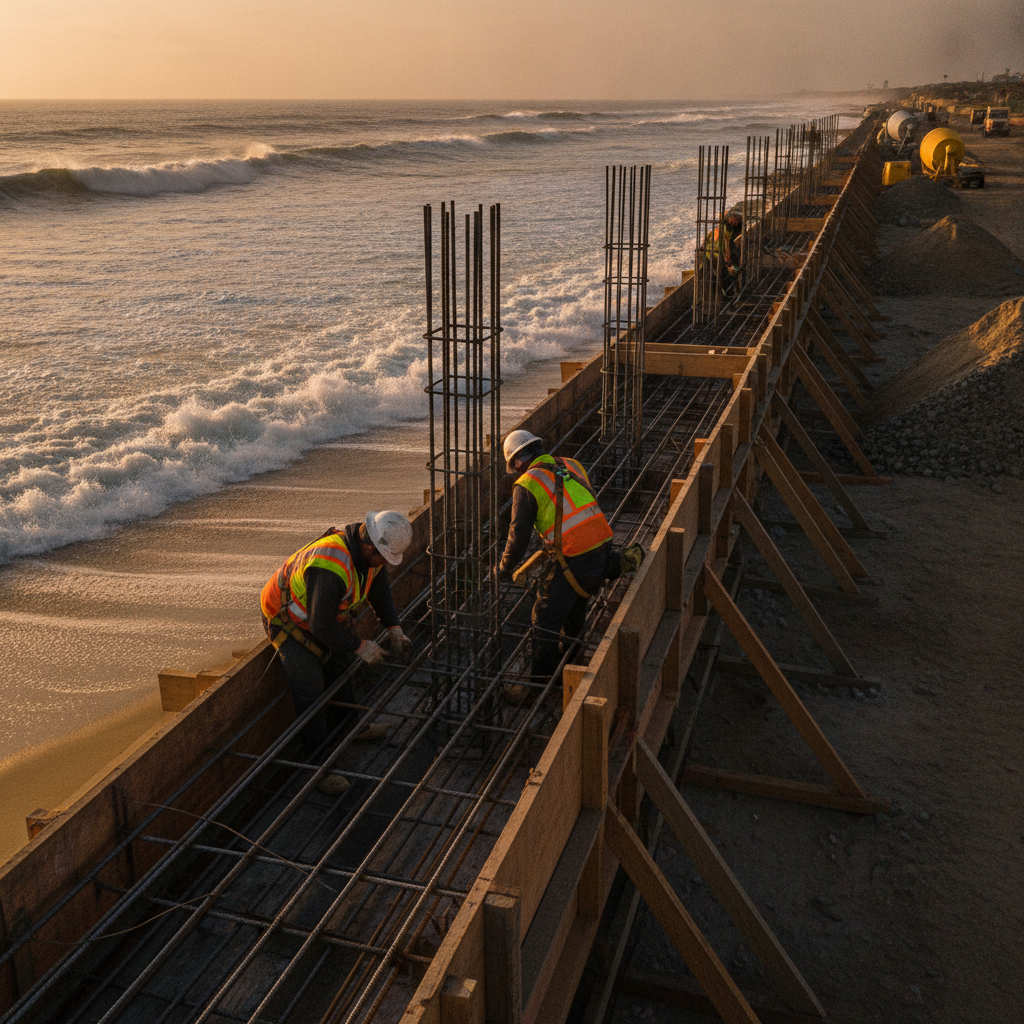
Coastal seawall retrofit
- Challenge: Splash-zone chlorides and abrasion risk near bracing.
- Approach: Prefabricated galvanized cages; field repairs documented with photos.
- Result: Faster placements and shorter punch lists.
Bridge barrier replacement
- Challenge: Night closures with strict inspection checkpoints.
- Approach: Sequence-labeled deliveries; pre-pour coating checks and sign-offs.
- Result: On-time reopenings and reduced rework.
Procurement and specification considerations
Confirm exposure class, service-life targets, galvanizing standard, and inspection criteria at bid time. Coordinate bend sequences, repair materials, and delivery labeling early. In Woodbridge and the Regional Municipality of York, aligned logistics and pre-inspection keep winter schedules intact.
- At bid: identify elements requiring galvanized reinforcement; verify coating class and inspection methods.
- Submittals: include mill certs, galvanizing certificates, and zinc-rich repair data sheets.
- Logistics: align deliveries to pour breaks; label by grid location and segment.
- Crew prep: brief teams on storage, lifting, and immediate touch-up steps.
Need to synchronize trucks and cranes? Our dedicated fleet and project coordinators stage drop-offs so bars arrive in the order you place them. Learn how timing affects outcomes in our note on why timely rebar delivery matters.
Frequently asked questions
Builders ask about bond, bending, repairs, and selection. Bottom line: galvanized rebar bonds reliably, is repairable with zinc-rich products, and fits projects where chloride exposure and handling toughness are priorities. Choose among galvanized, epoxy-coated, and GFRP based on exposure, life, and constructability.
Does galvanized rebar bond well to concrete?
Yes. With proper surface profile and placement, galvanized rebar develops dependable bond comparable to black steel. Crack control, cover, and consolidation remain key to performance regardless of coating.
Can you repair field cuts or nicks on galvanized bars?
Yes. Use approved zinc-rich repair compounds following the specification’s surface prep and thickness guidance. Document locations and verify continuity before concrete placement.
When is galvanized better than epoxy-coated reinforcement?
Where robust handling is needed and chloride exposure is significant, galvanized offers both barrier and sacrificial protection with good abrasion tolerance. Epoxy-coated bars perform well when handling damage is minimized and inspection is rigorous.
Is GFRP a substitute for galvanized steel?
GFRP is corrosion-immune and ideal for non-magnetic or highly aggressive environments, but it follows different design rules and has distinct handling and anchorage details. Many specs use GFRP selectively alongside steel reinforcement.
Key takeaways
Galvanized reinforcing steel pairs jobsite-tough coatings with sacrificial corrosion protection. Specify clearly, coordinate fabrication and logistics, and train crews on handling and touch-ups. Done right, it helps Ontario structures weather chloride exposure and meet service-life goals with fewer surprises.
- Galvanized rebar is still steel—familiar detailing and inspection, better chloride defense.
- Barrier plus sacrificial action suits podiums, barriers, and waterfront elements.
- Sequence-labeled deliveries and compatible accessories prevent rework.
- QC photos and touch-up logs make inspections simpler and faster.
- Partnering with one provider streamlines RFIs and pour sequencing.
Conclusion and next steps
Galvanized reinforcing steel provides durable, inspection-friendly protection for chloride-prone concrete. With disciplined detailing, fabrication, delivery, and on-site practices, it supports longer service life and steadier schedules across Ontario’s salted and coastal environments.
Want a second set of eyes on your spec or pour sequence? Dass Rebar’s in-house estimating, detailing, fabrication, delivery, and assembly teams align drawings, logistics, and inspections—so your galvanized reinforcement arrives on time and ready to place. Reach us in Woodbridge to coordinate your next delivery window.