
Rebar detailing companies create precise shop drawings and bar lists that turn structural designs into buildable reinforcement. In Woodbridge, accurate detailing shortens schedules, reduces rework, and prevents field clashes. Dass Rebar’s in-house team coordinates takeoffs, fabrication, delivery, and assembly so crews pour on time with fewer RFIs and change orders.
By Navjot Dass • Last updated: 2026-06-24
Above-Fold Guide: Start Here
Use this guide to evaluate rebar detailing partners, understand deliverables, and streamline coordination from takeoff through installation. You’ll see how in-house detailing at Dass Rebar reduces delays, where 15M rebar and welded wire mesh fit, and how to align procurement, trucking, and site crews for dependable pours.
- What rebar detailing is, why it matters, and where it saves days on schedule
- How rebar detailing companies operate and integrate with fabrication and field teams
- Methods and deliverables: shop drawings, 3D models, bar lists, tags, and revision control
- Best practices that slash rework and keep inspections clean
- Tools and resources used by professional detailers in Ontario
- Mini case examples from GTA jobs (high-rise, commercial, municipal)
Quick Summary
Rebar detailing translates structural intent into installation-ready drawings and schedules. The fastest projects pair detailing with fabrication, delivery, and assembly in one workflow. Dass Rebar’s MTO-approved team coordinates takeoffs, shop drawings, cutting, bending, and trucking so pours proceed without last-minute bar changes.
- Core outputs: plans, elevations, bar bending schedules, placing drawings, and tags
- When to engage: immediately after IFC structural drawings are issued
- Where it pays off: congested cores, transfer slabs, mat foundations, and shear walls
- Integration: estimating → detailing → fabrication → delivery → assembly
What Is Rebar Detailing?
Rebar detailing is the preparation of accurate, fabrication-ready drawings and bar schedules for reinforcing steel. It resolves ambiguities in structural plans, defines bar sizes and shapes, and sequences placement so fabrication and field crews can build safely, quickly, and to code.
At its core, detailing turns design intent into constructible instructions. For Ontario work, that includes Grade 400W and 500W bars (with epoxy-coated options), welded wire mesh, and GFRB when specified.
- Scope: placing drawings, bar marks, shapes, laps, hooks, and splice locations
- Standards: clear cover, development length, bar spacing, and minimum bends per applicable codes
- Materials: 10M, 15M, 20M sizes and mesh sheets such as 6″x6″ at 6/6, 9/9, and 10/10
- Workflow: review IFC → Requests for Information (RFIs) → coordinated shop drawings → approved for fabrication
In our experience on GTA high-rise cores, clean placing drawings often shave days off the cycle because installers don’t stop to resolve bar congestion at shear-wall intersections.
Why Rebar Detailing Matters
Good detailing prevents clashes, reduces rework, and accelerates inspections. Clear bar tags, lap locations, and congestion studies let crews install once—without backtracking. Projects with integrated detailing and fabrication see smoother deliveries and fewer schedule slips.
- Schedule: Less time lost to field questions and re-tying congested zones
- Quality: Inspections pass faster when cover, laps, and spacing are unambiguous
- Safety: Planned lifts and cages reduce ad hoc handling on deck
- Logistics: Tagged bundles, timed to pours, keep laydown areas organized
On transfer slabs and podium decks, planning 15M and 20M bar patterns with staged delivery reduces crane picks and deck clutter. That sequencing is baked into shop drawings and bar lists.
How Rebar Detailing Companies Work
Professional detailers review IFC drawings, coordinate RFIs, produce shop drawings and bar lists, and integrate directly with fabrication and delivery. The best workflows connect estimating, detailing, cutting, bending, trucking, and on-site assembly under one coordinated plan.
- Design intake: Structural IFC set, specs, and schedules are reviewed.
- Constructability check: Laps, hooks, splice zones, and congestion are validated.
- RFIs: Conflicts are clarified early with engineers of record.
- Shop drawings: Plans/elevations with marks, shapes, and bar lengths.
- Bar bending schedules: Exported for cutting and bending.
- Delivery plan: Bundling and truck staging aligned to pour sequence.
- Field support: Revisions, substitutions, and inspection responses.
Because Dass Rebar runs estimating, detailing, fabrication, delivery, and assembly in-house, we keep iterations tight and reduce handoff delays between companies.
Local considerations for Woodbridge
- Stagger deliveries to avoid peak traffic near Queen St / Highway 50, especially when multiple pours occur the same week.
- Winter pours need earlier bar staging; pre-position epoxy-coated 15M near heated zones to limit snow and ice handling.
- Coordinate laydown near Fogal Rd / Highway 50 access so cranes can pick directly from tagged bundles with minimal street occupancy.
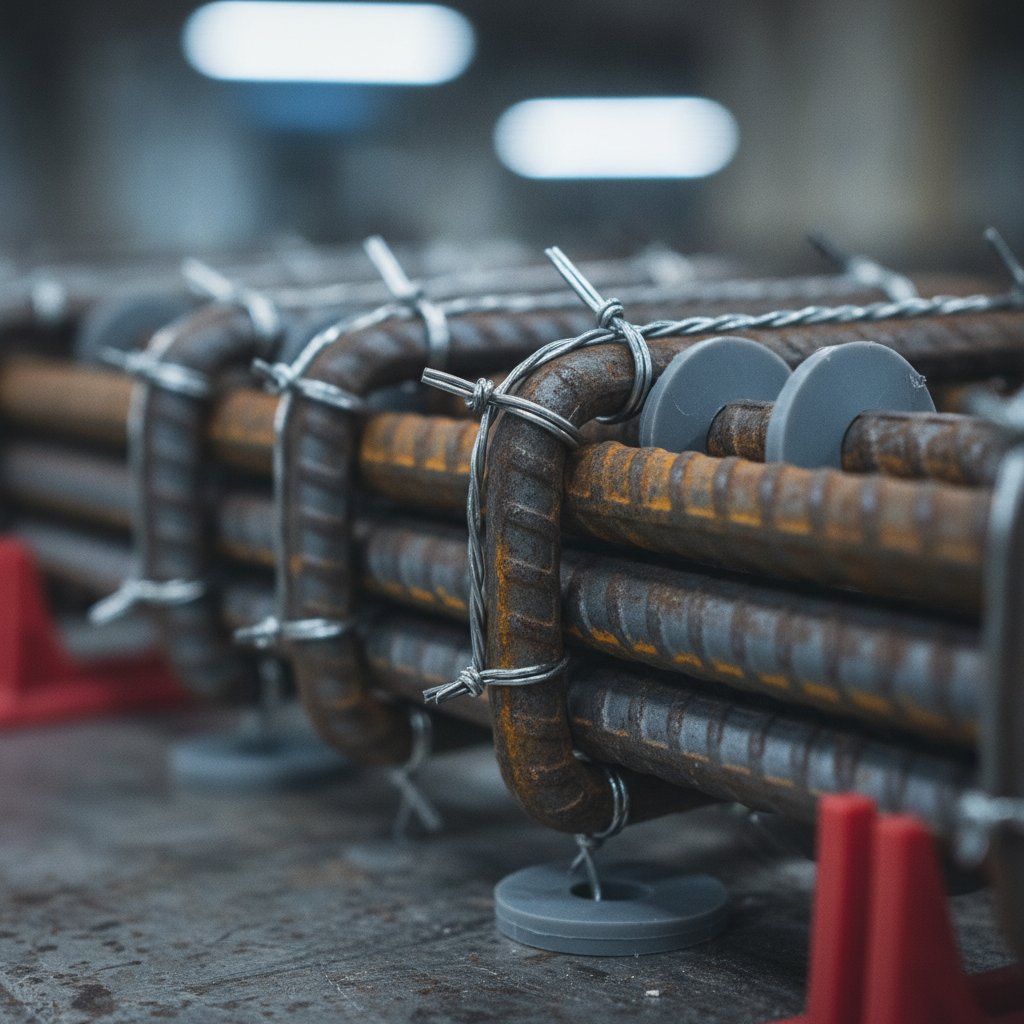
Types, Methods, and Approaches
Detailers use 2D placing drawings, 3D reinforcement models, and standardized bar schedules to translate design into constructible reinforcement. The right approach depends on complexity, congestion, and coordination needs across trades.
2D placing drawings
- Use when: Elements are repetitive (slabs, typical beams) and changes are minor
- Benefits: Fast approvals, lightweight files, simple field reference
- Action: Standardize title blocks, revision notes, and bar mark conventions to cut review time
3D rebar modeling
- Use when: Congestion is high (cores, transfer girders) or MEP coordination is tight
- Benefits: Clash detection, precise cut lengths, and realistic cage sequencing
- Action: Employ 3D for shear-wall intersections and mat foundations where visualization prevents rework
Standardized bar schedules and tags
- Use: Consistent shape codes and bend radii to streamline fabrication
- Benefits: Faster cutting/bending and fewer shop-floor questions
- Action: Tie bar lists to pour breaks; tag bundles by elevation and sequence
For deeper context on drawing conventions, see our detailing drawings overview and this companion detailing basics guide.
Best Practices That Keep Schedules Safe
Lock constructability early, standardize details, and align deliveries to pours. Clear drawings and staged logistics prevent field delays, while MTO-compliant materials ensure inspection success on municipal and provincial work.
- Engage early: Start detailing alongside estimating so long-lead bars and mesh are forecasted.
- Standardize notes: Reuse cover, lap, and splice notes across drawings to reduce RFIs.
- Bundle smart: Group 15M and 20M by elevation and sequence; minimize double-handling.
- QA/QC loops: Run internal checks on hooks, bends, and bar marks before submittal.
- Delivery windows: Stage trucks to jobsite capacity; avoid overfilling laydown space.
- Weather planning: Protect epoxy-coated bars; keep mesh flat to avoid wavy placements.
We integrate these practices across detailing, fabrication, and our trucking fleet so materials land onsite exactly when crews are ready.
Tools and Resources the Pros Use
Professional detailers combine CAD/BIM platforms with bar list automation, internal QA checklists, and coordinated logistics. When detailing, fabrication, and delivery are under one roof, information flows without transcription errors.
- Detailing platforms: 2D CAD for typical work; 3D modeling for complex cores and mats
- Data outputs: Bar bending schedules exported directly to the shop floor
- Materials: Grade 500W and 400W, epoxy-coated options, and GFRB where specified
- Mesh: 6″x6″ sheets at 6/6, 9/9, or 10/10 gauges stocked for quick turns
- Logistics: Dedicated trucking aligns bundles and cages with pour sequences
For a broader perspective on reinforcement selection, explore our steel reinforcement suppliers guide and rebar supply guide.

How Detailing Connects to Fabrication, Delivery, and Assembly
When one team owns detailing through assembly, handoffs disappear. Dass Rebar sequences shop drawings into cutting, bending, bundling, trucking, and onsite assembly so each pour has exactly what it needs—no more, no less.
| Phase | Primary Output | Field Impact |
|---|---|---|
| Estimating | Preliminary takeoffs and assumptions | Forecasts labor and crane picks |
| Detailing | Shop drawings, RFIs, bar lists | Constructible, clash-free plans |
| Fabrication | Cut/bent bars, welded cages | Less onsite bending and tying |
| Delivery | Tagged bundles by pour | Clean laydown and faster picks |
| Assembly | Pre-tied components, supports | Predictable cycle times |
For more on fabrication alignment, see our fabrication guide for Ontario and the extended fabrication companies guide.
Specifying Materials Smartly (10M, 15M, 20M, Mesh, GFRB)
Match bar sizes and coatings to exposure, cover, and constructability. Stocked 10M and 15M handle many slabs and walls; epoxy-coated bars protect in deicing or marine exposure; mesh accelerates slab placement; GFRB applies where corrosion resistance is critical by spec.
- 10M/15M: Common in walls and slabs; balance weight, spacing, and tying effort
- 20M: Use in higher-load beams, mats, and transfer elements where specified
- Epoxy-coated: Plan handling and protection; avoid coating damage during tying
- Mesh: 6″x6″ at 6/6, 9/9, or 10/10 reduces individual bar handling on large deck pours
- GFRB: Non-corrosive reinforcement used per engineer’s design requirements
Our detailing aligns orders with real inventory and dedicated trucking so the right material lands onsite when crews need it.
Choosing the Right Provider
Select a detailing partner that also coordinates fabrication, delivery, and onsite support. Integrated teams eliminate handoffs and reduce delays, especially on fast-cycle cores and congested transfer slabs.
- In-house integration: Look for estimating, detailing, fabrication, delivery, and assembly under one roof.
- MTO-approved supplier: Essential for municipal and provincial infrastructure work.
- Stock readiness: Confirm access to Grade 400W/500W, epoxy-coated bars, and mesh.
- Trucking fleet: Ask how bundles are staged to pour sequences and site capacity.
- Project record: Seek local builds similar to yours across the GTA and Ontario.
For an overview of supply considerations, our rebar suppliers guide outlines how to evaluate inventory depth and logistics.
Case Studies and Real-World Examples
Integrated detailing through delivery shortens cycles and reduces site congestion. Below are compact scenarios based on common GTA project types where in-house coordination prevents bottlenecks.
High-rise core cycle improvement
- Challenge: Shear-wall intersections created congestion and field RFIs.
- Action: 3D detailing resolved clashes; bar lists staged by elevation.
- Result: Fewer interruptions; predictable picks; clean inspections.
Commercial podium deck with mesh
- Challenge: Large slab areas risked tying delays.
- Action: Swapped repetitive 10M for 6″x6″ 9/9 mesh where design allowed.
- Result: Faster placement and simplified QC for cover and lap continuity.
Municipal structure needing corrosion resistance
- Challenge: Exposure required protective reinforcement.
- Action: Epoxy-coated 15M planned with protected staging and careful lifts.
- Result: Inspection-ready cages with coating integrity maintained.
For field planning parallels, read this take on timely rebar delivery and our explainer on how rebar strengthens concrete.
Frequently Asked Questions
These concise answers address how to engage a detailer, what deliverables to expect, and how detailing integrates with fabrication and site work. Each response is geared to GTA contractors who need predictable pours.
When should I bring a rebar detailing company into my project?
Engage your detailer as soon as IFC structural drawings are issued. Early coordination surfaces RFIs before they become field delays and lets the team align material orders, fabrication slots, and trucking with your pour schedule.
What deliverables should I expect from professional detailing?
Expect placing drawings, elevations, bar marks, bar bending schedules, tags, and a revision log. Good packages also include bundled delivery plans tied to pour breaks so the right bars arrive when the crew is ready.
How do detailing and fabrication work together?
Integrated teams export bar lists directly to the shop. Cutting, bending, bundling, and tagging follow the drawings, and trucking is scheduled to match pour sequences. This reduces transcription errors and last-minute field changes.
Where do 15M bars and welded mesh make the biggest difference?
15M is common in walls, slabs, and many podium elements where it balances strength and handling. Welded wire mesh accelerates large slab placements by reducing individual bar tying when the design allows sheet reinforcement.
Key Takeaways
Engage detailing early, standardize outputs, and align logistics to pours. Integrated teams like Dass Rebar reduce handoffs and keep inspections predictable, especially on complex GTA projects.
- Detailing turns design into safe, constructible instructions
- Integrated detailing→fabrication→delivery prevents rework
- 15M bars and mesh speed slabs and walls when specified
- MTO-approved materials support municipal/provincial compliance
Conclusion and Next Steps
The fastest path to clean, on-time pours is a single workflow from detailing through assembly. Dass Rebar coordinates drawings, bar lists, fabrication, trucking, and onsite support to keep your schedule intact.
- Share your IFC structural set for a constructability review
- Align pour sequences with bundling and truck staging
- Confirm bar sizes, coatings, and mesh early to protect the schedule
Soft CTA: Want a coordinated plan for your next pour? Connect with the Dass Rebar team—detailing, fabrication, delivery, and assembly are under one roof, backed by the JDASS network (see JDASS partners).
Continue Your Planning
Deepen your coordination by reviewing supply and fabrication workflows. The linked guides below explain how to evaluate partners and standardize drawings for faster approvals.
For supply-side clarity, read our rebar supply guide. For drawing standards, compare notes in the detailing drawings overview and our 3D rebar detailing guide.