
Rebar delivery planning is the moment where specification, fabrication, logistics, and site reality must align. If one item slips, a pour can be delayed for hours or days. This article lists the red flags to ask about before you commit to a supplier or a delivery window, with exact questions to pose and practical verification steps you can use on Ontario and GTA jobsites. For related first-party details, review Rebar Delivery: Cut Delays and Keep Jobs Moving in.
Supplier credentials and compliance checks
Why it matters: For infrastructure and municipal builds in Ontario you must be able to verify a supplier meets the standards your project requires. Ask these questions and treat certain answers as immediate red flags.
Questions to ask
- Are you MTO approved and can you provide proof for this project? A vague or delayed answer is a red flag because MTO approval is often required for infrastructure contracts; confirm approval documents and retain scanned copies for the contract file. Dass Rebar lists MTO approval among its core credentials on the company site.
- Can you list recent Ontario projects like ours and provide a contact or reference? Refusal or missing references suggests limited local experience.
- Do you provide mill test reports or certificates of compliance with every shipment? If the supplier cannot commit in writing, treat that as a documentation red flag.
Verify claims by requesting scanned documents and cross checking them with the supplier web profile. Use supplier pages and published project lists to confirm scope before awarding work.
Product and specification red flags to spot
Why it matters: The wrong grade, missing epoxy option, or unavailable mesh size will stop a pour as surely as a blocked driveway. Confirm product availability and specification compatibility with a short vendor Q&A.
Questions to ask
- What grades do you stock right now and in what lengths? A supplier that cannot give a current stock list creates execution risk. Buying guides recommend clarifying stock and cut-to-length options before ordering to avoid pour-day holds.
- Do you supply Grade 500W and Grade 400W rebar, and can you provide epoxy-coated rebar and GFRB if specified? If a supplier hesitates or only offers one grade, that gap is a red flag for specification changes or delays.
- Can you supply welded wire mesh in the exact gauge and sheet size we specified? If the supplier only offers substitute mesh without documented engineering sign-off, expect possible rework.
For Ontario projects, suppliers often list available products to help you confirm options. Dass Rebar advertises Grade 500W and 400W, epoxy-coated rebar, Glass Fibre Reinforcing Bars, and standard welded wire mesh configurations; always match the supplier’s published inventory to your specs and capture agreements in writing before fabrication. See contractor sourcing advice for buying rebar and stock checks for additional context.
Fabrication and detailing red flags
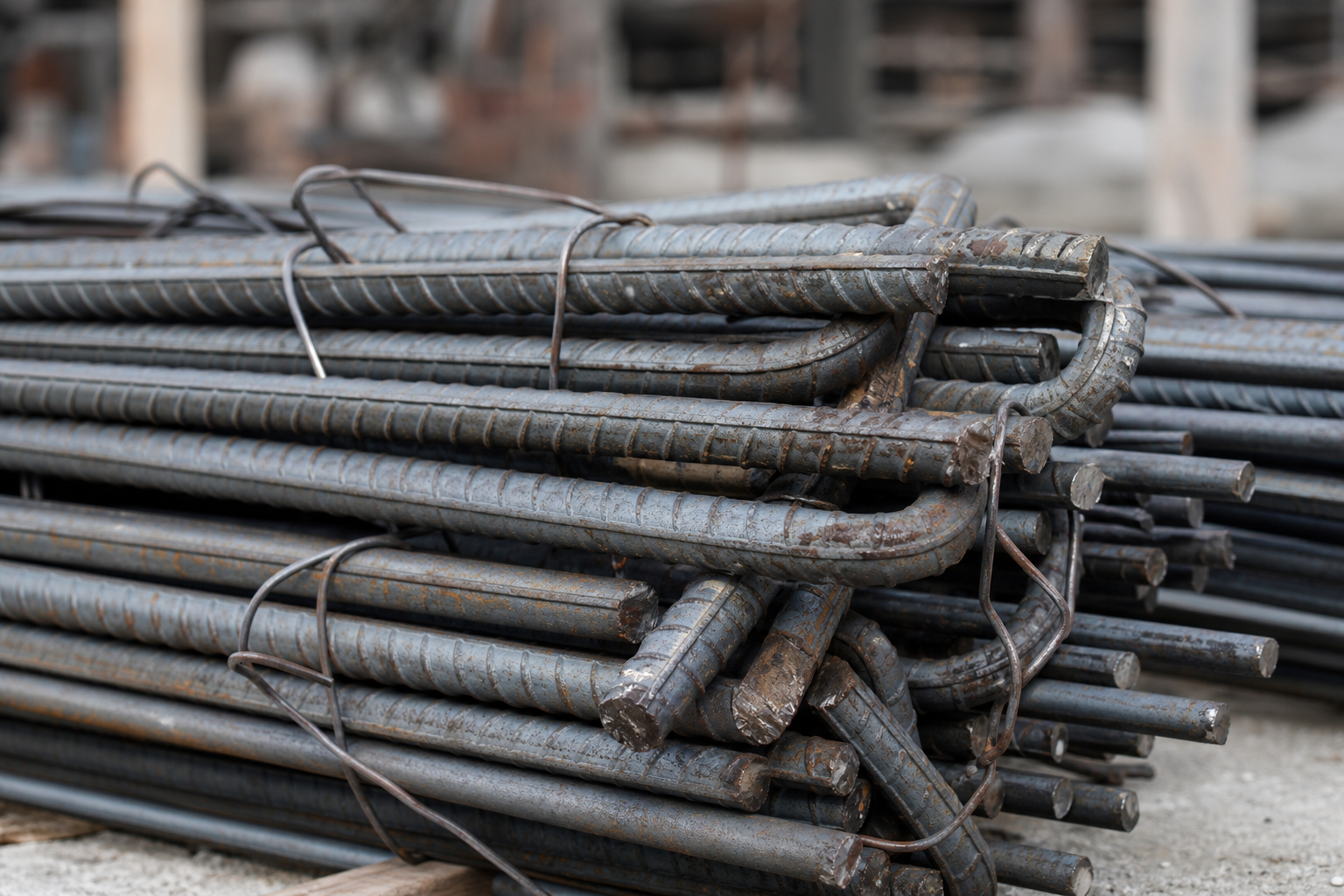
Why it matters: Poor or late shop drawings and unclear cut lists produce errors in fabrication, incorrect bundles on delivery, and on-site delays. Treat missing documentation or vague turnaround times as high risk.
Questions to ask
- Will you produce and issue signed shop drawings and a final cut list before fabrication starts? If drawings are not committed to a delivery schedule, rework is likely.
- Do you provide in-house estimating and detailing to cross-check our takeoffs? If a supplier outsources detailing without providing a single point of responsibility, coordination errors become more likely.
- What are your fabrication tolerances and how do you document anchorage and lap lengths in shop drawings? If the supplier avoids clear tolerance statements, expect on-site adjustment time.
Buying guides for steel emphasise comparing manufacturers on fabrication capacity and documentation practices before placing bulk orders. A supplier who can show signed shop drawings, clear cut lists, and an in-house detailing team reduces change orders and on-site hold-ups. Prefer vendors who highlight in-house estimating and detailing when you shortlist suppliers.
Logistics and site access red flags
Why it matters: Truck access problems are a common and immediately actionable cause of failed deliveries. Walk the route with your superintendent before booking, and expect suppliers to ask the same questions.
On-site walkthrough checklist
- Confirm turning radius and curb types for loaded transport; measure gate widths and confirm clear vertical clearance for standard trucks.
- Scan for overhead wires, low branches, or signage that will restrict crane or truck movement.
- Identify staging space and secure a spot for bundles or mesh so trucks can unload without blocking traffic.
- Check municipal restrictions, no-stop zones, and permit requirements for heavy deliveries in your municipality.
Industry pour-day guidance recommends a site route walk before booking delivery because parked cars, narrow lanes, or overhead obstructions frequently stop pours before they start. If a supplier tells you they will “figure it out” on delivery day, that is a logistics red flag you should not accept. For a deeper checklist on delivery and pour coordination see the Dass Rebar delivery guide and premix concrete delivery planning guidance used by contractors in the GTA.
Scheduling and pour-day coordination red flags
Why it matters: Rebar must arrive sequenced with inspections and ready-mix deliveries. Missing an inspector, mismatched windows with ready-mix, or unclear site contacts cause long waits and inefficient labour use.
Questions to ask
- Who is the dedicated on-site contact for pour day and can you provide a written delivery window? A blank or rotating on-site contact is a coordination red flag.
- How do you coordinate with ready-mix suppliers and inspectors to ensure simultaneous readiness? If the supplier has no process for sequencing deliveries with concrete trucks and inspectors, expect delays.
- What contingency steps do you take if a pour is delayed, such as re-bundling, re-staging, or returning materials? If the supplier has no contingency plan, that is a significant operational risk.
Ready-mix guidance recommends scheduling inspections and deliveries in the morning and verifying inspector availability well before the pour to avoid afternoon holdups. Use that same rule when you evaluate suppliers. If they do not proactively manage inspector and ready-mix sequencing, plan for additional buffer time or choose a supplier that documents coordination protocols.
Operational capacity and contingency red flags

Why it matters: A supplier’s written claims about capacity mean little if they lack fabrication bandwidth, trucking, or backup plans. Ask direct questions and request visible evidence.
Questions to ask
- What is your current fabrication lead time and how do you prioritise urgent jobs? Non-answers or vague timelines are capacity red flags.
- Do you operate a dedicated trucking fleet and can you guarantee a scheduled crew for our delivery window? If trucking is subcontracted without a confirmed booking, real-time problems can arise.
- Do you have contingency suppliers or spare inventory in case material is damaged or miscut? A supplier with no fallback plan increases the chance of multi-day delays.
When comparing manufacturers, check for explicit statements about fabrication load, trucking ownership, and contingency sourcing. Independent buying guides advise preferring suppliers who can show clear capacity and backup arrangements. Dass Rebar notes a dedicated trucking fleet and in-house fabrication capabilities among its value propositions; request the same specifics in writing from any supplier you shortlist.
Decision criteria, quick checklist, and next steps
Use this short checklist at your pre-award meeting. Treat any unchecked item as a potential deal breaker unless you receive written clarification.
- Proof of MTO approval or equivalent documentation for the project type
- Current stock list confirming Grade 500W/400W, epoxy options, or GFRB availability
- Commitment to signed shop drawings and final cut list before fabrication
- Confirmed staging plan and completed site access walk with photos
- Named on-site contact and a written delivery window for pour day
- Evidence of dedicated trucking fleet or confirmed carrier booking
- Contingency plan and backup supplier arrangements in writing
Next steps: take the checklist to your supplier meeting, collect digital copies of every confirmation, and attach them to the purchase order. If any supplier refuses to document a critical item, do not accept verbal assurances.
Common objections and how to verify supplier claims
You may hear pushback like “we always handle access issues on delivery” or “we will supply equivalent mesh.” Handle those claims with practical verification.
- Ask for recent site photos from a similar delivery and GPS coordinates of the drop zone.
- Request reference projects in the GTA where the supplier met tight pour-day windows, and follow up with those project contacts.
- Require a sample mill test report or certificate of compliance with the first shipment and a purchase order clause that missing documentation will delay acceptance.
Comparing suppliers before bulk orders often reveals whether a vendor is set up to support scheduled windows and quality documentation. If you need a focused checklist for field use, Dass Rebar’s delivery planning resources include practical pour-day coordination content and a dedicated delivery guide you can consult before finalising plans.
Frequently asked questions
What is an MTO-approved rebar supplier and why does it matter for my Ontario project?
An MTO-approved supplier has met Ontario Ministry of Transportation requirements for certain infrastructure materials and processes. For projects governed by provincial standards, MTO approval reduces compliance risk. Ask suppliers to show current approval documents and list relevant project experience.
What site-access checks should I run before booking a rebar delivery?
Walk the route with a tape measure or laser, confirm gate and lane widths, check vertical clearance for loaded trucks, and identify staging areas. Industry pour-day guidance recommends this site walk because parked cars, narrow lanes, and overhead obstructions commonly stop deliveries; capture photos and share them with your supplier.
Which documents should a supplier provide before pour day to avoid delays?
Require signed shop drawings, a final cut list, mill test reports or certificates of compliance, and a written delivery window with a named on-site contact. If any of these are missing, expect slower site acceptance and potential rework.
How can I verify a supplier’s fabrication capacity and trucking capability?
Ask for current fabrication lead times, evidence of in-house fabrication staff or shop capacity, and proof of ownership or booking for trucking units. Request references from recent projects and real examples of contingency responses to missed windows.
Can rebar deliveries be coordinated with ready-mix concrete to reduce risk, and how should I schedule that coordination?
Yes. Coordinate inspector availability and ready-mix booking with your supplier so rebar is set before concrete arrives. Ready-mix guidance recommends scheduling inspections and deliveries in the morning and confirming all parties at least 24 hours in advance to avoid afternoon or late-day delays.
For focused planning tools and a contractor checklist you can use on site, consult the Dass Rebar delivery guide for practical tips and templates and industry ready-mix delivery guidance from contractor resources.
Ready to discuss your next delivery window? Contact Dass Rebar to request a quote or to review delivery and detailing services for Ontario projects.