
Premix concrete delivery is the transport of ready-mix concrete from a batching plant to your jobsite on a set schedule so you can place it within the workable time window. At Dass Rebar (370 New Enterprise Way, Woodbridge), we coordinate reinforcing steel and delivery logistics so your pour and rebar placement align without delays.
By Navjot Dass · Last updated: May 31, 2026
Above-the-Fold Overview
Premix concrete delivery succeeds when concrete arrival, rebar placement, site access, and crew readiness line up. Use a single, coordinated plan that locks in truck sequencing, pour breaks, reinforcement checks, and finishing gear, and you’ll avoid workability loss, cold joints, and schedule overruns.
This complete guide shows contractors how to plan, schedule, and execute premix concrete delivery alongside reinforcing steel. It’s written for Ontario builders who manage rebar, mesh, and formwork under tight windows.
- Actionable 7-tip checklist to prevent delays
- How premix delivery works (truck, timing, slump)
- Where rebar detailing, fabrication, and delivery fit
- Local considerations for Woodbridge jobsites
- Comparison of ready-mix, site-mix, and volumetric
Quick Summary
Lock delivery times, verify reinforcement early, and stage finishing tools and pumps before the first truck arrives. Confirm form elevations, rebar cover, mesh laps, and embed layouts. Keep a runner managing truck flow and a backup pour plan if weather or traffic shifts timing.
Coordinated delivery is faster and safer. In our experience supporting GTA contractors, crews place more consistently when reinforcement checks are complete 60–90 minutes before the first load, pumps are tested, and a single logistics lead controls truck sequencing.
Local considerations for Woodbridge
- Stage arrivals to avoid congestion near Fogal Rd / Highway 50 during morning peaks. A 10–15 minute offset between trucks smooths on-site routing.
- Summer heat in the Regional Municipality of York can push slab temperatures. Plan early morning pours and shaded curing within the first 30–60 minutes.
- Coordinate with your reinforcement supplier for just-in-time drop-offs near the pump setup to reduce handling and keep rebar clean and dry.
What Is Premix Concrete Delivery?
Premix concrete delivery refers to batching concrete at a central plant and transporting it in a mixer truck to your jobsite for immediate placement. Success depends on matching truck arrival times to crew readiness, reinforcement completion, and the concrete’s workable time.
Ready-mix is produced under plant-controlled proportions, then hauled in transit mixers. A typical truck carries 8–10 yd³ (6.1–7.6 m³). Most mixes target placement within 60–90 minutes of batching at 70°F (21°C). Admixtures can extend workable time, but planning beats last-minute adjustments.
- Batching control: Central plants meter cement, aggregate, water, and admixtures to spec.
- Transit timing: Travel plus site access must preserve slump and entrained air.
- Placement window: Keep a steady placing rate to avoid cold joints.
Because concrete doesn’t wait, reinforcement must be installed and inspected before the first drum turns onto site. That’s where integrated rebar services shorten the critical path.
Why Premix Concrete Delivery Planning Matters
Good premix delivery planning prevents cold joints, rejected loads, and overtime. Aligning rebar placement, truck flow, and finishing tools reduces waste, preserves strength, and keeps the schedule intact.
Every minute counts. A single delay at the gate can domino into lost slump, pump idle time, and finishing crews chasing set times. Tight pour breaks, consistent head pressure over reinforcement, and clear finish targets (e.g., FF/FL) all rely on predictable concrete arrivals.
- Strength and durability: Even placement over rebar and mesh supports design cover and crack control.
- Schedule control: Sequenced trucks (10–15 minute offsets) sustain a steady pour rate.
- Safety: Staged routing reduces backing movements and spotter fatigue.
- Quality: Continuous placement helps avoid cold joints and surface blemishes.
We’ve found that crews pour more efficiently when shop drawings, bar lists, and mesh schedules are locked 3–5 days ahead, and when rebar delivery is confirmed the day prior.
How Premix Delivery Works (From Plant to Placement)
Premix delivery flows from batching to transit to placement. Keep the path clear, confirm slump on arrival, and maintain a consistent placing rate over reinforcement. Assign one logistics lead to call trucks in sequence and manage pour breaks.
Here’s the typical flow we see on successful placements across Ontario:
- Batch to dispatch: Mix is batched to spec (e.g., 4–6 in. slump, 3,000–5,000 psi target) and dispatched with load tickets for traceability.
- Transit window: Travel time is compared to target placement start. Hot or cold conditions adjust the start time.
- Gate control: A spotter and a runner coordinate entry and washout zones.
- Pre-pour checks: Rebar cover, mesh laps (often 6–12 in., confirm drawings), and embeds verified; pump and vibrator tested.
- Placement: Controlled discharge with vibrators every 12–18 in. lift to consolidate around bars and mesh.
- Finishing: Bull float immediately; trowel work timed to bleed and set.
- Curing: Start within 30–60 minutes—water cure, curing compound, or wet coverings.
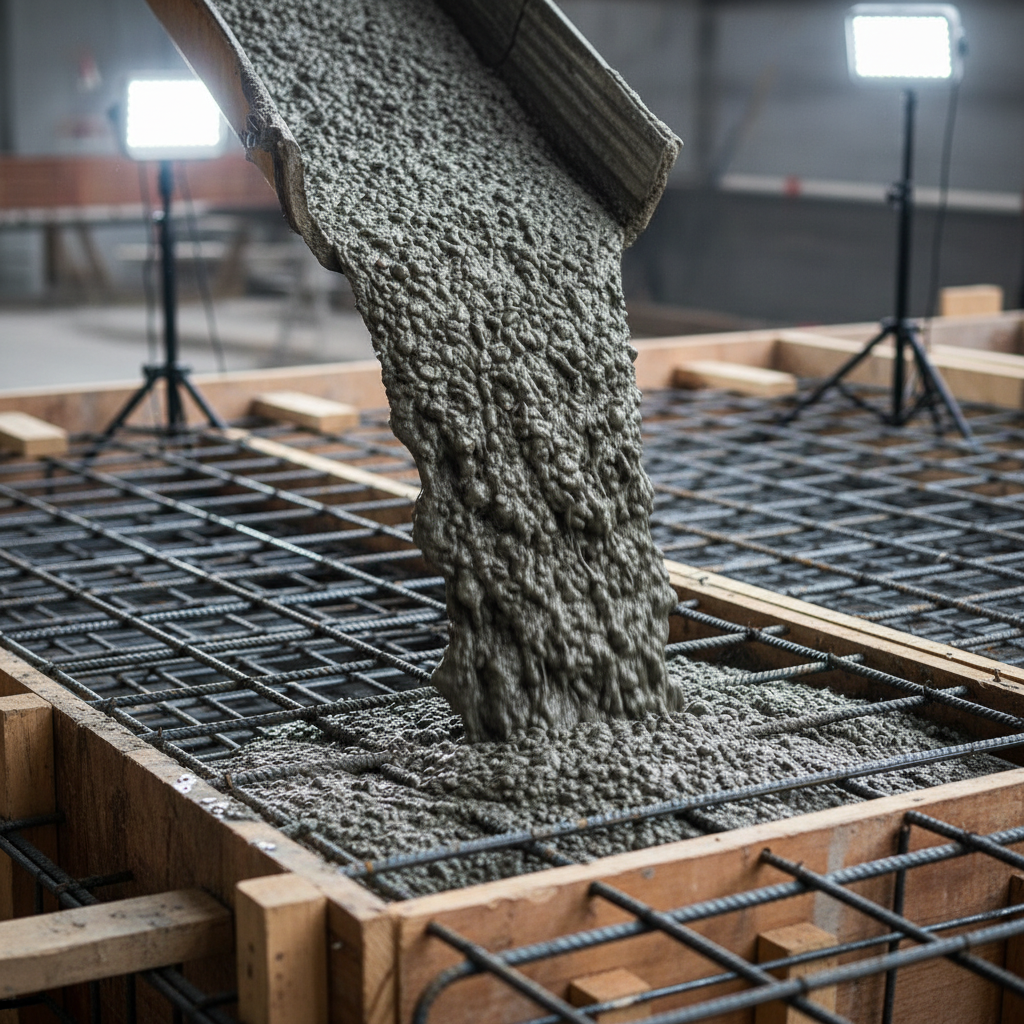
Transit mixers commonly rotate at 2–6 rpm in transit and 12–18 rpm for mixing. Keep water additions to the minimum needed—excess on site can undermine the specified water-cement ratio and reduce strength.
Concrete, Rebar, and Mesh: One System
Concrete placement and reinforcing steel work as one system. When rebar detailing, fabrication, and delivery are done early and accurately, premix trucks can unload continuously and crews maintain design cover and finish quality.
Dass Rebar supports this rhythm by aligning rebar estimating, shop drawings, fabrication, and delivery sequencing with your pour plan. Our teams stock common sizes—Grade 500W/400W, epoxy-coated bar, and welded wire mesh (6×6 at 6/6, 9/9, 10/10)—so reinforcement lands before the first truck. When your bar lists are clean, your pour moves.
- Detailing integration: In-house shop drawings reduce RFIs during pour day.
- Fabrication accuracy: Bends and cuts match cage geometry and cover requirements.
- Delivery timing: Dedicated trucking aligns drops with pump setup and staging.
See our guidance on rebar detailing and fabrication planning for pour-day reliability.
Types, Methods, and Approaches
Choose delivery and mix methods that fit access, weather, and reinforcement density. Ready-mix trucks, pumps, and volumetric mixers each suit different conditions. Specify slump, aggregate size, and admixtures to match rebar spacing and finishing goals.
Common approaches on Ontario jobs:
- Standard ready-mix: Central-plant batched; great QC; ideal for accessible sites.
- Pumped placement: Faster rates and consistent head; coordinate with pump operator.
- Volumetric mixing: On-truck proportioning extends working time and reduces returns.
- On-site mixing: Useful for very small pours; QC varies; slower placing rates.
- Admixtures: Water reducers, air entrainment, retarders/accelerators to match temperature and finish schedule.
| Method | Best For | Watch Outs |
|---|---|---|
| Ready-mix + pump | Medium–large pours; tight timelines | Access lanes; pump priming; steady truck cadence |
| Ready-mix direct chute | Footings/walls near access | Repositioning can slow rate; spotter required |
| Volumetric truck | Remote sites; variable volumes | Calibrate sand/moisture; finish timing changes |
| On-site mixing | Very small repairs | QC consistency; slower placement |
For dense reinforcement, a 3/8–1/2 in. (10–14 mm) aggregate and higher slump range can help flow around 20M bars; always confirm with structural notes.
Premix Concrete Delivery: 7 Tips to Avoid Costly Delays
Lock the plan, finish reinforcement early, and control truck flow. With one logistics lead, pre-pour checks, and a clear cadence for trucks, you’ll protect workability, meet cover, and hit finish windows without overruns.
Tip 1 — Freeze the Pour Plan 72 Hours Before
Decide start time, truck spacing, pump setup, and pour breaks at least three days out. Share the plan with the ready-mix dispatcher, pump operator, and reinforcement team.
- Confirm target slump (e.g., 4–6 in. for slabs; verify from specs).
- Define placing rate (yd³/hour) and truck spacing (10–15 minutes typical).
- Map traffic routes and washout location.
Action: Issue a one-page pour brief with drawings marked for breaks, embed zones, and finish sequence.
Tip 2 — Complete Rebar and Mesh Inspections the Day Before
Have reinforcement fully tied, chaired, and inspected before pour day. Verify cover, laps, splices, and chair spacing. Rebar adjustments during placement slow truck cycles and can cause cold joints.
- Check mesh laps (often 6–12 in.) and bar mark locations.
- Confirm edge cover and around openings; add dobies/chairs where needed.
- Stage dowels and mechanical couplers to prevent last-minute drilling.
Action: Use your bar list and reinforcement checklist to sign off each area.
Tip 3 — Assign One Logistics Lead
Designate a single person to call trucks, control pump priming, and manage pour breaks. Splitting decisions across crew leads invites delays.
- Set a radio channel for dispatch, pump, and spotter.
- Keep a standby route if the primary gate jams.
- Track load numbers and ticket times to monitor cadence.
Action: Post a whiteboard schedule at the pump with truck order and targets.
Tip 4 — Pre-Stage Finishing and Compaction Tools
Have internal vibrators, spare heads, bull floats, trowels, and curing compound staged before the first truck. A failed vibrator can cut placement rates in half.
- Test vibrators for amplitude and quick-connects.
- Lay out screed rails and straightedges to hit FF/FL targets.
- Prepare curing setup to start within 30–60 minutes of finishing.
Action: Run a 10-minute equipment drill at T-30 minutes.
Tip 5 — Control Water Additions and Verify Slump on Arrival
Adding water on site to “loosen” concrete can undercut strength and surface quality. Verify slump with a quick test on arrival and adjust with admixtures if specified.
- Keep water-cement ratio within spec; document any changes.
- Prefer water reducers over free water when allowed.
- Re-check slump after the first discharge near dense rebar.
Action: Log arrival time, slump, and placement start—trend against the plan.
Tip 6 — Pace Trucks to the Slowest Operation
Your true system rate is the slowest step—often access, pump repositioning, or vibration around congested rebar. Don’t let new trucks pile up and lose slump while you wait for consolidation.
- Keep 10–15 minute offsets; stretch to 20 if repositions are long.
- Use an overflow zone for staging and partial washouts if needed.
- Split finishing crews to reduce idle time during breaks.
Action: Adjust the cadence after the first two loads—then stick to it.
Tip 7 — Have a Weather and Traffic Backup
Heat, cold, or gridlock can shift workable time. Cold weather work often starts later; hot weather pours start earlier. Keep extra shade, water, blankets, and admixture approvals ready.
- Cold thresholds often start below 40°F (4°C); hot weather concerns above 90°F (32°C).
- Shift start time by 30–60 minutes based on forecast.
- Confirm dispatch flexibility for an earlier or later first load.
Action: Build a go/no-go checklist at T-2 hours with forecast and traffic maps.
Local Scheduling and Site Access in Woodbridge and York Region
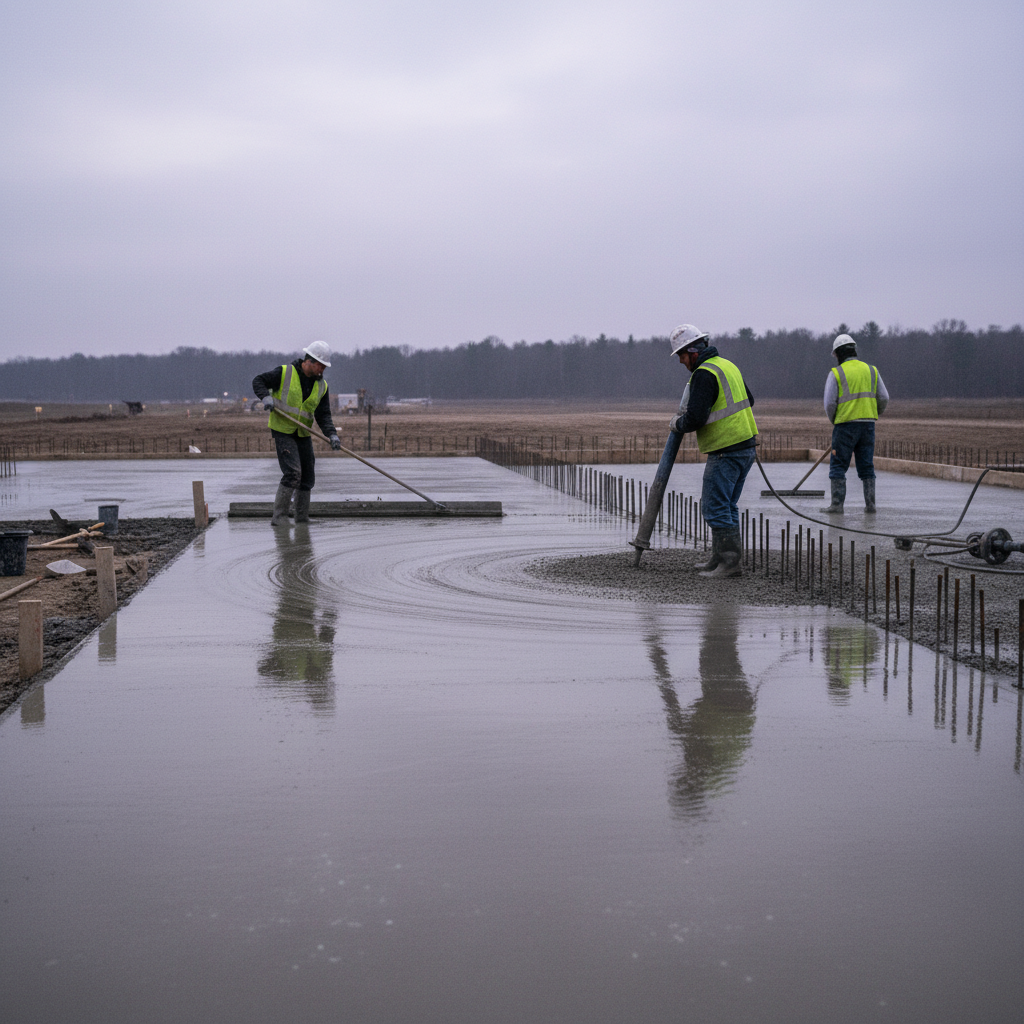
For Woodbridge jobs in the Regional Municipality of York, stagger truck arrivals and avoid peak traffic near Highway 50. Coordinate reinforcement delivery to land before pump setup, keeping laydown clean and close to the pour.
We routinely see smoother slabs when rebar and mesh arrive 12–24 hours ahead and are staged near the pump. For sites near Fogal Rd / Highway 50 or the Highway 50 – Zum Queen Stop EB, a 7:00–7:30 a.m. start can bypass congestion and protect workable time. Keep a dedicated spotter at the gate to maintain safe routing and reduce backing moves.
Tip: Post a laminated routing map in the cab of the first two trucks and hand copies to subsequent drivers.
Best Practices for Reinforcement-Ready Pours
Treat reinforcement readiness as the schedule’s gate. When bars and mesh are signed off, embeds are pinned, and chairs are set, trucks flow, quality rises, and finishing hits target.
- Use in-house detailing to resolve congestion before fabrication.
- Specify aggregate and slump for flow through tight bar spacing.
- Keep reinforcement clean, dry, and elevated off mud or soil.
- Verify cover with pre-pour gauges and sample checks.
- Stage welded wire mesh panels to minimize walking on steel.
Explore our reinforcing steel supply guide and delivery planning for integration ideas that keep crews moving.
Tools, Templates, and Resources
Use a one-page pour brief, a reinforcement sign-off sheet, and a truck cadence tracker. These tools align dispatch, pump, and finishing, and they surface issues before the first drum arrives.
- Pour brief: Start time, slump, breaks, truck intervals, contact list.
- Rebar sign-off: Cover checks, laps, chairs, embeds, dowels—completed day prior.
- Cadence tracker: Load number, arrival, slump, discharge start/finish.
- Gear checklist: Vibrators (spare head), bull float, straightedges, curing setup.
For reinforcement accuracy and schedule control, see our guides to rebar detailing and delivery sequencing.
Mini Case Studies and Field Examples
Coordinated reinforcement and premix scheduling trims downtime. When drawings are frozen early and rebar lands ahead of pumps, crews place faster and finish smoother.
High-rise podium slab, Toronto (The Hawthorne Residences): Dense 20M bar spacing demanded a pump and a higher-slump mix. With bar checks complete by 3:00 p.m. the day before and a 10–12 minute truck cadence, the slab finished within the target window with consistent cover.
Townhome foundations, Waterloo (Hickory Terraces): Forms and mesh were inspected prior; direct-chute placement was used for footings near the access road. Trucks were paced at 15 minutes to match consolidation around dowels and corners, avoiding cold joints.
Mixed-use tower, Pickering (The Grand at Universal City): A pre-dawn pump prime and early start avoided heat. Reinforcement deliveries from Dass Rebar were staged near the crane laydown, keeping walk paths clear and rates steady.
These scenarios mirror the same playbook: align rebar, control truck flow, and protect the finish window.
Frequently Asked Questions
Plan premix concrete delivery by aligning dispatch timing, reinforcement readiness, access, and finishing tools. The FAQs below cover timing windows, water additions, and how rebar impacts mix selection.
How far in advance should I schedule premix concrete delivery?
Lock your pour plan 72 hours in advance and confirm the schedule with dispatch 24 hours before. Share the plan with the pump crew and reinforcement supplier. This gives time to stage rebar, chairs, and embeds, and to adjust for weather or traffic.
Can I add water on site if the mix seems too stiff?
Limit on-site water additions to what the mix design allows. Extra water reduces strength and surface quality. If you need more workability, use approved admixtures or coordinate a higher-target slump in advance with your supplier.
What mix details should I confirm when pouring over dense rebar?
Confirm aggregate size (often 3/8–1/2 in.), target slump, and placement method (pump vs. chute). Tight bar spacing benefits from smaller aggregate and a slightly higher slump to improve flow and reduce voids around reinforcement.
How do I keep trucks from stacking up at the gate?
Assign one logistics lead to call trucks in sequence and maintain 10–15 minute offsets. Use a staging area and a clear washout route. If access slows, temporarily extend intervals to protect slump and finish timing.
Does welded wire mesh change how I place concrete?
Mesh affects flow paths and finishing. Keep it chaired to design height, verify laps, and use consistent vibration to drive paste through openings. Smaller aggregate and a pump often help achieve even coverage over mesh.
Conclusion and Next Steps
Coordinate premix delivery with reinforcement readiness, control truck cadence, and start curing early. When you lock details 72 hours out and finish rebar inspections the day prior, you protect quality and schedule.
- Key Takeaways
- Finish reinforcement checks before pour day; sign off cover and laps.
- Assign one logistics lead to manage truck flow and pour breaks.
- Verify slump on arrival; prefer admixtures over extra water.
- Start curing within 30–60 minutes to protect surface quality.
Need reinforcement that lands on time? Explore how Ontario builders rely on our rebar supply and delivery, in-house detailing, and project coordination to keep pour days smooth.
Planning a pour in Woodbridge or across the GTA? Connect with Dass Rebar for reinforcement estimating, detailing, fabrication, and delivery sequencing that align with your premix concrete delivery plan.
We help you avoid rebar-related delays so your concrete trucks roll on time.
For more on MTO-approved reinforcement and delivery reliability, see why Ontario builders trust our team and logistics approach in this overview on MTO-approved reinforcing steel and this perspective on why timely rebar delivery matters.