
Steel reinforcement suppliers provide the materials, detailing, and logistics that make concrete structures possible. For Ontario builders, the right partner reduces waste, prevents rework, and keeps pours on schedule. From our Woodbridge base at 370 New Enterprise Way, Dass Rebar supports GTA and Ontario projects with estimating, fabrication, delivery, and on-site assembly.
By Navjot Dass — Dass Rebar
Last updated: June 5, 2026
Overview
This complete guide explains how to assess steel reinforcement suppliers, compare product and service models, and align logistics to your build schedule. You’ll learn what matters most for quality, compliance, and delivery—plus practical steps to cut jobsite waste and reduce RFIs by improving takeoffs, detailing, and sequencing.
Use this page as a working playbook. It’s built for general contractors, concrete contractors, and construction managers who need dependable reinforcing steel across residential, commercial, and infrastructure work in the GTA and Ontario.
- What steel reinforcement is and how it works in concrete
- How to compare supplier models and prevent bottlenecks
- Grades, coatings, mesh, and composite options you’ll specify
- Estimating-to-fabrication workflows that stop rework
- Delivery sequencing that keeps crews productive
What is steel reinforcement?
Steel reinforcement is the system of rebars, mesh, and accessories embedded in concrete to carry tensile and shear forces. The steel-concrete composite resists cracking, controls deflection, and delivers long-term durability. Correct grades, spacing, and laps translate design intent into reliable structural performance.
Reinforcement transforms concrete (strong in compression) into a composite that also handles tension and shear. In practice, that means fewer cracks, tighter control of deflection, and predictable load paths from slab to foundations.
Core components you’ll specify
- Deformed rebar: CSA G30.18 grades (400W ≈ 400 MPa yield; 500W ≈ 500 MPa) with ribbed profiles for bond.
- Welded wire mesh: Standard 6″x6″ at 6/6, 9/9, and 10/10 gauges for slabs, toppings, and light-duty applications.
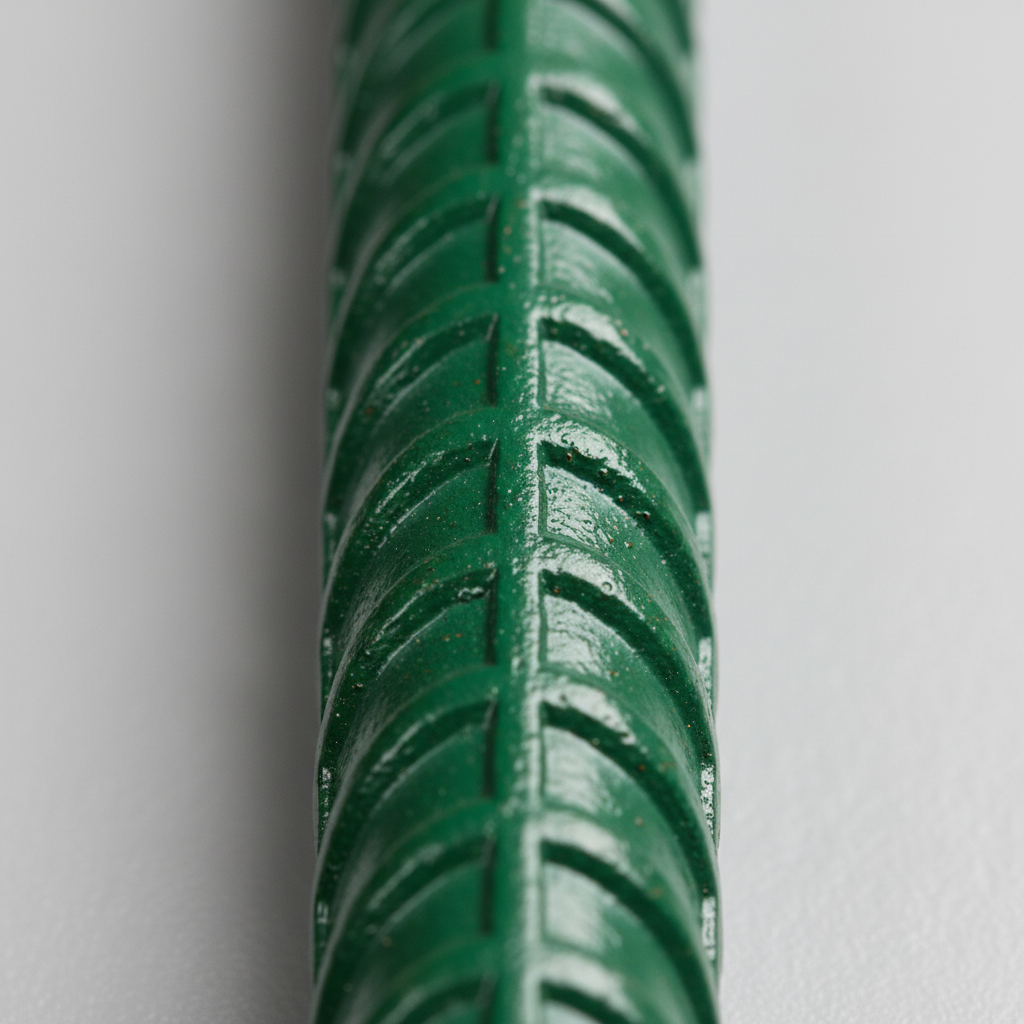
- Epoxy-coated rebar: Green coating to mitigate corrosion in chloride-exposed elements like parking decks and bridges.
- Glass fiber bars (GFRB/GFRP): Non-corrosive composite bars for harsh chemical or de-icing salt environments.
- Chairs, ties, and couplers: Accessories that lock cover, laps, and continuity into place.
At Dass Rebar, we stock common sizes and mesh patterns and fabricate custom shapes in-house. That shortens lead times and aligns fabrication with your pour schedule.
Why the supplier you choose matters
The right reinforcing partner prevents errors before they reach the site. Integrated estimating, detailing, and fabrication reduce change orders, RFIs, and idle time. MTO-approved quality and predictable trucking windows keep pours on track across complex, multi-phase jobs.
Most schedule slips start upstream—in unclear takeoffs, missing bends, or poorly sequenced deliveries. A supplier with end-to-end control can spot conflicts, tune bar lists, and deliver by pour break so crews spend time placing, not waiting.
Signals you’ve found a reliable partner
- MTO-approved inventory with traceability for infrastructure-grade work.
- In-house detailing that creates shop drawings aligned to site realities—openings, embeds, and pour breaks.
- Dedicated trucking enabling planned drops, returns, and quick re-sends if field changes arise.
- Proven Ontario projects demonstrating performance across residential, commercial, and municipal builds.
We built our model around those needs—estimating, detailing, fabrication, delivery, and assembly under one roof—so you can coordinate a single schedule and hold one accountable team.
How steel reinforcement supply actually works
A high-performing supply workflow starts with precise takeoffs, flows through constructible detailing, and ends with fabrication and sequenced delivery. Align each phase to pour breaks and crane time. The tighter the handoffs, the fewer RFIs and the cleaner the deck on pour day.
In our experience, strong handoffs are the difference between placing 100% of a drop and spending half the day chasing missing shapes. Here’s how we structure it.
From drawings to deck—step by step
- Estimating: Quantify bars, mesh, and accessories against structural drawings. Note conflicts and RFIs early.
- Detailing: Produce shop drawings and bending schedules that reflect real site conditions and placement sequences.
- Fabrication: Cut and bend to spec; bundle and tag by pour break or placement area.
- Delivery: Stage trucks for the pour sequence; plan returns and same-day re-sends for field changes.
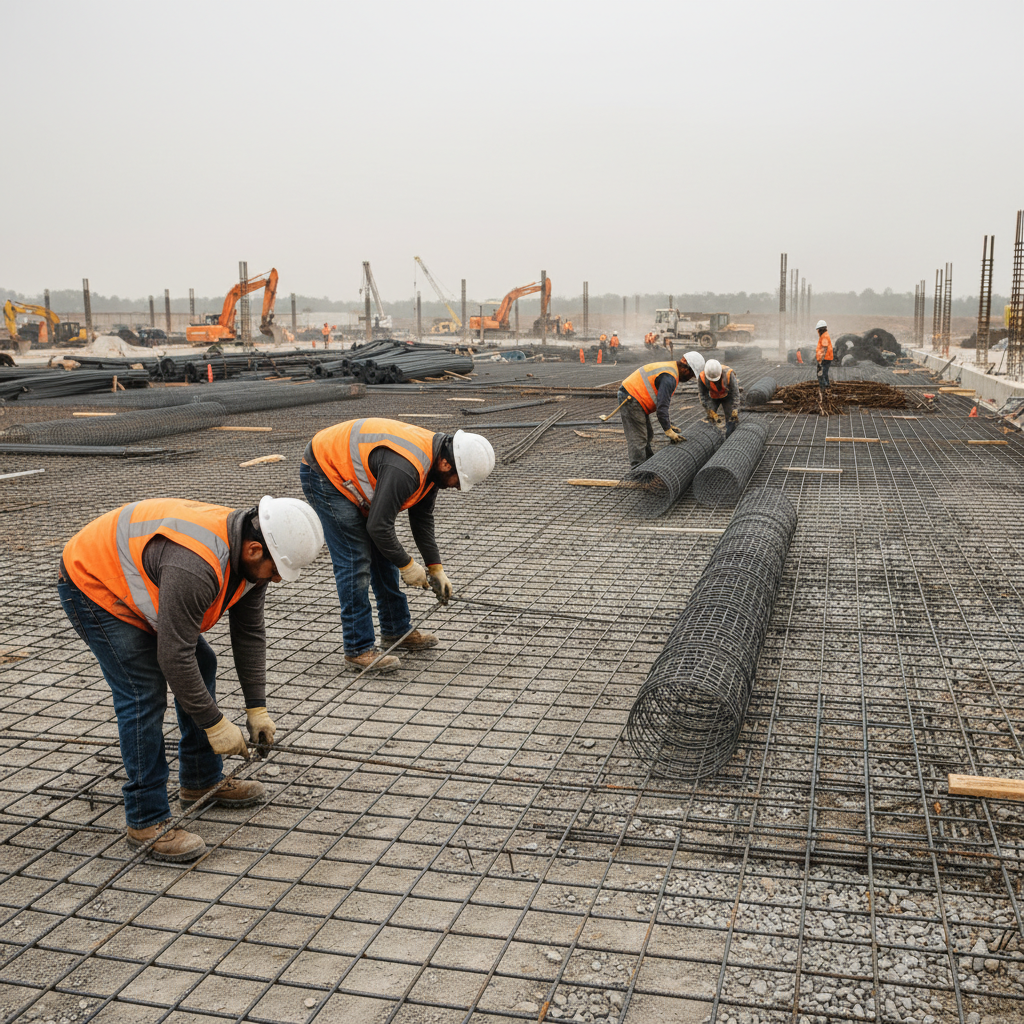
- On-site assembly: Tie, chair, and place mesh; verify cover, laps, and bar marks before concrete.
This is the integrated workflow we offer across Ontario—supported by our trucking fleet and project coordination. It’s designed to reduce site clutter and let crews flow from rebar to concrete with minimal downtime.
Types, specs, and materials you’ll compare
Compare reinforcement by grade, coating, form factor, and environment. 400W/500W grades cover most structural needs, epoxy extends service life in chloride zones, mesh speeds slab work, and GFRB solves corrosion-critical conditions. Match the option to exposure, load, and constructability.
Choosing among materials is easier when you tie the spec to the environment and the trade flow on site. Below are the most common decisions our Ontario clients make—and how we support them.
- Grades (CSA G30.18): 400W (≈400 MPa yield) and 500W (≈500 MPa). 500W allows smaller bar sizes or longer spans at the same strength—useful where congestion is an issue.
- Bar sizes: 10M (≈11.3 mm), 15M (≈16 mm), 20M (≈19.5 mm). We fabricate cut-and-bend by bar list and can sequence by area for faster placement.
- Coatings: Epoxy-coated bars resist corrosion in parking structures, podium slabs, and bridge decks exposed to de-icing salts.
- Welded wire mesh: 6″x6″ at 6/6, 9/9, 10/10. Mesh speeds slab-on-grade and toppings; we recommend pre-cut sheets to reduce trimming waste.
- Glass fiber bars (GFRB/GFRP): Corrosion-proof and lightweight; ideal for high-chloride, magnetic-sensitive, or aggressive-chemical environments.
Want a refresher on fundamentals and size selection? See our internal primer on steel rebar basics and our Ontario-focused rebar supply guide for practical field tips.
Supplier models compared (mill, fabricator, distributor, composite)
Suppliers differ in scope: mills make steel; fabricators cut and bend; distributors move stock; composite specialists supply GFRB/GFRP. For complex jobs, an integrated fabricator with in-house detailing and delivery coordination usually minimizes rework and delays.
Not all partners are set up to solve field problems. Here’s a simple comparison you can use during procurement.
| Model | Strengths | Risks to manage | Best for |
|---|---|---|---|
| Mill-direct | Base steel pricing; large volumes | No detailing/fab; coordination burden shifts to GC/Concrete | Very large, standardized elements with in-house fab |
| Fabricator (integrated) | Estimating, detailing, cutting/bending, tagged bundles, sequenced drops | Requires early design coordination and timely RFIs | Multi-phase builds, tight sites, complex geometry |
| Distributor/wholesaler | Quick access to common sizes and mesh | Limited custom bends; potential for mismatched deliveries | Small slabs, residential driveways, basic pads |
| Composite specialist (GFRB/GFRP) | Non-corrosive bars; niche engineering support | Unique lap/bend behavior; crew learning curve | High-chloride or magnetic-sensitive applications |
Because Dass Rebar runs estimating, detailing, fabrication, and trucking under one roof, contractors can coordinate through one schedule owner. For context on procurement decisions, explore our supplier selection guide and Ontario-wide reinforcing steel guide.
Best practices to cut waste and keep pours on time
Waste drops when takeoffs match constructible details, bundles arrive by pour break, and crews work from clear tags and maps. Use pre-pour checklists, bundle maps, and return loops. The goal is simple: place 100% of a drop without hunting parts.
Pre-pour planning (what to verify)
- Confirm bar marks and lengths against latest shop drawings; freeze the IFC set for the pour.
- Walk openings and embeds with the detailer’s map to avoid last-minute trim or rebar shifts.
- Stage mesh sheets to minimize overcut and tie laps to the plan’s traffic flow.
- Coordinate crane picks and drop zones by sequence; label bundles by area and elevation.
- Arrange a returns plan and same-day re-send window with your supplier.
Field execution (simple habits, big payoff)
- Use bundle maps at the gate; send crew leaders directly to the right stacks.
- Confirm cover and laps with spot checks before tying off entire bays.
- Separate epoxy-coated storage from bare steel to protect the coating.
- Log RFIs with photos and elevations; align with the detailer the same day.
We package these practices into our project management flow. For hands-on tips, see our reinforcing bar guide, plus slab-first pointers in our concrete rebar guide.
Tools and resources you can use right now
Standardize your process with simple templates: a takeoff checklist, a bundle mapping plan, and a delivery log. Add a returns loop to recapture overage. These low-lift tools reduce searching, rehandling, and on-deck clutter on every pour.
- Takeoff checklist: Scope drawings, load paths, exposure conditions, clearances, bends, laps, and mesh patterns.
- Bundle map template: Plan stacks and drop zones by area, elevation, and crane reach.
- Delivery/returns log: Track trucks, bundle counts, and same-day re-sends; reconcile after each pour.
- Corrosion-exposure matrix: Flag where epoxy or GFRB makes sense (de-icing salts, garages, podiums).
- Overage recovery: Close the loop with scrap and returns to cut waste across phases—use a nearby steel scrap value guide to understand recycling and diversion options.
If you need help adapting these tools to your project, our team in Woodbridge can set up a working session and align them to your schedule and site constraints.
Case studies and field examples (Ontario)
Ontario builders reduce delays when estimating, detailing, and trucking sit under one accountable team. Our portfolio shows the pattern: clear shop drawings, tagged bundles by area, and timed deliveries keep crews placing steel instead of waiting for parts.
Here are three snapshots reflecting the integrated approach our clients rely on across the GTA and Ontario.
High-rise residential, Toronto (The Hawthorne Residences)
- Challenge: Congested core and podium levels required tight sequencing for 10M–20M bars and mesh.
- What worked: Shop drawings broke down pour breaks; bundles were tagged by elevation and grid.
- Result: Crews completed placement per drop sequence with fewer partial returns.
Townhome development, Waterloo (Hickory Terraces)
- Challenge: Multiple parallel slabs with variable mesh patterns (6/6 and 9/9).
- What worked: Pre-cut mesh sheets reduced trimming; delivery logs closed the loop on overage.
- Result: Faster slab cycles and cleaner decks heading into pours.
Mixed-use, Pickering (The Grand at Universal City)
- Challenge: Podium slabs needed epoxy-coated bars due to chloride exposure from traffic.
- What worked: Coating-sensitive handling at yard and site; segregated storage and protected lifts.
- Result: Coating integrity maintained; inspection sign-offs without rework.
How to choose steel reinforcement suppliers
Pick suppliers by verifying compliance, evaluating in-house capabilities, and pressure-testing delivery reliability. Prioritize integrated fabricators with detailing, fabrication, and trucking under one roof—plus a track record across Ontario projects and MTO-approved materials.
Selection criteria that matter
- Compliance: CSA G30.18 grades (400W/500W), epoxy options, and material traceability for public work.
- Capabilities: Estimating, detailing, cutting/bending, and on-site assembly support.
- Logistics: Dedicated trucking fleet, sequenced drops, and responsive re-sends.
- Proven builds: Residential towers, commercial podiums, and municipal/infrastructure jobs in Ontario.
Our approach at Dass Rebar is straightforward: we own the estimating-to-delivery flow and coordinate it through one accountable schedule. Explore our fabrication guide for more detail on how cut-and-bend sequencing speeds placement.
Local considerations for Woodbridge
- Plan deliveries around traffic near Highway 50 – Zum Queen Stop EB to keep your crane schedule predictable.
- Winter pours need extra epoxy-handling controls and heated staging; align with our yard team before cold snaps.
- For tight sites near Fogal Rd / Highway 50, request smaller, more frequent drops to reduce on-deck clutter.
Serving Woodbridge and the Regional Municipality of York
Dass Rebar serves Woodbridge and the broader Regional Municipality of York with MTO-approved materials, in-house detailing, and a dedicated trucking fleet. Neighborhood proximity means faster site walks, clearer coordination, and dependable delivery windows across the GTA.
Being local helps. Our team can walk a site, resolve details with your superintendent, and adjust sequence plans without delaying pours. That’s valuable on complex podiums and mixed-use sites where a missed window can ripple across trades.
Materials and compliance details (fast reference)
For most Ontario structures, specify CSA G30.18 400W or 500W deformed bars, welded wire mesh in 6/6, 9/9, or 10/10, and epoxy-coated bars in chloride exposure. Use GFRB/GFRP where corrosion or magnetic sensitivity is critical. Match lap lengths, cover, and bends to the engineer’s design.
- Grades: 400W ≈ 400 MPa yield; 500W ≈ 500 MPa. Higher grade can reduce congestion.
- Bar sizes: 10M, 15M, 20M common in slabs, beams, and foundations; 20M rebar frequently appears in heavily loaded elements.
- Mesh patterns: 6″x6″ at 6/6, 9/9, 10/10; pre-cut options lower trimming waste.
- Coatings: Epoxy for de-icing exposure; handle with padded slings and segregated storage.
- Composite: GFRB/GFRP for non-corrosive needs; confirm lap/bend details with the engineer.
For a broader orientation, our reinforcing bar guide and reinforcing steel overview cover selection logic and constructability trade-offs.
Need a fast, constructible plan? Let’s map your next pour.
If you’re scoping an Ontario project, we can review drawings, flag risks, and build a delivery sequence that matches your pour breaks. One coordinated plan—from estimating to trucking—means fewer RFIs and cleaner decks.
Request a 30-minute scheduling consult with Dass Rebar’s project coordination team in Woodbridge. We’ll align takeoffs, detailing, bundle maps, and delivery windows to your timeline.
Schedule a consult — or share drawings and pour dates, and we’ll propose a sequence plan.
Trends and sustainability considerations
Contractors are standardizing bundle maps, using pre-cut mesh, and adopting corrosion-resistant options where lifecycle demands it. Closing the loop on returns and recycling reduces disposal and clutter, while integrated detailing cuts change orders across phases.
- Lifecycle focus: Epoxy-coated bars and GFRB where service-life requirements are high.
- Waste reduction: Pre-cut mesh and precise takeoffs reduce trimming and offcuts.
- Recycling: Divert scrap through established channels—see this brief on steel scrap value for context.
- Digital coordination: Shared markups between the field and detailers resolve conflicts faster.
These shifts are practical, not theoretical. We’ve seen them shorten cycles on podiums and improve inspection outcomes on chloride-exposed structures.
Frequently Asked Questions
These short answers address common questions Ontario builders ask when evaluating reinforcing partners. Each response is designed for quick decisions and easy sharing with field teams.
What’s the difference between 400W and 500W rebar?
400W and 500W indicate minimum yield strengths of roughly 400 MPa and 500 MPa. 500W can reduce congestion by allowing smaller bar sizes or wider spacing for the same capacity. Always follow the engineer’s design and lap requirements.
When should I specify epoxy-coated bars?
Use epoxy-coated bars where chloride exposure is expected—parking structures, podium slabs near roadways, bridge decks, or elements exposed to de-icing salts. Protect the coating during handling and segregate storage on site.
How do sequenced deliveries improve productivity?
Sequenced deliveries arrive by pour break, elevation, or grid. Crews head directly to the right stacks, place steel without hunting parts, and keep crane time productive. It also simplifies returns and reduces on-deck clutter.
Can glass fiber bars (GFRB/GFRP) replace steel everywhere?
No. GFRB is excellent for corrosion-critical or magnetic-sensitive locations but behaves differently for laps and bends. Use it where the engineer specifies, and train crews on handling and placement specifics.
Key takeaways
Choose an integrated reinforcing partner with in-house estimating, detailing, fabrication, and trucking. Align deliveries to pour breaks, use pre-cut mesh, and standardize bundle maps. These steps shrink waste, cut RFIs, and keep pours on time across Ontario jobs.
- Integrated suppliers reduce rework through better takeoffs and detailing.
- Epoxy and GFRB improve durability where corrosion risk is high.
- Sequenced drops and bundle maps improve placement speed.
- Returns and recycling loops keep decks clear and waste low.
Conclusion
Steel reinforcement success hinges on details: accurate takeoffs, constructible shop drawings, clean fabrication, and sequenced delivery. When one accountable team coordinates these steps, crews place more steel and projects pour on time.
If you’re coordinating reinforcing steel in Ontario, we can help. Dass Rebar brings 40+ years of experience, MTO-approved materials, and an in-house trucking fleet—based in Woodbridge and serving the GTA and beyond. Ready to align your next pour? Visit us at 370 New Enterprise Way.
For background on MTO-focused reliability and why local builders choose integrated partners, see our note on MTO-approved reinforcing steel and Ontario-wide Ontario rebar insights.