
Rebar delivery is the end-to-end process of transporting, staging, and handing off reinforcing steel to a jobsite so crews can place steel on schedule. At Dass Rebar (370 New Enterprise Way, Woodbridge), our dedicated trucking fleet coordinates just-in-time deliveries across Ontario to keep pours on track and reduce idle time.
By Dass Rebar • Last updated: 2026-06-18
Above-Fold Summary & Table of Contents
This complete guide explains how rebar delivery works, why timing matters, and how to plan access, staging, safety, and handoffs. You’ll learn step-by-step logistics, delivery options, and best practices we use at Dass Rebar to help Ontario contractors prevent delays and keep concrete milestones on schedule.
Here’s what you’ll find inside this practical, job-tested guide for superintendents, site foremen, and PMs.
- What rebar delivery includes and where risk hides
- How scheduling, staging, and crane windows affect productivity
- Delivery methods for bar, cage, and mesh (including 20M specifics)
- Job-ready checklists for access, safety, and receiving
- Case examples from Ontario projects and a planning workflow
- FAQ answers for common delivery and coordination questions
- What Is Rebar Delivery?
- Why Rebar Delivery Matters
- How Rebar Delivery Works
- Types, Methods, and Approaches
- Best Practices That Prevent Delays
- Tools, Templates, and Resources
- Case Studies and Examples
- Delivery Pricing Factors (No Numbers)
- Frequently Asked Questions
- Key Takeaways
- Conclusion and Next Steps
Quick Summary
Efficient rebar delivery aligns fabrication, trucking, site access, and crane windows so steel arrives staged and tagged for immediate placement. The payoff is fewer lost hours, cleaner safety control, and reliable pours. Plan access early, confirm bundle lists, and time deliveries to match the pour sequence.
Rebar logistics touch every trade on a concrete job. When the truck shows up late or with the wrong bundles, everything from forming to ready-mix goes off-sequence. The fix is a tight plan and crisp communication.
- Lock delivery dates to pour milestones and inspection gates.
- Confirm truck access and turning radii before fabrication starts.
- Stage bundles by placement order; tag clearly for fast handoffs.
- Protect epoxy-coated bars; keep mesh flat and dry for straight placement.
What Is Rebar Delivery?
Rebar delivery covers the coordinated steps from loading fabricated steel at the yard to safe offloading, staging, and sign-off at the site. It includes sequence planning, traffic routing, crew readiness, and documentation so bars, mesh, and cages arrive ready to place.
At Dass Rebar, delivery sits inside an end-to-end workflow: in-house estimating, detailing (shop drawings), fabrication, dedicated trucking fleet, and optional on-site assembly. That integration reduces handoff risk and helps superintendents keep critical path activities aligned.
Core components of rebar delivery
- Scope confirmation: Bar lists by size (10M, 15M, 20M), cut lengths, bends, and mark numbers.
- Packaging: Bundles tagged with heat numbers, bar marks, and placement area.
- Loading: Forklift or crane loading with dunnage and securement (chains, straps, edge protectors).
- Transport: Flatbed or roll-off with route planning and site approach notes.
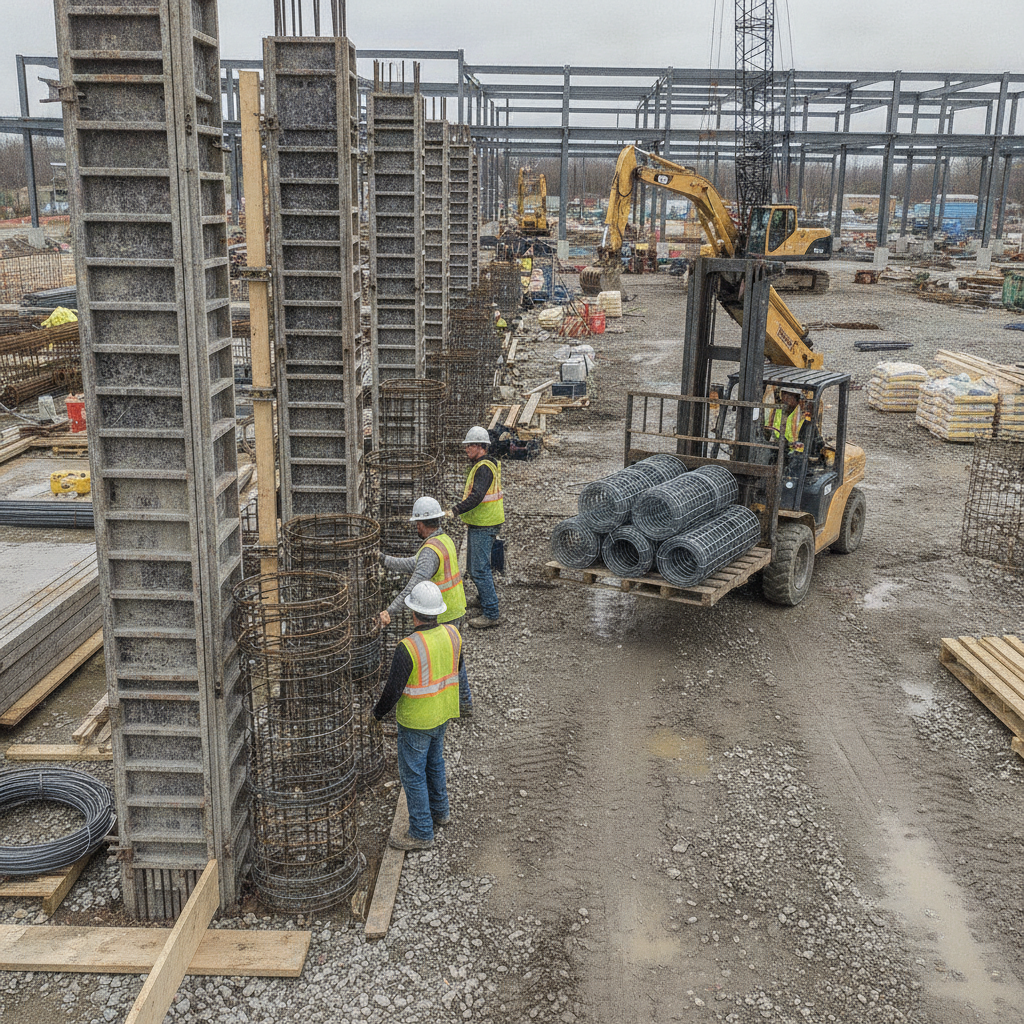
- Offload and staging: Crane, forklift, or Moffett; laydown zones planned for sequence.
- Sign-off: Delivery tickets checked against pack lists; discrepancies resolved immediately.
Want the cradle-to-site picture? Our Rebar Supply guide and detailing best practices show how accurate shop drawings reduce site rework.
Why Rebar Delivery Matters
Timely rebar delivery prevents idle crews and missed concrete windows. When bars arrive staged by sequence, crews place steel faster, inspections pass sooner, and pours hold. Late trucks, wrong bundles, or poor staging create cascading delays and safety risks.
Here’s the thing: every missed crane pick or mis-tagged bundle adds friction. We’ve seen crews lose hours hunting for a mark or cutting stock on the fly. Tight logistics flip that script.
Impacts you can measure on site
- Schedule protection: Aligning deliveries to inspection and pour windows keeps look-ahead plans credible.
- Labor efficiency: When bundles match placement order, ironworkers spend more time tying and less time sorting.
- Quality control: Epoxy-coated bars stay clean; mesh remains flat; bar supports aren’t overloaded.
- Safety outcomes: Controlled laydown areas reduce line-of-fire and pinch hazards during offload.
For deeper context on how supply reliability reduces risk, see our supplier selection guide and Ontario fabrication overview.
How Rebar Delivery Works
The delivery process links shop drawings to the jobsite through fabrication, loading, routing, offload, and sign-off. Success depends on early access checks, accurate tagging, confirmed crane windows, and real-time driver-to-foreman communication.
In our experience, the smoothest handoffs happen when site logistics are locked before the first stick is bent. Use this practical sequence to align teams.
Step-by-step workflow
- Confirm drawings and bar list: Approve shop drawings; lock mark numbers and bends.
- Sequence by pour: Group bundles by slab, wall, or footing; color-code tags for zone.
- Access survey: Verify road conditions, turning radius, overhead clearance, and laydown zones.
- Book crane/forklift windows: Set offload times that won’t conflict with other lifts.
- Load and secure: Use dunnage, chocks, straps, and protective sleeves for epoxy-coated steel.
- Notify ETA: Provide plate number, driver contact, and estimated time of arrival to the site lead.
- Offload and stage: Place bundles in order of use; keep aisles 4–6 feet clear for safe movement.
- Ticket sign-off: Match marks and counts; flag any shortages immediately for backfill.
Local considerations for Woodbridge
- Plan arrivals to avoid rush-hour congestion near Highway 50; staging near the Highway 50 – Zum Queen Stop EB corridor can slow approach lanes.
- Winter freeze-thaw can create soft laydown zones; add timbers or mats to keep 20M bundles level and clean.
- Municipal load restrictions vary by season; confirm axle limits when routing heavy cage deliveries in the Regional Municipality of York.
Need help setting the sequence? Our project planning guide covers handoffs from detailing to delivery in more depth.
Types, Methods, and Approaches
Choose delivery methods based on site access, lift capability, and product type: flatbeds for bulk bar, Moffett trucks for tight jobs, crane lifts for cages, and scheduled drops for welded wire mesh. Match the method to the pour sequence and space.
Reinforcing steel moves in different forms: loose bar, pre-tied components, cages, and mesh. Picking the right method saves hours and prevents rehandling.
Common delivery types
- Flatbed with crane on site: Fastest for volume; offload directly to laydown or deck.
- Flatbed with Moffett (piggyback forklift): Ideal for limited crane time or dispersed drops.
- Hiab/boom truck: Useful for smaller lifts or urban edges where a full crane isn’t practical.
- Pre-tied cage delivery: Reduces on-site tying; needs wider access and higher lift capacity.
- Mesh deliveries (6×6 6/6, 9/9, 10/10): Keep panels flat and dry; avoid stacking heavy materials on top.
Product notes: 10M, 15M, and 20M rebar
- 10M/15M: Easier hand moves; still require proper dunnage and tagging to avoid mix-ups.
- 20M: Heavier and stiffer; plan crane picks and longer laydown to keep bars straight and accessible.
- Epoxy-coated bars: Use soft slings and edge protectors; never drag across abrasive surfaces.
| Method | Best Use | Pros | Constraints |
|---|---|---|---|
| Flatbed + Site Crane | Large volumes and long bars | Fast offload, direct staging | Requires booked crane window |
| Flatbed + Moffett | Multiple small drops | Flexible placement | Lower lift capacity than crane |
| Boom Truck | Urban or tight sites | No separate crane needed | Limited reach and weight |
| Pre-tied Cages | Speed critical elements | Less on-site tying | Wide access and heavy lifts |
| Mesh Panels | Slabs and pavements | Fast placement | Must keep flat and dry |
For specs on reinforcing products and coatings, view this overview of rebar product types for context on grades and forms.

Best Practices That Prevent Delays
Lock site access early, stage by sequence, and protect epoxy-coated steel during all handling. Confirm crane windows, create clear laydown maps, and keep delivery tickets tied to bundle tags. These steps cut rehandling and keep pours on schedule—especially in busy GTA corridors.
Access and approach
- Confirm approach route: Check turning radii, overhead lines, and street occupancy permits.
- Laydown mapping: Mark zones by pour; aim for straight-line travel paths to decks and forms.
- Weather plan: Use timbers or mats to stabilize ground; snow and rain can undermine staging.
Staging and tagging
- Sequence-first staging: Place earliest-use bundles closest to the work face.
- Readable tags: Keep mark numbers visible at waist height; add zone color bands.
- Epoxy care: Use padded slings; never chain directly on coated steel.
Safety and housekeeping
- Exclusion zones: Establish clear offload buffers; one signaler, one operator, no crowding.
- Pinch-point control: Use tag lines; keep hands off suspended loads.
- Walkways: Maintain 4–6 feet of clear access; remove banding and scrap immediately.
For more on upstream controls that make delivery days easy, see our fabrication companies guide and our Ontario supplier best practices.
Tools, Templates, and Resources
Use simple checklists, laydown maps, and sequence schedules to align fabrication with truck drops. Templates standardize communication between the site lead, dispatcher, and driver so deliveries hit the deck exactly when crews are ready.
Job-ready templates
- Access checklist: Route notes, turning radii, clearance, permits, laydown zones, and crane times.
- Sequence schedule: Bundle lists mapped to pours, inspections, and lift windows.
- Receiving form: Ticket numbers, mark counts, epoxy condition, damages/shortages log.
Useful references
- Overview of rebar forms and coatings to plan handling methods.
- Practical context on steel scrap handling to keep sites tidy and safe.
- Background on compliance and quality from our MTO-approved reinforcing steel overview.
Need a custom plan? We often tailor a one-page sequence map for superintendents so drivers, riggers, and ironworkers share the same picture.
Case Studies and Examples
Coordinated rebar delivery compresses schedules by aligning fabrication with crane and crew availability. These brief Ontario examples show how sequencing, staging, and communication prevented idle time and kept pours moving.
High-rise slab cycle, Toronto
- Challenge: Tight downtown access; limited laydown near the deck edge.
- Approach: Flatbed + site crane; bundles staged by mark sequence for the next three pours.
- Outcome: Crew placed steel in sequence without rehandling; inspection passed on first visit.
Municipal works, Regional Municipality of York
- Challenge: Seasonal load restrictions and changing weather.
- Approach: Route planning to avoid soft ground; mats under 20M laydown; morning drops to match crew start.
- Outcome: Zero damaged epoxy bars; steady progress despite freeze-thaw cycles.
Mid-rise residential, Waterloo
- Challenge: Shared crane windows with other trades.
- Approach: Moffett offloads for small drops; cages delivered pre-tied for critical elements.
- Outcome: No missed lifts; bars arrived ready to place around other trade activities.
For a full supply-to-deck view, pair this guidance with our concrete reinforcing overview and detailing guide.
Delivery Pricing Factors (No Numbers)
Delivery rates vary by distance, load configuration, lift method, and scheduling constraints. You’ll manage costs by consolidating drops, confirming access, and aligning deliveries with crane windows to avoid rehandling or standby time.
What typically affects delivery rates
- Distance and routing: Greater distance and restricted routes add time.
- Load profile: Heavier 20M bundles, cages, or mixed mesh/panel loads affect lift plans.
- Offload method: Crane, boom, or Moffett capacity and availability.
- Scheduling: After-hours or tight windows can require special coordination.
- Site conditions: Soft ground, snow, or limited laydown areas increase complexity.
We focus conversations on value: fewer trips, right-sized equipment, and on-time handoffs. That’s how delivery supports both schedule and quality without surprises.
Frequently Asked Questions
These short answers address the delivery questions we hear most from superintendents, PMs, and concrete leads. Each response is direct and practical so you can make a plan quickly and keep your schedule intact.
How far in advance should I book rebar delivery?
Lock delivery dates as soon as shop drawings are approved and pours are sequenced. Most teams confirm at least one week ahead, then re-confirm 24 hours prior with driver contact, plate number, and ETA.
What information do drivers need before they arrive?
Provide approach route, gate location, site contact, booked crane or Moffett time, and where to stage bundles by sequence. Include any permit notes and a backup offload area if weather shifts.
How should I handle epoxy-coated rebar during delivery?
Use soft slings or padded forks, keep bars off the ground with dunnage, and avoid dragging or chaining. Inspect coating at receiving and note any damage on the ticket for immediate remediation.
When is a Moffett better than a site crane for offloading?
Use a Moffett when you have limited crane availability, multiple small drops, or dispersed laydown zones. A site crane is better for heavier 20M bundles, cages, or when you can offload directly to the work face.
Key Takeaways
Rebar delivery succeeds when drawings, sequencing, trucking, and offload plans lock together. Confirm access, stage by pour order, and protect epoxy coatings. Communicate ETAs clearly and book crane windows early. That’s how you keep crews tying and pours on time.
- Sequence-first staging prevents rehandling and lost hours.
- Access checks and laydown maps pay off on delivery day.
- Match delivery method to product: bar, mesh, or cages.
- Protect coatings and keep walkways clear for safety.
- Integrate detailing, fabrication, and delivery to reduce risk.
Conclusion and Next Steps
Plan rebar delivery like a mini project: define scope, verify access, set lift windows, and stage by sequence. With integrated estimating, detailing, fabrication, and a dedicated trucking fleet, Dass Rebar keeps Ontario jobs moving from first bend to final pour.
Looking for a delivery plan matched to your next pour? Request a sequence map, laydown diagram, and receiving checklist—built around your drawings and site. We’ll align the truck drop with your crew, crane, and inspection window.
Soft CTA: Talk with our team at Dass Rebar to schedule rebar delivery from our Woodbridge hub at 370 New Enterprise Way. We coordinate across the GTA and Ontario with MTO-approved materials and job-tested logistics.