
What cutting and bending rebar basics means
Cutting and bending rebar basics refers to the two core fabrication steps used to prepare reinforcing bars for placement in concrete: cutting bars to the required lengths and bending them into the shapes specified by the bar bending schedule. These activities can be done as small adjustments on site or as full shop fabrication to tight tolerances, and getting them right is essential to fit rebar cages, maintain concrete cover, and follow engineered details. Practical how-to guidance for tools and methods is available from industry references that cover both manual and machine techniques, for example the step-by-step bending overview and combined cut-and-bend equipment notes found in the construction guidance linked below How to Bend Rebar: A Step-by-Step Guide and How to Cut and Bend Rebar: A Complete Guide.
Why correct cutting and bending matter for concrete performance and schedules
Correct cutting and bending affect both structural performance and project productivity. Precisely cut and bent bars ensure reinforcement matches design geometry, so cages and mats seat correctly and specified concrete cover is achieved. Mistakes in length or angle often cause misfit cages, require rework, create exposed ends, or reduce cover, which can lead to delays and additional cost. Good cutting and bending practice also reduces site handling time and simplifies concrete placement and consolidation because prefabricated components arrive ready to position.
Beyond fit, some bending methods change the steel near the bend. For small, non-structural adjustments manual heating is sometimes used, but altering steel properties requires caution and appropriate controls. When a project requires strict tolerances, accuracy from shop fabrication and proper detailing is the safer path. Practical technique notes and cautions are discussed in field guides such as How to Bend Rebar Manually.
Common cutting tools and methods
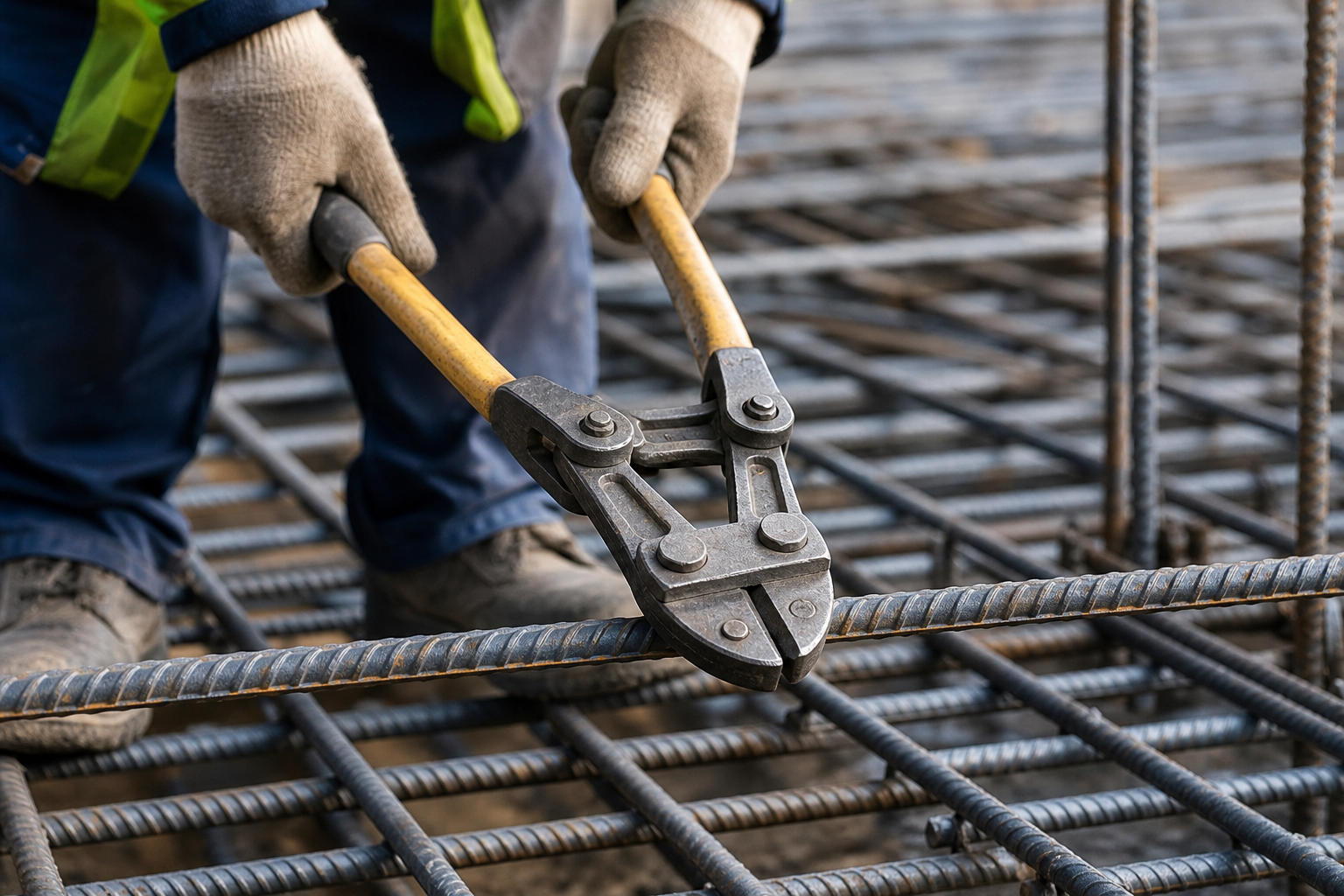
Site cutting methods
- Portable hydraulic rebar cutters, used for quick, clean cuts on small jobs and fast changes.
- Angle grinders or chop saws with abrasive cutoff wheels, common on site for mid-volume cutting; operators must control sparks and dust.
- Cutoff wheels and reciprocating saws for occasional cuts where mobility is important.
Site cutting is convenient for last-minute adjustments, but always confirm lengths against the bar bending schedule before cutting to avoid waste and rework. The practical pros and cons of each tool are summarized in hands-on guidance such as the combined cutting and bending article linked above How to Bend Rebar: A Step-by-Step Guide.
Shop cutting equipment
- Hydraulic shears and powered cold saws that produce repeatable, burr-free cuts for high-volume work.
- Automated cut-and-bend machines that cut to length and bend in sequence from bar bundles, improving accuracy for repetitive schedules.
- Dedicated fabrication lines where quality control and dimensional checks are built into the workflow.
Shop cutting is usually preferred for large volumes and when dimensional accuracy is critical, because it reduces handling and fitting time on site.
Common bending methods and equipment
Manual bending and small-site techniques
For small-diameter bars or one-off adjustments, manual benders, leverage jigs, and bar hooks are used. These methods work for modest bending angles but can be labour intensive and inconsistent for larger-bar work. Guidance on careful, incremental bending and when to avoid heat is available in practical hand-bending overviews such as How to Bend Rebar Manually.
Mechanical benders and roll benders
In a shop or high-volume site setup, mechanical benders, roll benders, and powered ring benders give consistent radii and repeatable angles across many bars. These machines are the standard when projects reference a bar bending schedule and require a high level of dimensional control.
Combination cut-and-bend machines and portable benders
Combination machines are widely used where mobility and speed are required because they both cut and bend in a single operation. For many contractors and fabricators these machines are the practical middle ground between manual site methods and full shop fabrication; see technique and equipment summaries in the combined-process guidance How to Cut and Bend Rebar. For focused bending techniques that avoid cracking when forming tight shapes, Dass Rebar’s technical note discusses circle bending tips and mitigation of cracks Bend Rebar Into Circles Without Cracks: Expert Tips.
Safety essentials and authoritative guidance
Cutting and bending rebar involve mechanical, thermal, and handling hazards. Basic controls include machine guarding, lockout procedures, eye and face protection, heavy gloves, steel-toe footwear, hearing protection, and secure material handling to avoid dropped loads. Hot work, such as heating bars to bend, requires hot-work permits and flame control. For authoritative safety checklists and deeper guidance, consult occupational safety organisations and trade technical notes that address working safely near rebar and on-site cutting and bending procedures.
When to order shop-fabricated cut-and-bent rebar
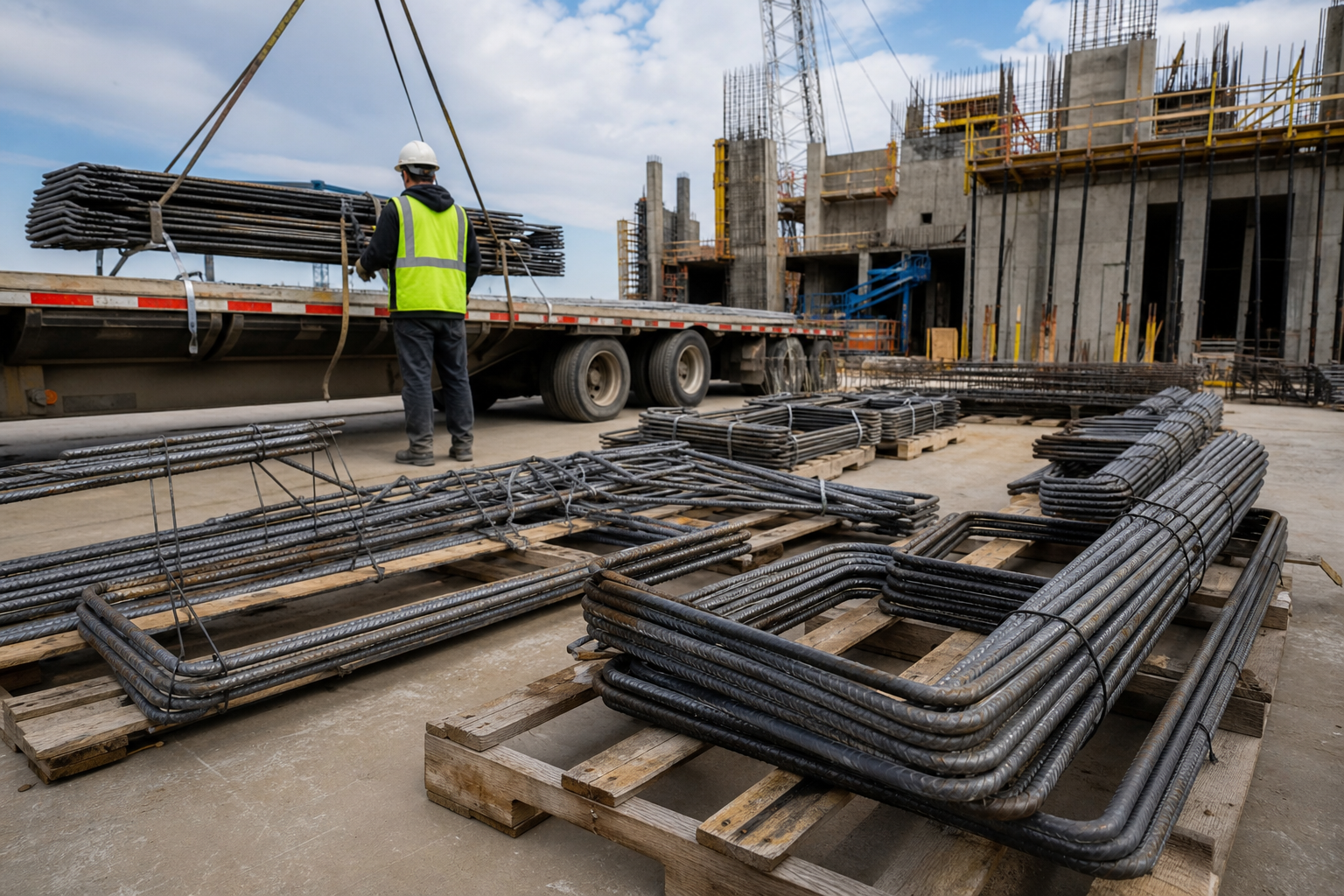
Outsourcing fabrication to a shop reduces site uncertainty. Consider ordering shop-fabricated rebar when any of these conditions apply.
- High complexity or quantity, such as numerous cages, mats, or repeating bent shapes where repeatability and speed matter.
- Strict tolerances and coordination driven by a bar bending schedule or infrastructure specifications that require close dimensional control.
- Compliance or project-risk drivers like municipal or MTO requirements where certified materials and traceable fabrication records reduce approval friction.
Industry discussions on cut-and-bend benefits highlight reduced site rework and better quality assurance when fabrication is completed in a controlled shop environment. For Ontario infrastructure projects, using an MTO-approved supplier can be especially important; request supplier documentation when required.
How Dass Rebar supports your Ontario project
Dass Rebar is an Ontario-based reinforcing steel supplier that offers in-house estimating and rebar detailing, shop cutting and bending (fabrication), welded mesh and GFRB supply, MTO-approved materials such as Grade 500W and 400W bars with epoxy options, and a dedicated trucking fleet for coordinated delivery across the GTA and Ontario. These capabilities let contractors move from a shop drawing to shop-fabricated components and scheduled delivery with fewer site punches and clearer installation sequencing. For detailed bending tips see Dass Rebar’s technical note on circle bending Bend Rebar Into Circles Without Cracks: Expert Tips, and to request project quotes or shop drawings use the supplier contact page Contact Us or the Dass Rebar homepage Dass Rebar for more information.
Decision checklist, common objections, and how to choose
- Criteria to weigh: required accuracy, project scale, site access constraints, and compliance needs.
- Common objections include perceived higher cost and lead time. Mitigations include partial shop fabrication, staged deliveries, and on-site assembly to reduce on-site labour and rework.
- Recommended next actions: request a stamped shop drawing from your supplier, confirm material certifications for MTO or municipal jobs, and schedule a delivery window that fits placement sequences.
Frequently asked questions
How do I decide whether to have rebar cut and bent in the shop or on site?
Decide based on volume, complexity, tolerance needs, and site conditions. Shop fabrication suits high volume and strict tolerances, while site cutting is practical for last-minute adjustments. If your project requires traceable material documentation or MTO compliance, favour shop fabrication. The combined cut-and-bend process articles linked earlier outline the trade-offs.
Does bending rebar on site weaken the steel or affect structural performance?
Properly executed bends do not inherently weaken reinforcement for intended use, but poor technique, kinking, or uncontrolled heating can reduce performance near bends. For critical or heavily loaded elements, follow engineered details and use shop-fabricated bends where quality control is easier to manage.
Can crews safely heat rebar to make bends on site?
Heating rebar changes steel properties and raises safety and quality issues. Heating may be used only for small, non-structural adjustments with appropriate permits, hot-work controls, and engineering approval. For routine, structural bending use mechanical benders or shop fabrication instead.
What documentation should I request from an MTO-approved rebar supplier?
Request material certifications, mill test reports, shop drawings or bar bending schedules, and proof of the supplier’s MTO approval when the project requires it. Dass Rebar provides in-house detailing and can produce shop drawings and coordinated delivery plans; contact the supplier to request project-specific documentation via the Dass Rebar contact page Contact Us.
Need shop-cut, bent, and delivered rebar for your Ontario project? Contact Dass Rebar to request shop drawings, a quote, or assistance with MTO-compliant material documentation.