
A hand held rebar bender is a portable tool that forms bends in reinforcing steel on site. It’s ideal for small batches, quick tweaks, and tight access. For repetitive shapes, heavier bars, coatings, and schedule pressure, pre‑bent, tagged bundles from Dass Rebar’s cut‑and‑bend shop are the faster, safer path.
By Navjot Dass — Last updated: 2026-07-13
Summary
Bend on site for isolated, simple angles. Shift to shop fabrication for repetition, bigger diameters, coatings, and schedule control. Dass Rebar has served Ontario since 1986 with in‑house estimating, detailing, fabrication, and a trucking fleet that stages tagged bundles by pour zone.
| In business since | 1986 |
|---|---|
| Approvals | MTO‑approved reinforcing steel supplier |
| Primary services | Rebar supply, fabrication (cut‑and‑bend), estimating, detailing, project management, delivery, on‑site assembly |
| Stocked products | Grade 500W & 400W rebar (epoxy‑coated options), GFRB, welded wire mesh (6″×6″ at 6/6, 9/9, 10/10) |
| Service area | Woodbridge, GTA, and Ontario |
| Hours | Mon–Fri: 7:00–16:30 |
| Logistics | Dedicated trucking fleet for coordinated, zone‑based drops |
Woodbridge logistics tip (crew‑tested)
Book first‑wave drops before 7:30 a.m. to miss congestion near Highway 50 – Zum Queen Station Stop WB. Tight sites around Queen St / Highway 50 run smoother when we stage tagged bundles curbside at 6 a.m., so your crane is lifting steel—not hunting for it.
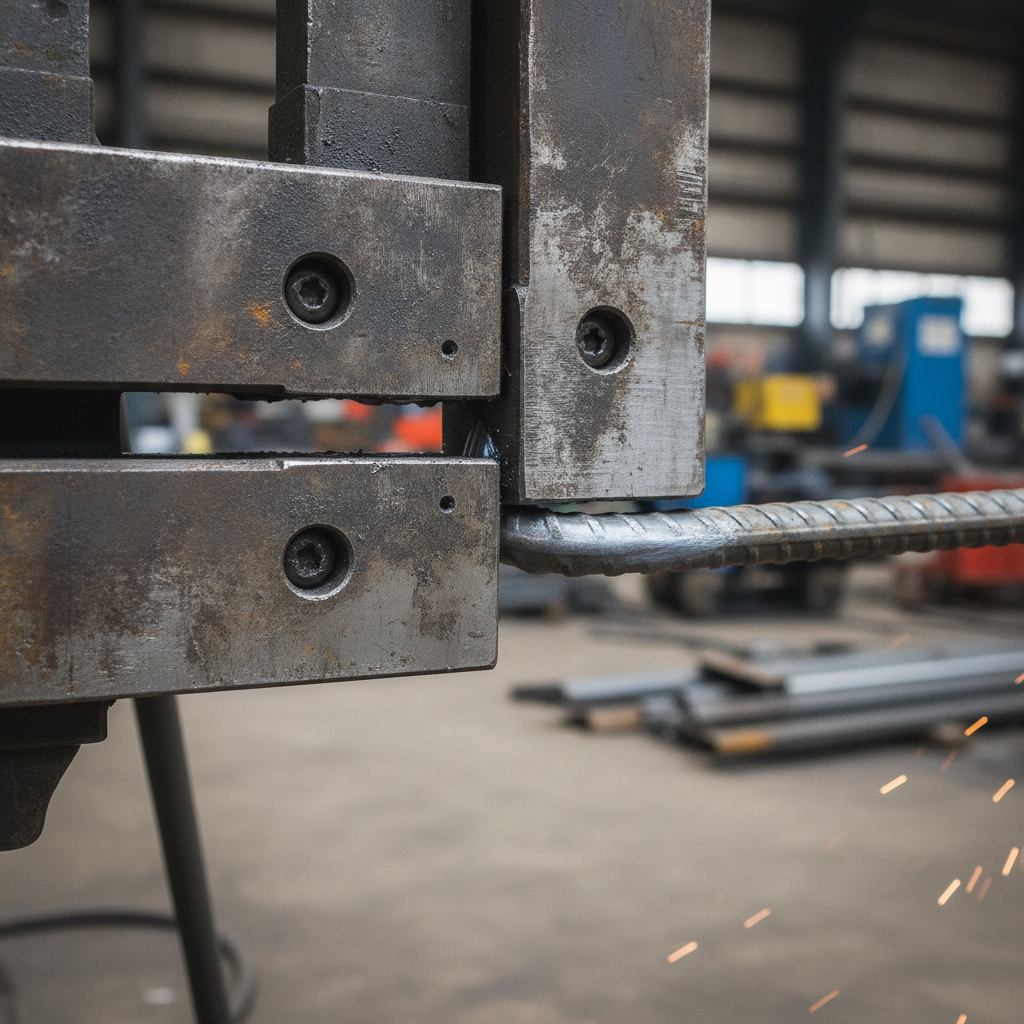
What Is a Handheld Rebar Bender and When Does It Actually Make Sense
A handheld rebar bender is a portable lever‑and‑die tool that forms bends in place. It’s the right call for simple 90°/45° bends in small quantities, tight access fixes, and punch‑list work. For repetition, coatings, larger bars, and accuracy, shift to shop bending.
On Ontario jobs, we see handheld units shine for dowel tweaks, top‑up hooks, and one‑off corrections where moving stock isn’t practical. Field cycle time matters: a typical 10M 90° bend takes about 2–3 minutes including mark, clamp, and cycle; a 15M bend often runs 4–6 minutes. Multiply that by 60–200 pieces and the math leans toward shop work.
- Best fits: Isolated bends, tight access, low counts, quick rework before a pour.
- Materials: Grade 400W is more forgiving; Grade 500W springs back more—plan 2–3° of over‑bend. Epoxy‑coated and GFRB are safer in shop conditions.
- Accuracy lens: Handheld angles commonly vary within ±3°; our shop benders routinely hold ±1° with consistent inside radii.
We keep crews efficient by combining approaches: carry a hand held rebar bender for exceptions, and order repetitive sets pre‑bent and tagged so cages drop in without trimming fights at the form.
Handheld Bender vs. Fabricated Rebar: An Honest Job‑Site Cost Comparison
Handheld wins on mobilization speed for one‑offs; fabrication wins on throughput, accuracy, and safety. If you’re repeating a bend more than a few dozen times, shop‑bent, tagged bundles cut hours from installation and reduce rework.
Here’s a field‑tested comparison we use during pre‑pour meetings:
| Scenario | Handheld rebar bender | Dass Rebar cut‑and‑bend |
|---|---|---|
| Few, simple 90° bends (under 20 pcs) | 2–3 min each (10M); 4–6 min (15M) | Shop setup outweighs benefit |
| Repetitive ties/stirrups (60–200 pcs) | Angle drift ±3°, fatigue sets in | ±1° angles, identical radii, bundled and tagged |
| 15M/20M bars in tight zones | Awkward handling; higher strain risk | Machine bends, safer lifts, clear labels |
| Epoxy‑coated stock | High coating scuff risk in the field | Protected dies; post‑bend inspection and wrap |
| GFRB | Not suited for cold field bends | Bends to specified larger radii under control |
| Tight pour window | Throughput becomes the bottleneck | Zone‑timed drops match the pour sequence |
For planning templates and sequencing ideas, we share practical notes in our Ontario fabrication overview and steel rebar guide. Both show how tagged bundles keep trades out of each other’s way.
How to Use a Handheld Rebar Bender Correctly (Step‑by‑Step)
Confirm the spec, mark precisely, choose the right die, brace the bar, make a single smooth cycle, verify the angle, and inspect the surface. Tag the piece immediately and stage it by zone to prevent mix‑ups.
- Verify drawings: Confirm size (10M, 15M, 20M), grade (400W/500W), angle, and inside radius.
- Mark the line: Use a paint marker; account for bend allowance and springback (add ~2–3° for 500W).
- Fit correct dies/pins: Match the specified radius—too tight risks micro‑cracks at the inside corner.
- Stabilize: Clamp the stock and support the free end; never free‑hand long bars.
- Cycle once: Smooth, continuous motion. Do not over‑bend and pull back; reverse cycles cold‑work the bar.
- Measure: Check with a square or template; handhelds commonly vary ±3°—adjust minimally.
- Inspect: Look for kinks, flaking, or scuffed epoxy; reject compromised pieces.
- Tag and stage: Label by pour zone and bundle with like pieces to speed installs.
For an extended safety checklist and bend templates, see our crew notes in the steel bar bending guide.
Common Mistakes Contractors Make With Portable Benders
Using the wrong die radius, rushing heavy bends without bracing, “back‑bending” to fix angles, and ignoring coating damage are the big four. Each one slows installs and increases rework.
- Wrong radius: Too‑tight radii concentrate stress and create hairline cracks; cages fight the formwork.
- Poor bracing: Long bars whip. Support the free end and clear the swing arc.
- Back‑bending: Over‑bending and pulling back weakens the bar due to cold‑work—don’t do it.
- Epoxy damage: Field jaws chew through the green jacket; that exposes steel and shortens service life.
- GFRB in the field: Glass fiber bars demand larger bend radii; cold field bends risk cracking—keep this in the shop.
- No tagging: Unlabeled pieces waste crane time; tag as you go.
A quick story: a Woodbridge foreman called after hand‑bending ~180 identical stirrups. Angles drifted a few degrees, and the cage wouldn’t seat. We shipped a tagged set that afternoon; the crew swapped them in and poured on schedule the next morning.
When to Call a Fabricator Instead (Signs Your Job Has Outgrown the Tool)
If you’re repeating bends, handling 15M/20M, protecting coatings, or racing a pour date, move the work to the shop. You gain consistent geometry, safer handling, and faster installs.
- Repetition threshold: More than ~40–60 identical bends tips the balance toward fabrication.
- Heavy bars: 15M and 20M are cumbersome in tight decks; machine control matters.
- Coatings and GFRB: Shop‑controlled bends preserve epoxy jackets and meet GFRB radii.
- Schedule: Tagged bundles staged by zone remove a bottleneck during pours.
Explore coordination tactics in our Woodbridge supplier guide and reinforcement supplies.
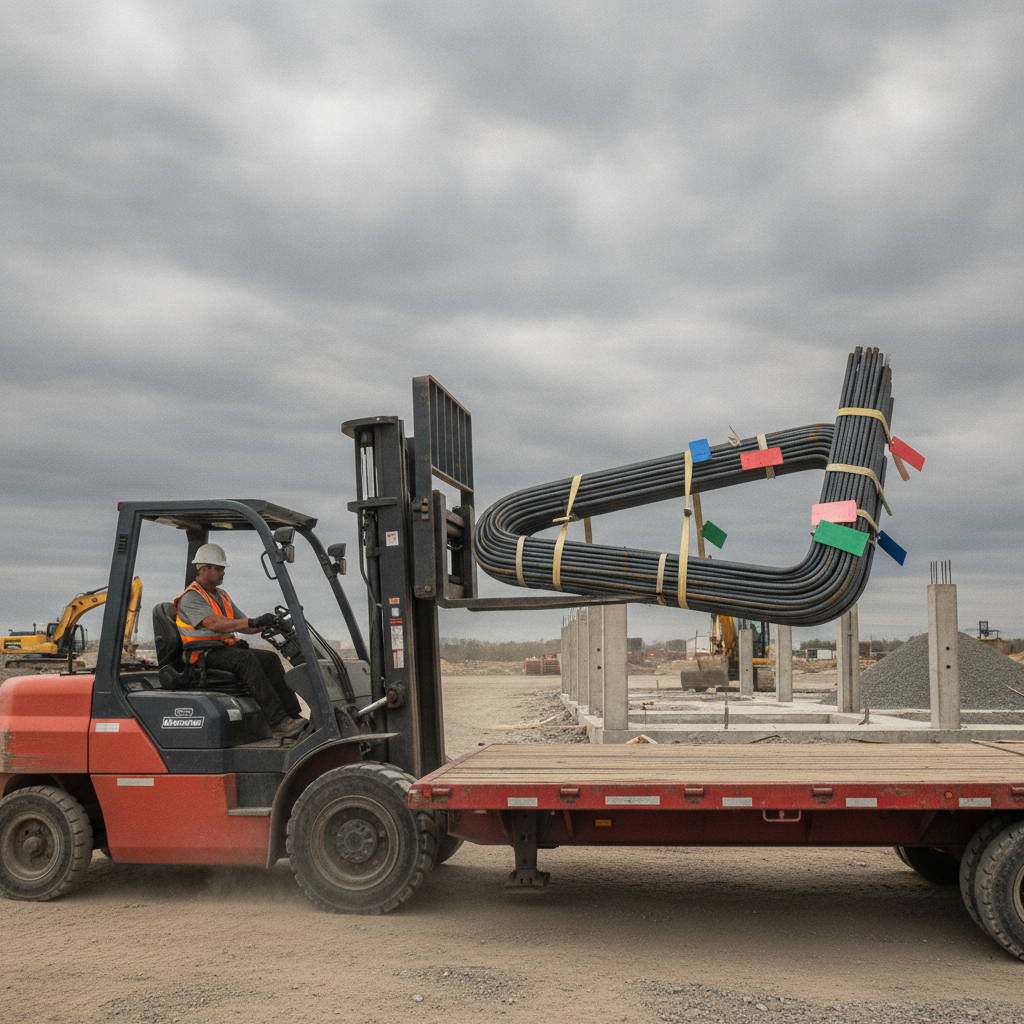
How Dass Rebar’s Cut‑and‑Bend Fabrication Works for Your Project
Send drawings, we perform in‑house takeoff and detailing, fabricate to spec, tag by zone, and deliver with our trucking fleet. Installers pull bundles in order and build clean cages without on‑site bending delays.
Our coordinated workflow
- Estimating & takeoff: We quantify bars and spot repetition to reduce site labor.
- Detailing: Shop drawings and bar lists standardize angles, radii, and sequences.
- Fabrication: Machine bends for 10M, 15M, and 20M; Grade 400W/500W; epoxy options.
- Tag & package: Each bundle is labeled to pour zones for fast retrieval.
- Delivery: Our fleet times drops to your pour windows across Woodbridge and the GTA.
- On‑site assembly: Crews can assist with tying/assembly where needed.
Unsure where the break‑even is? Share your bar list. We’ll flag which bends suit a hand held rebar bender and which should be shop‑fabricated to tighten schedule and QA.
FAQ
These answers reflect what we tell Woodbridge foremen daily: use the handheld for simple exceptions; rely on shop bends for volume, coatings, and accuracy.
What sizes are practical with a handheld rebar bender?
Most crews use handhelds for 10M and select 15M bends in low counts. Handling 20M in tight decks slows work and increases strain risk. If you’re repeating the same bend more than a few dozen times, move it to the shop for consistency and safety.
Can I field‑bend epoxy‑coated or GFRB bars?
We don’t recommend it. Epoxy jackets scuff in handheld jaws, exposing steel. GFRB requires larger bend radii and is prone to cracking if cold‑bent on site. Shop‑controlled bends preserve durability and meet specified radii.
How accurate are handheld bends compared to shop bends?
Field bends with handhelds typically vary about ±3° depending on bracing and operator fatigue. Our shop benders hold about ±1° with consistent inside radii. That difference shows up during cage fit‑up and formwork.
Do you deliver pre‑bent, tagged bundles by pour zone?
Yes. We coordinate drops with our trucking fleet, label by zone, and stage curbside when access is tight. Crews spend time installing—not sorting. This is a major time‑saver on cores and shear walls in Woodbridge.
Local considerations for Woodbridge
- Stage early deliveries to bypass traffic near Highway 50 – Zum Queen Station Stop WB.
- Cold weather slows hydraulic cycles; warm handheld units before critical bends for angle accuracy.
- Tight corridors around Queen St / Highway 50 benefit from tagged bundles to reduce crane picks.
Key takeaways
- Use a hand held rebar bender for simple, low‑count bends and tight access fixes.
- Shop‑fabricated, tagged sets win on repetition, coatings, larger bars, and schedule.
- Dass Rebar aligns estimating, detailing, fabrication, and delivery to keep pours on time.
For company updates and industry context, see Dass Metal updates and highlights from our open house. If you want fabrication specifics, review our fabrication process.