
Reinforcing steel is the system of deformed bars and welded wire embedded in concrete to carry tensile forces, control cracking, and improve ductility. Typical yield strengths range from roughly 58–73 ksi (400–500 MPa). Managed end-to-end—estimating, detailing, fabrication, delivery, and assembly—it shortens schedules. From our Woodbridge base in 370 New Enterprise Way, Dass Rebar supports Ontario projects with MTO-approved supply and coordinated services.
By Navjot Dass — Dass Rebar
Last updated: 2026-05-16
Overview & Table of Contents
This complete guide explains reinforcing steel fundamentals and shows how better estimating, detailing, fabrication, delivery, and on-site assembly eliminate delays. Learn bar types, mesh options, coatings, scheduling tactics, QA/QC steps, and Ontario-focused practices—plus practical tools and examples—so your next pour stays on time and compliant.
- What is reinforcing steel?
- Why reinforcing steel matters
- How reinforcing steel works in concrete
- Types, coatings, and mesh (including 10M)
- Best practices to prevent delays
- Tools, standards, and field checklists
- Case studies and Ontario examples
- Frequently asked questions
- Key takeaways & next steps
Local considerations for 370 New Enterprise Way
- Plan GTA trucking windows around peak traffic so crane picks and pours aren’t forced into overtime; sequenced loads reduce on-site congestion.
- In winter, keep bars dry and ice-free, and verify heated enclosures before inspection; cold snaps can affect cover tolerances and finish quality.
- Coordinate municipal inspections with approved shop drawings and pour-by-pour bar lists to avoid resubmittals that stall slab or wall placements.
What is reinforcing steel?
Reinforcing steel refers to deformed bars and welded wire placed in concrete to carry tension, limit cracking, and ensure ductile behavior. Rib deformations develop bond so forces transfer. Proper grade selection, bar spacing, laps, and cover deliver strength, serviceability, and durability.
Concrete excels in compression but has low tensile capacity. Bars take tension, enabling beams, slabs, walls, and footings to resist bending and shear reliably. Detailing defines bar sizes, spacing, splice lengths, and hook geometry. Field placement then ensures required cover—often 1.5–2.0 inches for interior slabs, higher near weather or soil exposure—to protect steel and maintain bond.
For Ontario projects, common strength classes include Grade 400W (about 58 ksi) and Grade 500W (about 73 ksi). Those figures set yield points that drive bar count and spacing. The right combination of grade, size, and layout makes the difference between a crack-prone slab and a durable, serviceable structure.
Why reinforcing steel matters
The right reinforcement plan improves safety, speed, and lifecycle. Early takeoffs, accurate shop drawings, and punctual delivery compress the critical path. Correct grades, coatings, and cover reduce corrosion risk and maintenance, increasing reliability for buildings and infrastructure.
- Structural reliability: Bars provide tensile capacity and ductility. Even modest increases in steel area can reduce crack width and enhance service life.
- Schedule certainty: Pre-bent, tagged bundles placed by pour accelerate installation. Crews work faster when bar marks are logical and kits arrive in sequence.
- Inspection readiness: Clear shop drawings and labeled bundles streamline checks. Inspectors verify sizes, spacing, laps, and cover without hunting for information.
- Risk reduction: The biggest jobsite delays often come from missing bars, wrong bends, or uncoated pieces in corrosive zones. Upstream controls avoid downstream rework.
In our experience supporting residential high-rise and municipal work across Ontario, projects that lock detailing and logistics early see fewer inspection holds and more predictable pour calendars. Simple steps—issue bar lists per pour, pre-stage mesh, and confirm splice strategies—translate directly into saved days.
How reinforcing steel works in concrete
Rebar and concrete act compositely: concrete carries compression while steel carries tension. Bond at the ribs transfers force, and matched thermal movement keeps strains compatible. Adequate development length, lap splices, and cover ensure reliable force transfer throughout a member’s life.
- Composite action: Under bending, the concrete compresses at the top while the steel in the tension zone resists stretching.
- Bond and development: Deformations engage concrete to prevent slip. Development length and laps (often on the order of 40–60 bar diameters, depending on conditions) make sure bars reach full strength.
- Anchorage and hooks: Hooks and mechanical anchorage help where embedment is limited or congestion is high.
- Shear reinforcement: Stirrups and ties control diagonal cracking and confine concrete in columns and beams.
- Cover and durability: Cover protects steel from corrosion and fire. Exterior or chloride exposure typically requires greater cover than interior conditioned spaces.
On site, chairs and spacers position reinforcement. Checklists should confirm bar size, spacing, laps, cleanliness, and cover before every pour. That 10-minute verification often prevents hours of rework.
Types, coatings, and mesh (including 10M)
Common reinforcement includes carbon-steel bars in 400W and 500W classes, epoxy-coated bars for added corrosion resistance, glass fiber bars (GFRB) for non-corrosive performance, and welded wire mesh for slabs and walls. Selection depends on loads, exposure, constructability, and service-life goals.
Dass Rebar maintains in‑stock availability of widely used specifications, so Ontario contractors can source quickly and keep cycles moving. Here’s how to choose:
Carbon-steel bars
- Grades: Grade 400W (≈58 ksi) and Grade 500W (≈73 ksi) are common in Ontario building and infrastructure work.
- Use cases: General structural reinforcement in beams, slabs, walls, columns, and footings.
- Benefits: Predictable strength and ductility; broad availability; proven performance.
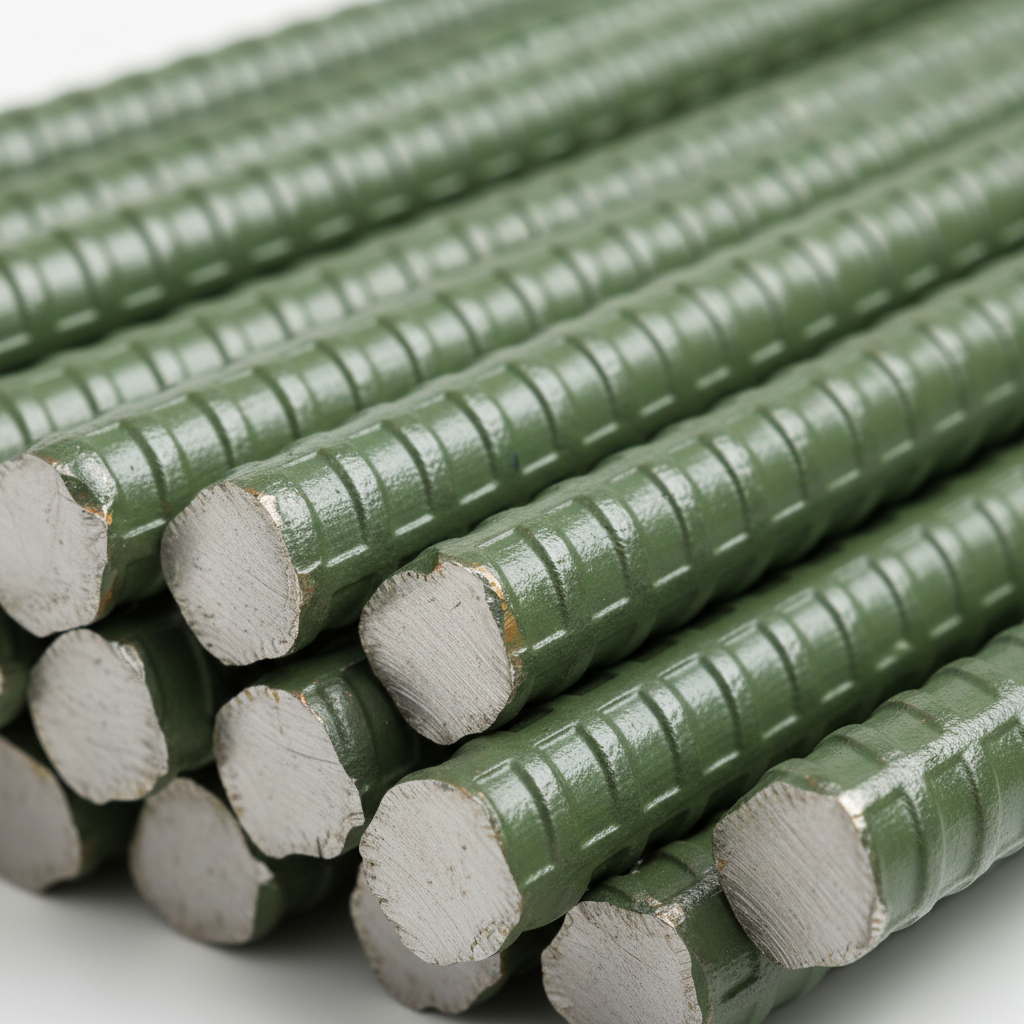
Epoxy-coated rebar
- Purpose: Polymer-coated surface adds corrosion resistance in chloride-prone or deicing-salt environments.
- Use cases: Parking structures, bridge decks, exterior slabs, podiums, and exposed or splash zones.
- Handling tip: Protect coating during unloading and tying; use non-marring supports and ties.
Glass Fiber Reinforcing Bars (GFRB)
- Purpose: Non-corrosive, lightweight bars that don’t rust and are electrically non-conductive.
- Use cases: Highly aggressive environments, water treatment, or where magnetic neutrality is needed.
- Detailing note: Different modulus and bond characteristics mean splice and development rules differ from steel—follow manufacturer guidance.
Welded wire mesh
- Common configurations: 6″ × 6″ at 6/6, 9/9, and 10/10 in sheets or rolls for slabs and walls.
- Benefit: Faster placement and consistent crack control, especially for slab-on-grade work.
- Field tip: Keep mesh on chairs; don’t let it sink during concrete placement.
Bar sizes and the 10M reference
- 10M rebar: Commonly used size with nominal diameter of about 11.3 mm, suitable for slabs, walls, and ties depending on design.
- 15M and 20M: Larger diameters for higher loads or longer spans, often in beams, columns, and transfer elements.
- Actionable step: When in doubt, align size with bar mark schedules in approved shop drawings to avoid substitutions.
For a deep dive on selection and ordering, see our internal guide on 10M rebar uses and our broader rebar fabrication practices that help cut rework.
| Reinforcement type | Typical use | Strength class | Corrosion performance | Choose when… |
|---|---|---|---|---|
| Carbon-steel (400W) | General slabs, beams, walls | ≈58 ksi | Standard | Interior or low-exposure structures |
| Carbon-steel (500W) | Higher-demand members | ≈73 ksi | Standard | When you need fewer bars via higher yield |
| Epoxy-coated steel | Bridge decks, parking, podiums | 400W/500W core | Improved | Chloride or deicing-salt exposure |
| GFRB | Aggressive or magnetic-sensitive zones | Manufacturer-specific | Non-corrosive | When long-term corrosion immunity is key |
| Welded wire mesh | Slab-on-grade, walls | Varies by wire | Standard | Speed and consistent crack control |
Best practices to prevent delays
Lock the sequence—estimating → detailing → fabrication → delivery → assembly. Approve shop drawings early, release bars by pour break, and schedule trucking with crane and formwork cycles. On site, verify cover, chairs, and laps before concrete arrives.
Plan upstream, protect downstream
- In-house estimating: Share up-to-date drawings to enable accurate takeoffs. Clear RFIs reduce redesign later.
- Detailing for constructability: Avoid congestion at beam-column joints; stagger laps where practical; provide realistic bend radii.
- Fabrication accuracy: Cutting and bending to tolerances avoids field modifications. Tag bundles clearly by bar mark and pour.
- Delivery windows: Dedicated trucking aligned with site logistics keeps labor productive and laydown yards orderly.
- Assembly readiness: Chairs, spacers, and tie wire staged per pour; pre-checked cover and laps prevent inspection holds.
Submittal-to-pour playbook
| Phase | Primary owner | Deliverable | Checkpoint |
|---|---|---|---|
| Estimating | Dass Rebar + GC | Quantity takeoff | Scope clarified; RFIs issued |
| Detailing | Dass Rebar | Shop drawings & bar lists | Coordination with trades; congestion resolved |
| Fabrication | Dass Rebar | Cut & bend; tags | QC dimensions verified |
| Delivery | Dass Rebar fleet | Sequenced loads | Matches crane/form cycles |
| Assembly | Installer | Chaired & tied steel | Inspection passed; pour proceeds |
To see how early logistics affects outcomes beyond concrete, review these insights on steel framing coordination across the JDASS network—tight planning upstream pays dividends in the field.

Field checks that save hours
- Cover and supports: Confirm top and bottom cover before placing. Many inspection rejections trace to insufficient cover or sagging mesh.
- Laps and splices: Measure a few typical joints; label lap lengths on drawings; avoid stacking laps where congestion will occur.
- Cleanliness: Bars should be free of loose rust, oil, or mud; light surface rust is acceptable in most cases but knock off scale.
- Bar substitution: If a size is swapped, recheck development length and spacing; document approvals before proceeding.
- Epoxy handling: Use non-marring chairs and ties; repair minor coating damage per specification before the pour.
For delivery timing lessons learned from active jobs, see our perspective on keeping builds moving and our focused write-up on why timely rebar delivery matters.
Helpful CTA: If you’re sequencing multiple pours across sites, we can kit by pour, tag bundles to match drawings, and align trucking windows with your crane schedule. Start with a coordinated takeoff and shop drawing review—visit Dass Rebar to connect with our team.
Tools, standards, and field checklists
Use code-aligned design assumptions, current product standards, and plain-language field checklists. Digital takeoffs, bar mark schedules, delivery trackers, and inspection templates speed submittals and help crews pass checks the first time.
Practical tools our teams use
- Digital takeoff sheets: Trace members, record bar sizes and spacing, and auto-roll totals into bar lists.
- Bar mark schedules: Clear marks and tags that installers can match quickly in the laydown yard.
- Delivery trackers: Sequence loads by pour break and floor, then notify site when trucks leave.
- Inspection checklists: 1-page lists covering bar sizes, spacing, laps, cover, cleanliness, and supports.
- Photo verification: Quick snapshots before concrete placement create a solid QA/QC record.
For background on how reinforcement enables composite action, this explainer on how rebar strengthens concrete pairs well with our rebar detailing guide and our structured rebar supply planning approach.
Coordinating metal scopes? Our affiliates share guidance on heavy-gauge framing that mirrors the same plan‑early, build‑fast principles we use for reinforcement.
Case studies and Ontario examples
Coordinated reinforcing steel—detailing first, logistics locked—shortens the path from submittal to pour. Ontario projects that sequenced deliveries by pour and staged mesh saw fewer inspection holds, steadier crane utilization, and consistent finishes across levels.
Residential high-rise podium
- Challenge: Podium decks with traffic-bearing exposure demanded corrosion protection and tight schedules.
- Approach: Epoxy-coated bars in splash zones, per-pour bar lists, and delivery windows tied to crane cycles.
- Result: Inspection passed on first review across consecutive pours; uniform finishes reduced patching.
Mid-rise infill with limited laydown
- Challenge: Constrained urban site; minimal space for staging.
- Approach: Just-in-time trucking with pre-tagged bundles and floor-by-floor kitting.
- Result: Crews placed steel without reshuffling; no idle time waiting for the right bundles.
Municipal works
- Challenge: Multiple approvals and inspection windows across stakeholders.
- Approach: Front-loaded RFIs, clear shop drawings, and walk-through checklists shared ahead of time.
- Result: Predictable pour dates; fewer change-driven splice adjustments in the field.
These patterns align with our integrated model—steel reinforcement supply, fabrication, detailing, and project planning—so you’re not chasing separate vendors when time is tight.
Frequently asked questions
These quick answers cover grades, coatings, laps, inspection timing, and handling. Use them for fast site decisions and smooth approvals without digging through long specs.
What does epoxy-coated rebar do in practice?
Epoxy-coated bars add a protective polymer layer that slows corrosion in chloride-rich or deicing-salt environments. They’re common in parking structures, bridge decks, podium slabs, and splash zones. Handle carefully to avoid coating damage and repair small nicks per specification before the pour.
How much lap splice length should I allow?
Lap length depends on bar size, grade, concrete strength, cover, and location (tension or compression). As a rough field memory aid, many tension lap splices fall in the 40–60 bar-diameter range. Always follow approved shop drawings and project specifications for exact values.
What’s the simplest way to avoid inspection holds?
Stage chairs and spacers, verify cover before concrete arrives, and keep bundles tagged to shop drawing bar marks. Confirm laps and bar sizes in a short pre-pour walkthrough. Those steps catch the majority of issues—insufficient cover, wrong spacing, or misidentified bars—before inspectors do.
When should I choose GFRB instead of steel?
Use GFRB where long-term corrosion resistance or magnetic neutrality is a priority—water treatment, highly aggressive environments, or sensitive equipment areas. Remember that development, splicing, and handling practices differ from steel; follow manufacturer guidance and project specs.
How do I keep welded wire mesh effective in slabs?
Keep mesh on chairs so it stays in the intended plane during placement. Overlap sheets per drawings, keep laps staggered, and avoid walking mesh into the subbase. A quick pre-pour check for cover and cleanliness protects crack-control performance.
Key takeaways & next steps
Treat reinforcing steel as a schedule-critical system. Confirm grades early, lock shop drawings, and release fabrication by pour. Stage deliveries to match crane time, and run tight QA/QC before every placement for predictable, on-time pours.
- Plan early: Complete takeoffs and RFIs, then approve shop drawings without delay.
- Sequence smart: Kit and tag by pour; align trucking windows with crane and formwork cycles.
- Verify fast: Use one-page checklists to confirm cover, laps, spacing, and cleanliness before concrete.
- Choose well: Match coatings and bar types to exposure and lifecycle goals; use 10M, 15M, or 20M where design requires.
- Leverage partners: Keep supply, fabrication, delivery, and assembly under one roof to reduce coordination risk.
Ready to streamline your next pour across Ontario? Our team in Woodbridge aligns estimating, detailing, fabrication, delivery, and assembly so your reinforcement arrives right the first time. Start a conversation at Dass Rebar and book a coordination review.