
“Rebar supplier” refers to a partner that estimates, fabricates, and delivers reinforcing steel and mesh so concrete crews can place on time. Based at 370 New Enterprise Way in Woodbridge, Dass Rebar aligns takeoffs, detailing, trucking, and on-site assembly support to keep pours on schedule across Ontario with compliant, MTO-approved materials.
By Navjot Dass • Dass Rebar • Last updated: 2026-06-02
Above-Fold Section: Hook + TOC
Fast, coordinated reinforcement prevents schedule slips. The right rebar supplier synchronizes estimating, detailing, fabrication, and delivery so steel arrives staged by pour break. This section shows how to align scope, timing, and logistics—so crews place bars and mesh the moment forms are ready, keeping cranes productive and decks cycling.
Use this guide to move from drawings to deck pours without bottlenecks. You’ll learn how we compress lead time, what to order, and when.
- What a rebar supplier actually does
- Why supplier choice impacts quality, safety, and schedule
- End-to-end workflow from takeoff to on-site assembly
- Types of reinforcement (Grade 400W/500W, epoxy-coated, GFRP, welded wire mesh)
- Best practices for ordering, tagging, and staging
- Tools and resources to reduce RFIs and rework
- Local logistics for Woodbridge and York Region
- Case studies from Ontario projects
Quick Summary
A dependable rebar supplier turns drawings into staged steel on site—accurately, on time, and to spec. Expect in-house estimating, detailing, cut-and-bend fabrication, dedicated trucks, and optional assembly support. MTO-approved products, traceable mill certs, and bar-tag staging reduce sort time and keep pours within planned windows.
- Core services: estimating, detailing, fabrication, delivery, assembly support
- Products on hand: Grade 400W/500W; epoxy-coated; GFRP; welded wire mesh 6″×6″ (6/6, 9/9, 10/10)
- Typical sizes: 10m, 15m, 20m (on request)
- Compliance: MTO-approved materials and documented mill test certificates
- Delivery: dedicated trucking fleet with predictable ETAs and laydown planning
What Is a Rebar Supplier?
A rebar supplier estimates quantities, creates shop drawings, fabricates cut-and-bend bars, and delivers staged bundles to your site. The best suppliers maintain stock, provide traceable mill certs, and coordinate trucks to match pour windows—reducing crane idle time and avoiding cold joints or rework.
In our experience, the term covers more than purchasing. It’s a coordinated service linking design intent to field placement. When estimating and detailing live under one roof with fabrication and logistics, information flows faster and errors drop.
- Estimating: material takeoffs from IFC drawings and revisions
- Detailing: shop drawings, bending schedules, bar lists, and tags
- Fabrication: cutting, bending, bundling, heat-number tracking
- Delivery: flatbeds, staging by zone/pour break, site access coordination
- Assembly support: optional on-site install assistance or field fixes
Want a deeper primer? See our overview of steel grades and markings in Steel Rebar Basics and how we keep timelines intact in our supply guide.
Why Your Choice of Rebar Supplier Matters
Supplier performance drives safety, durability, and schedule. Accurate takeoffs, clean shop drawings, and punctual deliveries save shifts, while MTO-approved materials and mill certs protect public infrastructure. Integrated teams close RFIs faster and stage steel so crews place bars instead of sorting bundles.
Here’s the thing: a single missed pour can push follow-on trades by 24–48 hours. We’ve seen cycles recover when detailing resolves congestion before fabrication and when trucks arrive tagged by pour sequence.
- MTO-approved compliance: required for Ontario infrastructure; documentation verifies grade and coating
- Traceability: heat numbers and mill certificates enable QA audits
- In-house detailing: detects clashes (e.g., congested 20m bars at column heads) before the shop floor
- Dedicated fleet: predictable ETAs reduce crane idle minutes and labor shuffle
- Proven Ontario delivery: residential, commercial, and municipal jobs with repeat contractors
For a service-level perspective on timing, review our note on why timely arrivals keep schedules intact in this delivery explainer.
How the Rebar Supply Process Works (End-to-End)
The supply process translates drawings into staged steel through six steps: bid/estimating, detailing approvals, fabrication, staging/logistics, delivery/site checks, and optional assembly support. Aligning these steps removes guesswork and compresses lead time from PO to deck pour.
Step-by-step workflow
- Bid & estimating: Receive IFC drawings; quantify 10m/15m/20m bars; identify epoxy-coated or GFRP zones.
- Detailing & approvals: Produce shop drawings and bend schedules; resolve RFIs; lock bar marks and laps.
- Fabrication & tagging: Cut and bend to spec; bundle by zone; attach tags with bar mark, heat number, and pour sequence.
- Staging & logistics: Confirm laydown space, crane picks, truck routes, and delivery windows (day or night).
- Delivery & site checks: Verify mill certs and counts; spot-check cover and splice geometry at critical nodes.
- Optional assembly support: Provide on-site assistance for first-pour alignment and congestion fixes.
Process table (roles vs outputs)
| Phase | Primary role | Output | Risk reduced |
|---|---|---|---|
| Estimating | Estimator | Takeoff (tonnage, mesh) | Under/over-ordering |
| Detailing | Detailer | Shop drawings, bar lists | Field clashes, RFIs |
| Fabrication | Shop | Cut-and-bend bundles | Wrong lengths/angles |
| Logistics | Dispatcher | Sequenced deliveries | Crane idle time |
| On site | Foreman/QC | Verified placement | Rework, cold joints |
For a deeper breakdown of fabrication sequencing and QA, see our rebar fabrication guide.
Types/Methods/Approaches: Reinforcement and When to Use Them
Ontario projects rely on Grade 400W and 500W steel, epoxy-coated bars for chloride exposure, GFRP for non-conductive/corrosion-immune needs, and welded wire mesh to speed slabs. Selecting by exposure, load, and constructability balances durability, weight, and placement time.
Core options
- Carbon steel (Grade 400W/500W): Workhorse reinforcement; 400W ~ 58 ksi yield; 500W ~ 73 ksi yield. Stocked in 10m, 15m, and 20m sizes.
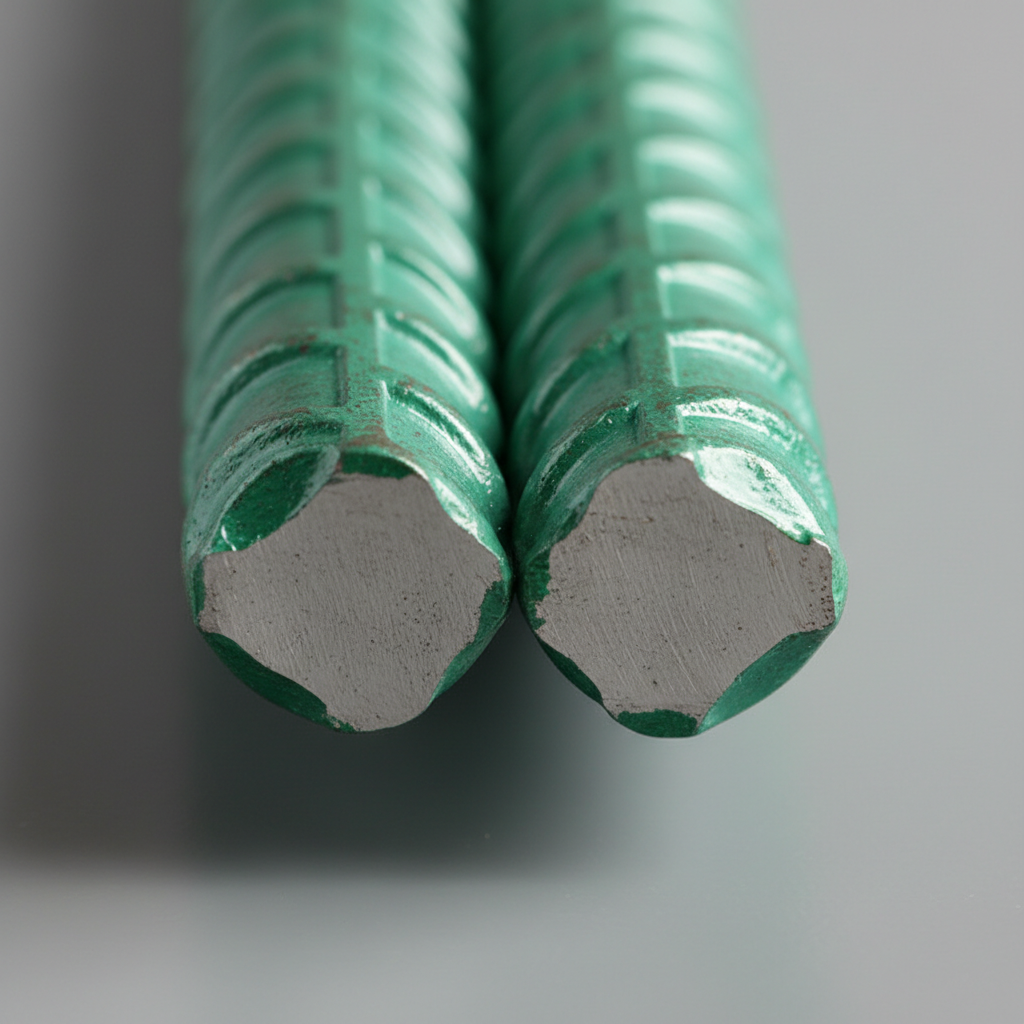
- Epoxy-coated rebar: Green-coated steel for deicing and splash zones; reduces chloride-induced corrosion.
- GFRP (glass fibre reinforcing bars): Non-conductive, corrosion-immune; ideal near electrical equipment or in harsh chemistries.
- Welded wire mesh (6″×6″ at 6/6, 9/9, 10/10): Speeds slab and podium placement; predictable spacing and cover.
Selection tips
- Map exposure classes first (chlorides, moisture, stray current) to determine epoxy-coated or GFRP zones.
- Use 20m bars in high-moment regions to minimize congestion and lapped splices.
- Choose mesh for wide, repetitive slab areas; bar mats for complex geometry or high demand.
- Standardize bar marks and lap lengths (often 40–60 bar diameters, per design) to keep field checks simple.
Need a primer on sizes? Our 10m-specific rundown is here: 10m rebar uses guide. For a whole-of-project view, see our reinforcing steel supply guide.
Best Practices for Ordering and Scheduling
Lock scope early, align delivery with formwork cycles, and stage bundles by pour break. Tagging, night-before confirmations, and clear site access plans reduce sort time and crane idle minutes—keeping pours inside planned windows and labor productive.
Ordering checklist
- Share IFC drawings plus bulletins; flag epoxy-coated and GFRP zones.
- Confirm bar marks, lap lengths, hooks, and splices on congested nodes.
- Request mill test certificates and heat numbers with deliveries.
- Specify staging by zone/pour break; include laydown plan and crane pick order.
- Verify truck access, turnaround, and time-of-day restrictions.
- Pre-clear safety and PPE requirements for offloading crews.
Scheduling principles
- Sequence deliveries to start-of-shift to protect pour windows.
- Use just-in-time loads for tight sites; avoid double-handling.
- Lock nightly confirmations (ETAs, driver contacts, manifest).
- Align deck cycles so bars arrive 12–24 hours before placement.
- Stage mesh panels near slab start points to minimize backtracking.
For a wider look at how detailing and fabrication contribute to on-time arrivals, skim our detailing guide and Ontario supplier overview.
Need help aligning your next pour? Book a coordination call. We’ll review drawings, confirm bar marks, and map delivery windows to your deck cycles so the first truck lands exactly when you need it. Contact us via Dass Rebar.
Tools and Resources
Use code references, staging templates, and delivery trackers to reduce RFIs. Standardized bar lists, bend schedules, and mill-cert checklists improve traceability. Internal delivery dashboards and photo logs make QA fast during pours and audits.
- Spec references: Grade 400W/500W steel; epoxy-coated bars for chloride zones; GFRP where non-conductive reinforcement is required.
- Templates: takeoff workbook, bar list format, delivery manifest, mill-cert log, laydown map.
- Field tools: cover gauges, bar benders, tie wire reels, lifting hooks, mesh spreaders.
- QA artifacts: heat-number index, RFI register, pour-sequence photos, signed delivery tickets.
For context on compliance and trust signals builders look for, see this note on MTO-ready materials and documentation: MTO-ready reinforcing. For a GTA-centric view of supplier dynamics, browse our GTA supplier insights.
Local Logistics for Woodbridge and the Regional Municipality of York
Serving Woodbridge and the Regional Municipality of York hinges on tight routing near Highway 50 corridors, coordinated laydown, and seasonal planning. Staging near transit nodes reduces travel variability, while winter deicing exposure favors epoxy-coated steel in curb, deck, and splash-zone elements.
Our yard at 370 New Enterprise Way positions trucks close to key arterials, improving ETA reliability across York and the western GTA. We routinely plan deliveries to land early in the shift to protect morning pours and avoid afternoon congestion.
Local considerations for Woodbridge
- Time deliveries around Highway 50 – Zum Queen Stop EB traffic waves to keep ETAs predictable.
- Account for freeze–thaw and deicing salts; prioritize epoxy-coated bars for exposed infrastructure.
- For clustered sites near Fogal Rd / Highway 50, coordinate multi-drop runs to reduce idle time.
These small adjustments—route timing, exposure-driven material selection, and multi-site dispatching—can protect a full day on a tight schedule.

Case Studies and Examples
Coordinated estimating, detailing, and trucking shorten cycles on real jobs. Tagging by pour break, early RFIs, and epoxy-coated bars in splash zones cut sort time and extend service life—seen across residential, commercial, and municipal Ontario projects.
Hawthorne Residences (Toronto)
- Scope: podium slabs and verticals with 10m/15m bars; mesh for large slab areas.
- Approach: in-house detailing resolved beam-column congestion; bundles tagged by pour sequence.
- Outcome: smoother crane picks and reduced on-deck searching during early pours.
Hickory Terraces (Waterloo)
- Scope: multi-building coordination with recurring 15m/20m bar patterns.
- Approach: multi-drop trucking; standardized lap lengths and hooks simplified checks.
- Outcome: consistent deck cycles across buildings, minimizing labor spikes.
The Grand at Universal City (Pickering)
- Scope: podium and vertical elements with exposure near traffic and deicing zones.
- Approach: epoxy-coated 20m bars in splash-prone areas; mesh accelerated slab placement.
- Outcome: durable reinforcement strategy and predictable placement hours for forming crews.
Looking to apply similar sequencing on your job? Our fabrication best practices outline how cutting, bending, and tagging feed field productivity.
Frequently Asked Questions
These quick answers address the most common questions from Ontario GCs, concrete contractors, and developers. Each response is concise and action-focused so you can make faster decisions and keep pours on schedule.
What documents should arrive with my rebar delivery?
Ask for the delivery ticket, bar list with marks, heat numbers, and mill test certificates. For infrastructure work, include any required MTO documentation. Keep a photo log of tags and a signed receiving sheet for QA.
Do you supply 20m rebar and welded wire mesh?
Yes. We stock common sizes and supply 20m on request, along with welded wire mesh in 6″×6″ at 6/6, 9/9, and 10/10 gauges. Fabrication and delivery are scheduled to match your pour windows.
When should I choose epoxy-coated bars over standard steel?
Use epoxy-coated bars in chloride-rich environments—deicing exposure, splash zones, and certain bridge elements. The coating helps resist corrosion, improving durability in freeze–thaw cycles common across Ontario.
How do staged deliveries help tight sites?
Sequenced, just-in-time loads reduce double-handling and keep laydown areas clear. Tagging by pour break and zone means crews place steel immediately instead of sorting bundles, protecting your critical path.
What’s included in in-house detailing?
We produce shop drawings, bend schedules, and bar lists, then coordinate RFIs and approvals. Early clash detection minimizes field fixes, and standardized laps/hooks simplify site checks and QA.
Key Takeaways
Choose a rebar supplier with integrated estimating, detailing, fabrication, and delivery. Demand MTO-approved, traceable materials, staged by pour break. Align deliveries to shift starts, confirm ETAs the night before, and keep RFIs moving to protect the schedule and reduce rework.
- Integrated teams close RFIs faster and reduce errors.
- MTO-approved products and mill certs protect infrastructure work.
- Tagging by pour break cuts on-deck sorting time.
- Early-morning deliveries protect pour windows and crane time.
- Match material choice to exposure: epoxy-coated or GFRP where needed.
Conclusion
The best way to avoid delays is to coordinate early with a rebar supplier that controls estimating, detailing, fabrication, and dispatch. With traceable materials and sequenced deliveries, crews place steel the moment forms are ready—no searching, no surprises.
Dass Rebar brings 40+ years of reinforcing experience and MTO-approved supply to Ontario builders. We keep common grades and sizes in stock, including welded wire mesh and epoxy-coated options. Our dedicated trucking fleet and project management keep ETAs predictable across the GTA and beyond.
Ready to lock your next pour window? Share IFC drawings and constraints, and we’ll map a delivery plan that meets your deck cycles. Reach us at Dass Rebar.
Related Articles
If you’re streamlining reinforcement procurement, these deeper dives explain how supply, detailing, and fabrication work together to keep projects moving on time and to spec.
For supply strategy, see our rebar supply guide. If you’re comparing shops, review fabrication best practices. And for product basics that reduce field confusion, explore Steel Rebar Basics.