
Concrete reinforcing bar is a steel bar with deformations used to strengthen concrete in tension. It raises load capacity, limits cracking, and increases durability in slabs, walls, and bridges. From our Woodbridge base at 370 New Enterprise Way, Dass Rebar supplies concrete reinforcing bar, welded wire mesh, and in-house services to keep Ontario projects on schedule.
By Navjot Dass • Last updated: 2026-06-11
Above-Fold Overview and Table of Contents
Use concrete reinforcing bar for structural members that demand ductility, anchorage, and custom layouts; choose welded wire mesh for uniform crack control and speed in slabs and sidewalks. This guide explains how each works, where each excels, and how Dass Rebar coordinates estimating, detailing, fabrication, delivery, and assembly across Ontario.
This complete guide is written for general contractors, concrete contractors, developers, and construction managers who need fast, accurate answers and a practical plan. You’ll find definitions, how reinforcement works in concrete, a side-by-side comparison, best practices, tools, and real Ontario examples.
- What concrete reinforcing bar is and why it matters
- How steel and mesh share loads and control cracks
- Rebar vs mesh: selection criteria and a comparison table
- Grades (400W/500W), coatings, GFRB, and common M-sizes
- Ontario-focused best practices and local considerations
- Tools, checklists, and coordination workflows that prevent delays
Quick Summary
Concrete reinforcing bar provides strength, anchorage, and custom shaping for high-demand members; welded wire mesh speeds placement and controls shrinkage cracking in slabs. The best choice depends on load paths, spacing, bar development, exposure class, and schedule. Dass Rebar aligns estimating, detailing, fabrication, and delivery to meet these constraints.
Here’s the short version before we dive deep. For high loads, complex geometry, or seismically demanding members, use steel reinforcing bar with proper development length. For flatwork where crack control and speed dominate, welded wire mesh is often the right move. When corrosion risk is elevated, use epoxy-coated or consider GFRP where codes permit.
Local considerations for Woodbridge
- Plan staging near Queen St / Highway 50 to avoid congestion windows around peak commuting times; coordinate site delivery windows with our trucking fleet to minimize crane idle.
- Expect freeze–thaw cycles and deicing salts in the Regional Municipality of York; prioritize epoxy-coated reinforcing steel in exposed slabs-on-grade and parking structures.
- For tight urban sites in Woodbridge, preschedule bundles by pour sequence and bar lists to reduce laydown footprint and speed picks from the truck.
What Is Concrete Reinforcing Bar?
Concrete reinforcing bar (rebar) is deformed steel embedded in concrete to resist tensile forces. It develops bond through surface ribs, allowing the composite section to carry higher loads, control cracking, and provide ductility. Dass Rebar supplies Grade 400W and 500W rebar, epoxy-coated options, and detailing to match Ontario specifications.
Rebar turns concrete’s brittle tensile behavior into a ductile, predictable system. Its deformations transfer load by bond and mechanical interlock, ensuring stress is shared before cracks widen. Typical Canadian grades include 400W (≈400 MPa yield) and 500W (≈500 MPa yield). Epoxy-coated bar protects against chloride-driven corrosion in parking decks and exposed slabs.
- Primary function: carry tension and control crack widths so concrete can perform in compression.
- Bond and development: ribs provide anchorage; proper embedment and hooks ensure design strength.
- Typical sizes (M-series): 10M, 15M, 20M and beyond for beams, columns, walls, and slabs.
- Coatings and alternatives: epoxy-coated steel and Glass Fibre Reinforcing Bars (GFRB/GFRP) when corrosion resistance is critical and codes allow.
In our experience, early alignment between takeoffs, detailing, and pour sequencing avoids site rework. That’s why we keep estimating, shop drawings, fabrication, and delivery under one roof.
Why Reinforcement Matters in Concrete
Reinforcement allows concrete to resist tension, control crack widths, and redistribute loads after cracking. Without rebar or mesh, brittle failure can occur at low strains. Correct bar size, spacing, and cover ensure serviceability, durability, and long-term structural performance in Ontario’s freeze–thaw climate.
Concrete excels in compression but is weak in tension. Rebar and mesh bridge that gap by carrying tensile strains and limiting crack widths so serviceability targets are met. Cover and coatings defend against chlorides and moisture. Exposure classification, deicing salts, and thermal gradients all influence the reinforcement strategy for Ontario jobs.
- Serviceability: Holding cracks to acceptable widths extends life and keeps water out.
- Ductility: Steel yields before crushing, warning of overload instead of sudden failure.
- Durability: Proper cover, epoxy coating, or GFRB improve resistance to corrosion and spalling.
- Resilience: Detailing choices (laps, hooks, ties) help members maintain load paths after localized damage.
We’ve found that matching bar spacing to joint layout in slabs cuts curling and random cracking, and it simplifies finishing. That’s where welded wire mesh can shine—especially on schedule-driven pours.
How Reinforcing Bar and Mesh Work Inside Concrete
Rebar and mesh carry tensile stresses after concrete cracks. Ribs develop bond so forces transfer from concrete to steel. Mesh evenly distributes shrinkage strains; rebar delivers anchorage and ductility at concentrated demand points like supports, openings, and moment regions.
Once microcracks form under load or shrinkage, reinforcement limits their growth. In beams and walls, bars align with principal tension trajectories; in slabs-on-grade, mesh provides uniform restraint to shrinkage and temperature movements. Development length, splice design, and bar support (chairs and ties) determine whether the theoretical capacity shows up in the field.
- Development and splices: Sufficient embedment and laps keep bars engaged through peak tensile zones.
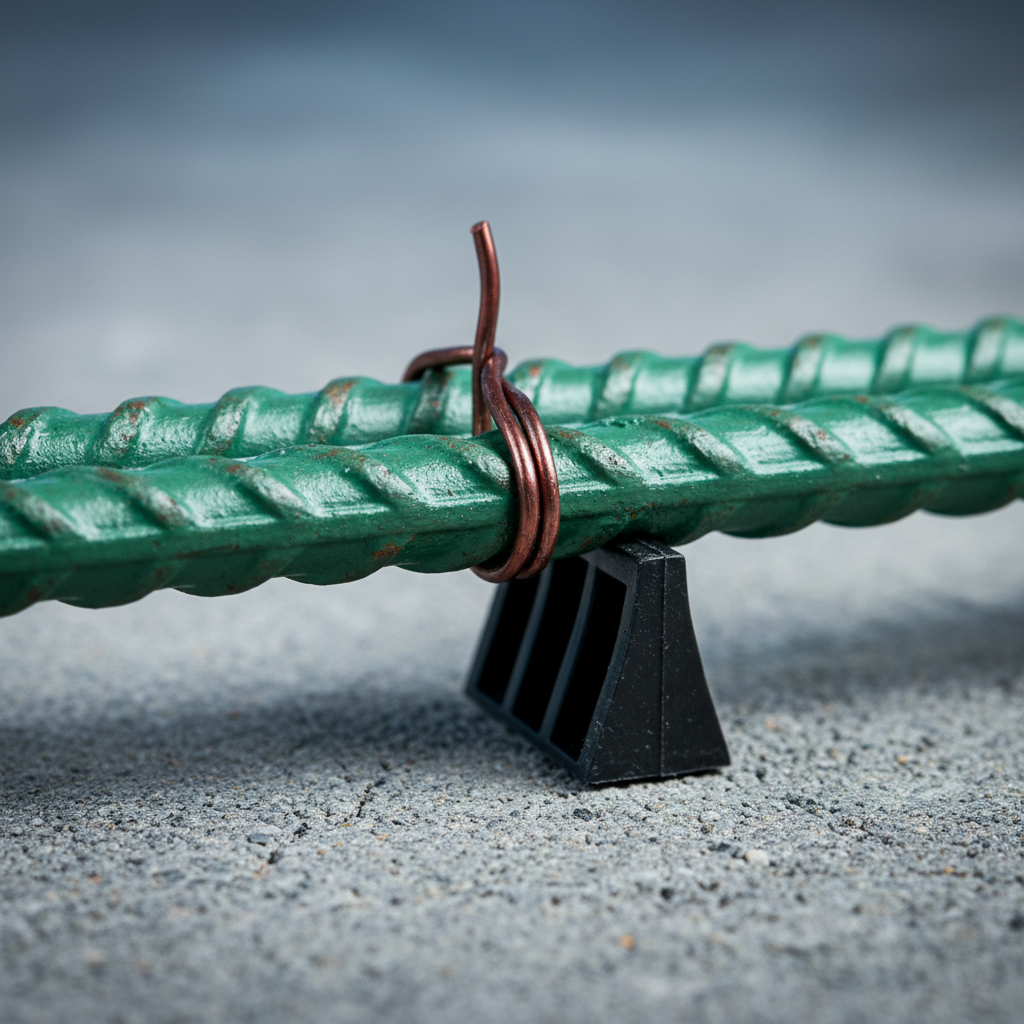
- Bar supports: Chairs maintain cover and elevation to preserve bond and corrosion protection.
- Load paths: Rebar follows bending and shear demands; mesh controls distributed cracking.
- Edge conditions: At openings and re-entrant corners, additional bars or strips of mesh reduce stress concentrations.
On slab projects, our crews often pre-stage mesh panels near the pump boom reach, then roll or place sheets in sequence. For walls and beams, shop-fabricated cages cut tie time and improve bar placement tolerances.
Rebar vs Mesh: When to Choose Each
Choose rebar for high loads, anchorage needs, complex geometry, or seismic detailing. Choose welded wire mesh for fast placement and uniform crack control in slabs and sidewalks. In corrosive exposures, specify epoxy-coated reinforcing bar or consider GFRB where permitted.
Both forms of reinforcement are valuable. The right answer depends on structural demand, exposure, constructability, and schedule. Rebar delivers targeted strength and ductility. Mesh speeds production work and controls distributed cracking. Many projects use both: bars around openings and supports, mesh for the field of the slab.
| Criteria | Concrete Reinforcing Bar | Welded Wire Mesh |
|---|---|---|
| Primary use | Carry design tension, anchorage, ductility | Control shrinkage/temperature cracks, speed |
| Best for | Beams, columns, walls, edges, openings | Slabs-on-grade, sidewalks, toppings |
| Layout | Custom bar spacing, hooks, laps | Standard sheets or rolls, quick placement |
| Ductility | High (yielding steel) | Moderate (distributed restraint) |
| Corrosion options | Epoxy-coated steel, stainless (project-specific) | Epoxy-coated sheets available; cover is critical |
| Field productivity | Higher tie time; faster with prefabricated cages | Very fast placement; minimal tying |
| Typical spec notes | Development length, splice class, bar supports | Wire size, sheet spacing, laps, placement elevation |
For Ontario flatwork with tight schedules, we often detail mesh in the slab field with rebar strips at sawcut joints and around penetrations. This hybrid strategy balances speed, crack control, and ductility where it counts.
Types, Grades, and Coatings You’ll Specify
Ontario projects commonly specify Grade 400W and 500W reinforcing steel, available bare or epoxy-coated. Popular M-sizes include 10M, 15M, and 20M. GFRB (GFRP) provides corrosion resistance in some environments when permitted by the engineer of record and applicable codes.
We stock standard sizes and fabricate to shop drawings produced in-house. For infrastructure or marine-adjacent exposures, epoxy-coated reinforcing bar often pays dividends in durability. Where non-metallic reinforcement is approved, GFRB eliminates corrosion risk entirely and has high tensile strength, though service stiffness and anchorage behavior differ from steel.
- Grades: 400W (≈400 MPa yield) and 500W (≈500 MPa yield) for most Ontario work.
- Common sizes: 10M (~11.3 mm), 15M (~16 mm), 20M (~19.5 mm) used across slabs, walls, and beams.
- Coatings: Epoxy-coated reinforcing steel in chloride exposures (parking structures, podium slabs, ramps).
- Alternatives: GFRB/GFRP for non-corrosive reinforcement where specified and detailed accordingly.
For bar lists, we provide clear tags that match pour breaks and crane picks. That single step reduces search time on deck and keeps your finishers moving.
From Estimating to Fabrication, Delivery, and Assembly
Accurate takeoffs and shop drawings drive field productivity. Dass Rebar integrates estimating, detailing, fabrication, dedicated trucking, and on-site assembly so crews receive correctly labeled bundles in the sequence they’ll be placed.
In-house estimating catches quantity and splice assumptions early. Detailing and shop drawings confirm bar marks, laps, hooks, and clearances. Fabrication cuts and bends bars to spec, and our trucking fleet sequences drops by pour. On-site assembly support helps with cages, wall mats, and last-minute adjustments so the pour proceeds as planned.
- Estimating: Early takeoffs reduce change orders and keep procurement predictable.
- Detailing: Shop drawings clarify rebar congestion, clear cover, and splice classes.
- Fabrication: Cutting and bending ensure accuracy before steel reaches the site.
- Delivery: Dedicated fleet aligns with crane windows and pour breaks.
- Assembly: Cages and mats pre-tied where practical to reduce tie time.
For additional selection context, see this concise rebar product overview that explains standard shapes and applications in straightforward terms.
Best Practices for Ontario Jobs
Maintain cover, tie density, and bar elevation; match joint layout to reinforcement; choose epoxy-coated or GFRB in chloride exposures. Sequence deliveries by pour and clearly label bundles. These steps reduce cracking, speed placement, and improve inspection outcomes.
Ontario’s freeze–thaw cycles and deicing practices raise the stakes for durability. Protect steel with cover and coatings, and coordinate joints with reinforcement to control where cracks form. Lifting plans and material laydown should be sized to your site’s access and crane capacity.
- Cover and supports: Use chairs and dobies to maintain specified cover—critical for corrosion protection.
- Joints and sawcuts: Align reinforcement with control joints; add bars at re-entrant corners.
- Hybrid detailing: Combine rebar at supports/openings with mesh in slab fields for speed and control.
- Exposure class: In chloride zones, specify epoxy-coated steel or approved GFRB.
- Labeling and logistics: Bundle and tag by sequence to cut search time on deck.
If you’re building near Woodbridge, we can time deliveries between commuter peaks around Queen St / Highway 50 to simplify access. That’s a small change that often prevents half-day delays.
Tools, Checklists, and Resources
Use coordinated takeoff templates, bar list checklists, and delivery sequencing sheets to prevent miscounts and site delays. Align your submittal log with detailing milestones and inspection hold points to keep approvals moving.
Our team shares standardized templates that reduce omissions and help supers maintain control. A few must-haves: clear bar mark legends, splice schedules, pour break maps, and a delivery calendar keyed to crane time. These tools keep projects flowing, especially when multiple pours run in parallel.
- Takeoff template: Quantities by zone with lap assumptions and bar supports.
- Shop drawing checklist: Covers clearances, bar marks, hooks, laps, and congestion checks.
- Delivery planner: Sequence by pour; include truck arrival windows and laydown plans.
- Inspection log: Track pre-pour checks for cover, spacing, and splices.
For a broader look at reinforcement formats and where they shine, skim our welded wire mesh guide and this rebar and mesh overview to align material choices with schedule and serviceability needs.
Ontario Case Examples and Lessons Learned
On recent GTA projects, hybrid strategies—bars at supports/openings and mesh in slab fields—cut placement hours and reduced random cracking. Early detailing reviews also resolved congestion at mechanical openings before fabrication, avoiding rework and pour delays.
Take a typical residential podium slab. We’ve detailed 15M bars at columns and around ramp transitions with 150 mm spacing in demand zones, then mesh panels in the slab field. The result: fewer change orders, faster placement, and controlled crack widths at sawcuts. For an infrastructure deck, epoxy-coated 20M bars with tight cover held up well through deicing seasons.
- Residential high-rise: Hybrid podium slab; rebar at edges/openings, mesh in field—faster placement, predictable joints.
- Commercial slab-on-grade: Mesh with rebar dowels at sawcuts minimized random cracks and joint spalling.
- Parking structure: Epoxy-coated reinforcing steel and increased cover with diligent chair spacing improved durability.
For specification context and material background, this short summary of rebar and mesh types helps teams align expectations before detailing begins.

Specs, Codes, and Cited References
Designers specify bar grade, size, spacing, cover, and coatings to meet exposure and load demands. Submittals should confirm bar lists, splice details, and coating where required. Field checks verify cover, elevation, and tying before the pour proceeds.
Teams often ask for a single-page ref to align on bar choices, coating use, and practical shop limits. For a concise backgrounder, see the rebar products summary and our format overview noted earlier. These provide quick context before you open the project spec.
Related Guides on Our Site
If you’re comparing reinforcement options, pair this guide with our deep dives on welded wire mesh and Ontario rebar selection. Together they cover formats, detailing, logistics, and inspection checklists that shorten placement time and reduce rework.
For Ontario-focused selection tips and coordination checklists, explore our steel rebar basics guide, the concrete rebar guide for Ontario, and reinforcement planning insights in our reinforcing steel guide. If 20M bar is on your list, our cluster on sizes and use-cases connects selection to real pour sequences.
Send us your drawings and pour schedule. We’ll return a coordinated bar list, shop drawings, and a delivery plan that fits your crane windows—so your slab or wall pours stay on track.
Frequently Asked Questions
These quick answers cover selection, coatings, mesh vs rebar, and logistics so supers and PMs can make decisions fast. For project-specific advice, share your drawings and we’ll respond with a coordinated plan.
When should I use rebar instead of welded wire mesh?
Use rebar when members see concentrated tension, require anchorage and ductility, or involve complex geometry—like beams, columns, edges, and openings. Mesh is ideal for uniform crack control and speed in slab fields, sidewalks, and toppings. Many projects use both: bars at edges and openings, mesh in the slab field.
Do I need epoxy-coated reinforcing bar for Ontario flatwork?
If the slab is exposed to deicing salts, snowmelt, or frequent moisture, epoxy-coated rebar is a smart durability choice. It protects steel from chloride attack. For podium slabs, ramps, and parking structures, coated bar plus correct cover and drainage significantly improves long-term performance.
What are common M-sizes and where are they used?
10M, 15M, and 20M are common in Ontario. 10M often appears in temperature steel and ties; 15M is typical in slabs and walls; 20M is common for beams, columns, and high-demand zones. The engineer of record defines size, spacing, and cover for each application.
How do you stage deliveries for tight Woodbridge sites?
We bundle by pour sequence and bar list, then schedule trucks around local traffic near Queen St / Highway 50. That way, bundles land in the order they’ll be placed and crane time is used efficiently. Clear labeling and pre-briefs with the super keep the deck organized.
Conclusion and Next Steps
Use rebar where strength, anchorage, and ductility are essential; use mesh for speed and distributed crack control. Specify coatings in chloride exposures. Coordinate takeoffs, detailing, fabrication, delivery, and assembly to turn drawings into reliable pours without rework.
Here’s how to move forward with confidence. Share your drawings, exposure classes, and schedule. We’ll return a single coordinated package—bar list, shop drawings, and a delivery plan. From estimating to assembly, our Woodbridge team aligns every step so your slab and wall pours hit the dates you’ve promised.
- Key takeaways: Rebar for demand and ductility; mesh for speed and control; coatings for durability.
- Action steps: Send drawings and pour map; confirm exposure classes; lock delivery windows.
- Local support: Our team at 370 New Enterprise Way coordinates GTA jobs daily.