
Last updated: October 2026
By Dass Rebar • Refreshed for the 2026 publication cycle
What Does Steel for Home Construction Include?
Steel for home construction is not one interchangeable product. It is a group of materials used in different parts of a residential project: reinforcing bars are placed inside concrete, welded wire mesh helps distribute stresses in slabs, and structural or cold-formed steel can form part of a building’s frame or non-combustible assembly.
That distinction matters when a homeowner, general contractor, estimator, or concrete crew is reviewing drawings. Reinforcement should not be selected by appearance or by a generic “stronger is better” rule. Bar size, grade, spacing, cover, laps, supports, exposure, and placement all need to follow the project design.
Where the main steel products are used
- Rebar: Reinforcing bars are placed in footings, foundation walls, grade beams, slabs, stairs, and other concrete elements to help carry tension.
- Welded wire mesh: Mesh is commonly used in slabs, garage floors, sidewalks, and other areas where distributed reinforcement and crack control are required.
- Cold-formed steel: Light-gauge studs and track can create straight, dimensionally stable, non-combustible wall and floor assemblies where the design calls for them.
- Structural steel: Heavier steel members may support concentrated loads, openings, beams, columns, or special residential layouts when designed by the responsible professional.
- Accessories: Chairs, ties, bar supports, couplers, anchors, and embeds help the specified reinforcement remain correctly positioned and constructible.
For terminology and foundation context, the Ontario concrete rebar guide explains how reinforcement works with concrete. The steel rebar primer is useful when a project team needs to review bar shapes, marks, and common terminology before requesting a takeoff.
Why Is Steel Important in Residential Construction?
Concrete performs well in compression but is less effective on its own where tension, bending, shrinkage, or concentrated loading develops. Reinforcing steel helps the concrete element respond as a designed system. It does not eliminate every crack or guarantee a problem-free building, but correctly specified and installed reinforcement can improve structural performance and make behaviour more predictable.
Benefits for the finished home
- Crack and deflection control: Reinforcement can help manage stresses in slabs, walls, footings, and other concrete elements, supporting more stable finishes.
- Durability: Correct concrete cover, suitable materials, and appropriate detailing help protect reinforcement from moisture and corrosion.
- Fire and pest resistance: Steel itself is non-combustible and is not a food source for pests, although the complete assembly still needs to meet its design and code requirements.
- Dimensional stability: Cold-formed steel does not warp, cup, or twist like moisture-sensitive wood can, which may help where straight substrates are important.
- Constructability: Fabricated bars, clear marks, and delivery by pour sequence can reduce field cutting, sorting, and avoidable handling.
What steel cannot replace
Steel cannot replace a project-specific structural design, proper soil preparation, suitable concrete, curing, waterproofing, control joints, or safe site practices. It also cannot correct an incorrectly placed bar after concrete has been poured. The value comes from matching the product and installation to the engineer’s intent.
Ontario’s Building Code applies to construction, renovation, and change-of-use work. The province’s Building Code overview is a useful starting point for understanding the regulatory framework, but it is not a substitute for the project drawings or professional advice.
What Ontario Rules Apply to Steel in a Home?
Residential steel work should be coordinated with the current Ontario Building Code requirements and the project’s structural documents. The applicable provisions depend on the building, the element being designed, the construction method, and the professional design route used for the project.
For example, Ontario’s 2024 Part 9 housing and small buildings material identifies requirements for certain light-frame and insulating concrete form applications and refers to CSA G30.18 for reinforcing. The provincial regulation also identifies CAN/CSA-A23.3 for reinforced concrete, CSA S16 for structural steel, and CAN/CSA-S136 for cold-formed steel. These references support coordination; they do not establish a universal bar size or spacing for every home.
Questions to resolve before ordering
- Which drawings and revisions govern the order?
- Who is the Engineer of Record, and which elements require professional design?
- What bar grade, size, spacing, lap, splice, cover, coating, and support details are shown?
- Are there penetrations, sleeves, embeds, stairs, retaining walls, or congested connections that affect fabrication?
- Which inspection, permit, and concrete placement milestones control the delivery sequence?
The provincial Part 9 housing and small buildings reference can help teams locate relevant housing provisions. The regulation’s requirements for concrete, structural steel, and cold-formed steel are available in Ontario Regulation 332/12. For work involving existing foundations, review the province’s guidance on underpinning hazards and compliance before assuming that a conventional new-build sequence applies.
How Do You Choose Rebar, Mesh, or Steel Framing?
The first decision is not the supplier or the material catalogue. It is the function the steel must perform. Rebar and mesh are reinforcement embedded in or supported by concrete; framing products form part of the building enclosure or structural system. A project may use one, two, or all three, but they should not be treated as substitutes.
Rebar for foundations, walls, and slabs
Dass Rebar supplies Grade 400W and Grade 500W reinforcing products, including common 10m, 15m, and 20m bar sizes. The engineer’s drawings should control the grade and size. Longer or heavier bars may be appropriate for particular spans, walls, loads, or congestion conditions, but a larger bar is not automatically a better choice if it cannot be placed with the required cover and spacing.
Welded wire mesh for distributed reinforcement
Welded wire mesh is available in standard configurations including 6″ x 6″ at 6/6, 9/9, and 10/10 gauges. The specified pattern depends on the slab, loading, exposure, support conditions, and design. Mesh also needs to be supported at the correct elevation; leaving it on the subgrade does not provide the intended structural position.
Epoxy-coated rebar and GFRB
Epoxy-coated bars may be specified where moisture, chlorides, or de-icing salts create a higher corrosion concern. Glass Fibre Reinforcing Bars can provide a non-corrosive or non-conductive option for particular applications. Neither option should be selected solely as a product upgrade: compatibility with the drawings, bending requirements, handling, cover, and the surrounding concrete system still matter.
The 10m rebar uses guide covers common residential applications, while the reinforcing steel guide provides a broader review of products and preparation for Ontario pours.
Cold-formed steel framing
Cold-formed steel studs and track can be useful where straightness, non-combustibility, or resistance to pests and moisture are priorities. Stud gauge, spacing, connections, bracing, sheathing, thermal detailing, and fire performance must be treated as a complete assembly. The cold-formed steel framing overview introduces typical residential and light-commercial applications, and the steel framing system guide compares common stud-and-track approaches.
How Is Steel Coordinated From Drawings to the Pour?
A reliable reinforcement process connects design information to what the crew receives on site. The sequence below is useful for a custom home, a multi-unit residential project, or a small development, although the level of review changes with the project’s size and complexity.
- Review the drawings: Confirm the latest structural, architectural, civil, and mechanical information before measuring quantities.
- Prepare the takeoff: Quantify bars, mesh, accessories, laps, couplers, and special shapes while identifying missing or conflicting information.
- Detail the reinforcement: Produce bar lists, mark numbers, bend information, placement drawings, and notes that the field crew can follow.
- Resolve congestion: Check openings, sleeves, embeds, laps, chairs, and concrete access before fabrication makes a late change expensive.
- Fabricate and label: Cut, bend, bundle, and identify steel by element or pour sequence to reduce sorting and field adjustment.
- Deliver to the planned window: Match the truck, staging area, access route, and inspection timing to the site’s actual constraints.
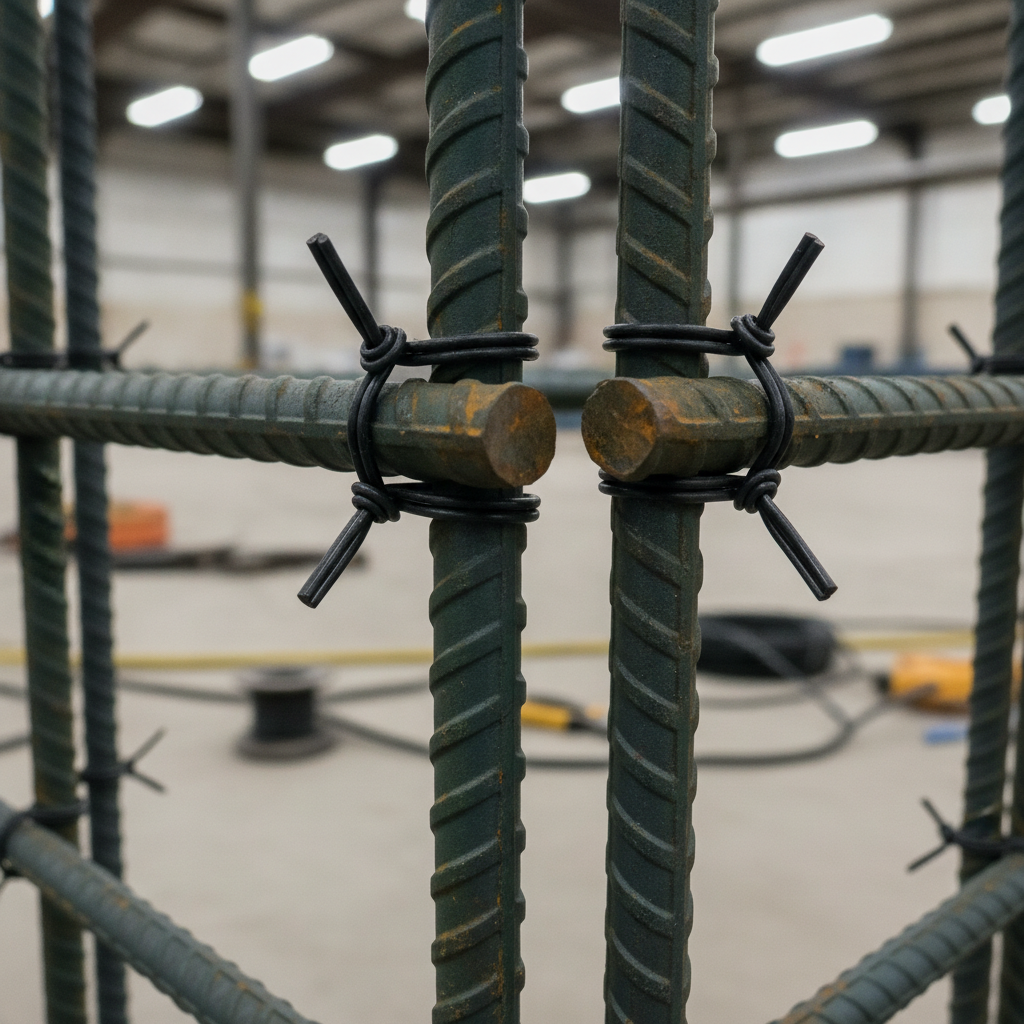
- Place and verify: Tie reinforcement, install supports, confirm cover and spacing, and complete the required review before concrete placement.
Who owns each decision?
| Work stage | Primary responsibility | Supplier or fabricator contribution |
|---|---|---|
| Structural design | Engineer of Record | Discuss buildability and fabrication implications |
| Quantity review | GC, estimator, or project team | Prepare a reinforcing and mesh takeoff |
| Detailing | Detailer under the project requirements | Produce bar lists, marks, bends, and placement information |
| Fabrication | Fabricator | Cut, bend, bundle, label, and prepare the specified material |
| Placement | Concrete and reinforcing crew | Provide assembly support when included in the scope |
| Approval | Project professionals and inspectors | Supply traceable, organized material and documentation |
Ontario’s scope-of-practice regulation describes reinforcing rodworker activities including handling, cutting, bending, placing, tying rebar and welded wire mesh, and installing mechanical splices. Teams can review the provincial reinforcing rodworker scope when clarifying trade responsibilities.
For a closer look at fabrication and bundle sequencing, use the Ontario rebar fabrication guide. The steel studs guide provides additional context for deciding where cold-formed framing may suit the wall or partition strategy.
What Are the Best Practices for Residential Steel?
Confirm exposure and cover
Identify garages, driveways, exterior slabs, wet areas, retaining conditions, and locations exposed to de-icing salts before material is ordered. Coating decisions, concrete cover, concrete quality, and drainage work together. A coated bar does not compensate for inadequate cover or poor placement.
Make the drawings field-friendly
Readable bar marks, clear lap notes, practical bends, and coordinated penetrations help crews build what was designed. If a detail creates congestion around an opening or cannot be placed through available access, resolve it before fabrication rather than relying on field improvisation.
Protect the planned position
Chairs and supports must hold reinforcement at the specified elevation during walking, tying, concrete delivery, and vibration. Mesh should be lifted into position as designed, not pulled up after concrete placement has started. The crew should check cover, spacing, laps, dowels, embeds, and cleanliness before requesting the inspection.
Keep records useful
Photographs, delivery tickets, bundle labels, revised drawings, and inspection notes can make later questions easier to answer. Records are especially helpful when a project has multiple pours, different bar grades, or changes to openings and services.
How Should Ontario Builders Plan Rebar Delivery?
Delivery planning starts with the pour schedule, not with the truck arrival. Share the order of footings, walls, slabs, stairs, or elevations so bundles can be fabricated and loaded in a sequence that matches the work. This reduces double handling and makes a restricted residential site easier to manage.
- Confirm access: Review gate widths, overhead obstructions, crane or telehandler needs, and the designated unloading area.
- Reserve a realistic window: Allow time for unloading, sorting, inspection, and any site restrictions rather than booking only the concrete start time.
- Label by location: Bundle descriptions should help the crew identify the footing, wall, slab, level, or pour to which the steel belongs.
- Protect material: Keep bars and mesh organized, supported, and free from avoidable damage or contamination before placement.
- Coordinate changes: Send revised drawings promptly so a changed opening or lap detail does not arrive after fabrication.
Dass Rebar operates from 370 New Enterprise Way in Woodbridge and supports Ontario projects with in-house estimating, detailing, fabrication, project coordination, a dedicated trucking fleet, and on-site assembly services. Its portfolio includes The Hawthorne Residences in Toronto, Hickory Terraces in Waterloo, and The Grand at Universal City in Pickering. These business facts describe the company’s capabilities; the project engineer still controls the structural design.
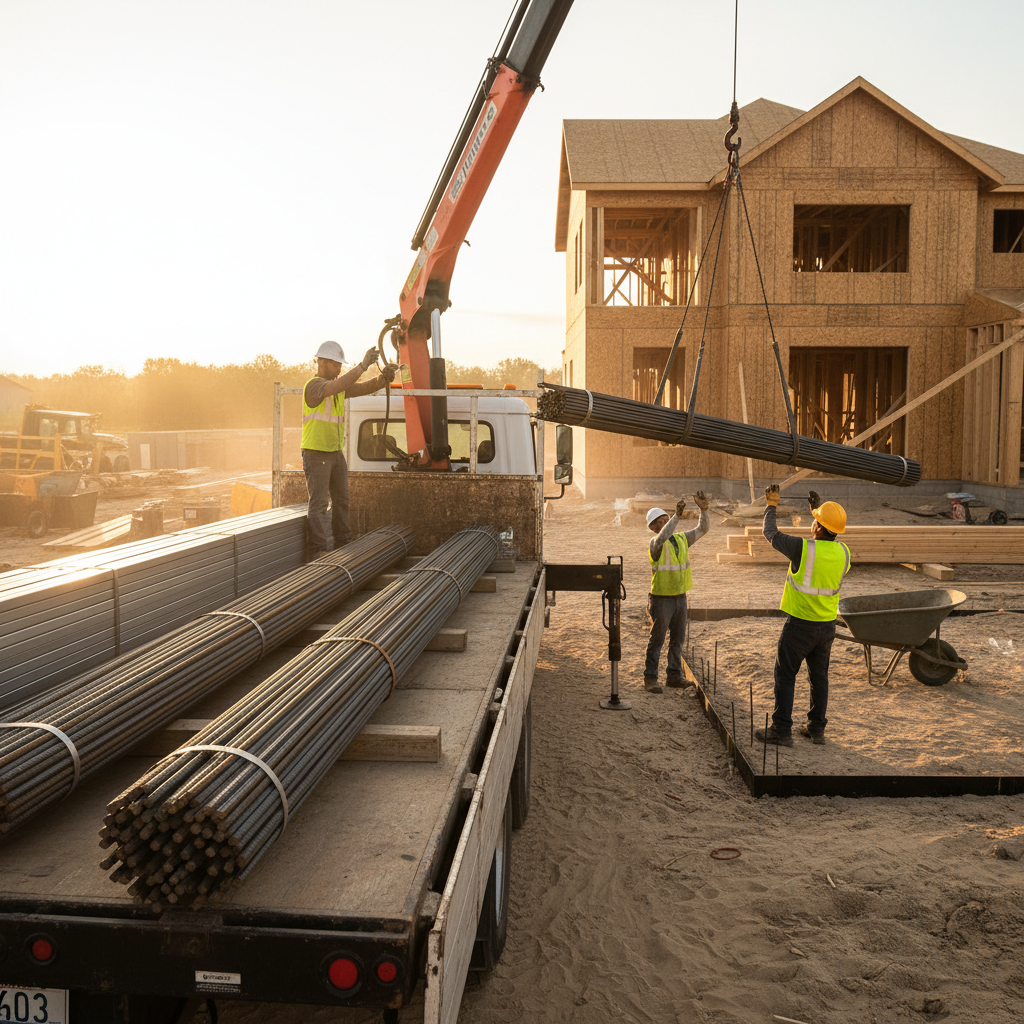
For supply planning, compare quantities, fabrication requirements, delivery access, and coordination support using the rebar supply guide. The steel reinforcement supplier guide can help a GC prepare questions before requesting quotations.
What Affects the Cost and Value of Home Construction Steel?
A responsible quote needs more than a generic material rate. Total cost can be influenced by the quantity of steel, bar sizes, mesh pattern, coatings, bends, couplers, detailing effort, minimum loads, delivery distance, unloading conditions, and whether on-site assembly is included.
Cost drivers to identify early
- Quantity and complexity: Footings, foundation walls, transfer conditions, stairs, retaining elements, and multiple levels require different amounts of material and labour.
- Fabrication: Special bends, tight tolerances, congestion, bar marks, and multiple pour sequences can increase detailing and handling time.
- Exposure: Epoxy-coated reinforcement or GFRB may be appropriate for a specific design but changes material and handling requirements.
- Site logistics: Limited access, timed unloading, crane coordination, and repeated deliveries affect the installed cost.
- Change management: Late drawing revisions can lead to remanufacture, re-sorting, or idle crew time.
The lowest unit price is not always the lowest project cost. A clear takeoff, accurate shop information, correctly sequenced bundles, and dependable delivery can reduce rework and waiting. Ask each supplier to state what is included so quotations can be compared on the same scope.
Steel Framing vs. Wood Framing in Homes
Steel framing is not automatically better than wood for every house. The right choice depends on the design, fire strategy, thermal envelope, labour availability, connections, finish requirements, budget, and the local construction method. A hybrid approach may place steel where straightness or non-combustibility matters and wood where familiar fastening or finishing is advantageous.
| Decision factor | Cold-formed steel | Wood | Practical question |
|---|---|---|---|
| Combustibility | Steel itself is non-combustible | Wood is combustible | What does the complete rated assembly require? |
| Dimensional stability | Does not warp or cup like wood | Can move with moisture and storage conditions | Where are straight substrates most important? |
| Moisture and pests | Not a food source and does not rot | Needs moisture and pest protection | What exposure will the assembly face? |
| Installation | Needs appropriate screws, tools, bracing, and detailing | Familiar fastening for many crews | Which workforce and connection details are available? |
| Thermal performance | Requires careful thermal-bridge detailing | Can accommodate familiar insulated stud assemblies | How will the envelope consultant address continuity? |
What Ontario Homebuilding Resources Should You Check?
Regulatory information changes, and project teams should use the current provincial material applicable to their work. A homebuyer or renovator may also need different information from a developer or concrete contractor. Ontario’s guidance on Building Code updates is useful when checking whether a requirement or referenced edition has changed.
If the project involves a manufactured or modular home, review the province’s information on building a modular house and confirm that the home meets Ontario requirements before ordering related foundation work. Renovation clients should also review rights when starting home renovations or repairs, including questions about contractors, agreements, and permit responsibilities.
For new-home purchasers, the province’s guidance on what to know before buying a home explains protections and builder responsibilities. These consumer resources do not replace structural drawings, but they help different project participants understand which questions belong with the builder, designer, municipality, or supplier.
Frequently Asked Questions About Steel for Home Construction
What is the best steel for a home foundation?
There is no single best bar for every foundation. The engineer normally specifies the grade, diameter, spacing, laps, cover, and coating based on loads, soil and exposure conditions, and the applicable design requirements. Ontario projects commonly use Grade 400W or 500W reinforcing steel, but the drawings – not a general product list – control the order.
Is welded wire mesh or rebar better for a residential slab?
They serve different design and construction purposes. Welded wire mesh may provide distributed reinforcement in a slab, while rebar may be specified where particular forces, edges, beams, walls, or concentrated loads need to be addressed. Use the material, pattern, elevation, and supports shown in the structural design.
When should a home use epoxy-coated rebar?
Epoxy-coated reinforcement may be specified where the design identifies increased exposure to moisture, chlorides, or de-icing salts, such as some garages, exterior slabs, or related conditions. The coating is only one part of durability; concrete quality, cover, handling, and placement also matter. Confirm the requirement before fabrication.
How can a builder reduce delays caused by reinforcement?
Release current drawings early, provide the pour sequence, resolve penetrations and congestion before fabrication, and book delivery around inspection and site-access windows. Labelled bundles and coordinated estimating, detailing, fabrication, and delivery reduce sorting and field improvisation. Keep the engineer and concrete crew informed when the design changes.
Plan the Steel Package Before the Pour
Steel for home construction performs best when design intent, material selection, detailing, fabrication, delivery, and placement are treated as one coordinated package. For an Ontario residential project, start with the current drawings and code requirements, then confirm exposure, quantities, sequence, access, and inspection timing before placing the order.
Dass Rebar can help builders and concrete crews coordinate estimating, detailing, fabrication, delivery, and on-site assembly for residential work. Contact Dass Rebar to discuss the reinforcement package for your next Ontario project.