
Mesh reinforced concrete is concrete strengthened with welded wire mesh to control cracking, distribute loads, and improve slab performance. The mesh provides tensile restraint where plain concrete is weakest. For builders in 370 New Enterprise Way, Woodbridge, ON, Dass Rebar supplies in-stock welded wire mesh and coordinates estimating, detailing, fabrication, delivery, and assembly to keep pours on schedule.
By Navjot Dass • Last updated: May 21, 2026
Overview: Mesh Reinforced Concrete at a Glance
Mesh reinforced concrete uses factory-welded steel wires placed within a slab to limit shrinkage and temperature cracking, improve load distribution, and speed placement. Standard sheets (for example, 6×6 at 6/6, 9/9, 10/10) cover large areas quickly and reduce tying time compared to loose bars, helping crews pour more efficiently.
Here’s what you’ll get in this complete guide and how it ties to real jobs across Ontario:
- Clear definitions of mesh reinforced concrete and when to use it.
- Design and placement rules you can apply on your next pour (lap, cover, support, jointing).
- Approach-by-application: slabs-on-grade, toppings, sidewalks, light commercial floors.
- Mesh vs. rebar vs. fibers: strengths, limits, and hybrid strategies.
- Best practices and checklists developed from field experience in the GTA.
- Tools and resources: in-house estimating, detailing, fabrication, delivery, and assembly from Dass Rebar.
What Is Mesh Reinforced Concrete?
Mesh reinforced concrete is concrete with a welded wire reinforcement (WWR) grid embedded near the tension face to resist shrinkage and temperature cracks, enhance load transfer, and reduce random cracking. The mesh is factory-welded for consistent spacing, delivered in sheets or rolls, and placed on chairs to maintain correct cover.
In our experience, most slab cracks trace back to one of four issues: insufficient restraint, poor jointing, inadequate curing, or lack of support under reinforcement. A welded grid directly addresses restraint, while good layout and curing handle the rest. Standard sheet sizes let crews cover more square footage per hour than tying loose bars, which matters on fast-track schedules.
- WWR basics: Common specifications include 6×6 at 6/6, 6×6 at 9/9, and 6×6 at 10/10 (wire gauge pairs). Those notations define both spacing (6 in. by 6 in.) and approximate wire size.
- Placement position: For slabs-on-grade, mesh typically sits in the upper third of the slab thickness to counter surface tension from shrinkage and curling.
- Lap and support: Laps often equal at least one full square (6 in.) with tied intersections; support with chairs or dobies so the mesh doesn’t end up on the subbase.
On Ontario jobs, we regularly coordinate mesh with joint layouts at 12–15 ft panels (or 24–36 times slab thickness in inches). Joints cut early—often within 4–12 hours depending on mix and temperature—keep random cracks tight and guided.
Why Mesh Reinforcement Matters
Mesh reinforcement matters because it controls crack widths, improves load sharing, and speeds installation. In sheet form, it reduces tying operations, helps crews hit placement rates, and keeps shrinkage cracking tight so floors remain serviceable and safer for traffic and finishes.
Concrete is strong in compression but weak in tension. Even a 4-in. slab can experience restrained shrinkage shortly after finishing. A welded grid near the top third restrains that movement, reducing average crack widths that would otherwise telegraph through floor coverings. Faster installation is another practical benefit: one sheet can replace dozens of individual bar ties.
- Crack-width control: Properly positioned mesh helps keep most microcracks under finish-tolerant widths, supporting resilient and tile finishes.
- Load distribution: The grid shares wheel loads across multiple joints, reducing local punching risk in light-duty slabs.
- Schedule reliability: Sheets accelerate reinforcement placement. We routinely see crews stage multiple bays the day before a pour to lock in an early pump start.
- Integration with joints: Where contraction joints are spaced at 12–15 ft, continuous mesh helps transfer loads across saw cuts when doweled or when aggregate interlock is maintained.
Here’s the thing: even perfect reinforcement can’t fix poor subgrade prep or missed curing. The best results combine a compacted base, correct water-reducing admixtures as needed, early jointing, and a curing regimen that keeps the slab moist for at least 7 days.
How Mesh Reinforced Concrete Works
The welded grid resists tensile strains from drying shrinkage and temperature swings. When cracks do form, the wires bridge them and limit opening. With correct cover—often around 2 in. for slabs-on-grade—the mesh remains engaged where tensile stresses are highest.
Consider a retail slab with frequent cart traffic. Without reinforcement, shrinkage cracks may open and ravel under wheels. With mesh, the crack is restrained, stays tight, and the surface remains serviceable. Add well-timed joints—cut at about 24–36 times slab thickness—and you channel movement where it belongs.
- Stress profile: Curling and temperature gradients create tension near the top of ground slabs. Placing mesh too low neutralizes its effect; support it with chairs every 3–4 ft to maintain elevation.
- Lap integrity: Maintain laps of at least one square (6 in.) and stagger them to avoid weak lines. Tie laps at a regular spacing, especially at edges and penetrations.
- Cure and protect: Begin curing immediately after finishing using water spray, curing compound, or wet coverings for a minimum of 7 days to retain moisture and reduce early-age cracking.
When our detailing team coordinates slab thickness, jointing, and mesh grade, crews report fewer callbacks for random cracking and smoother handoffs to flooring trades. That’s why we always ask for planned saw-cut timing, joint layout, and slab use case during estimating.
Types, Methods, and Approaches
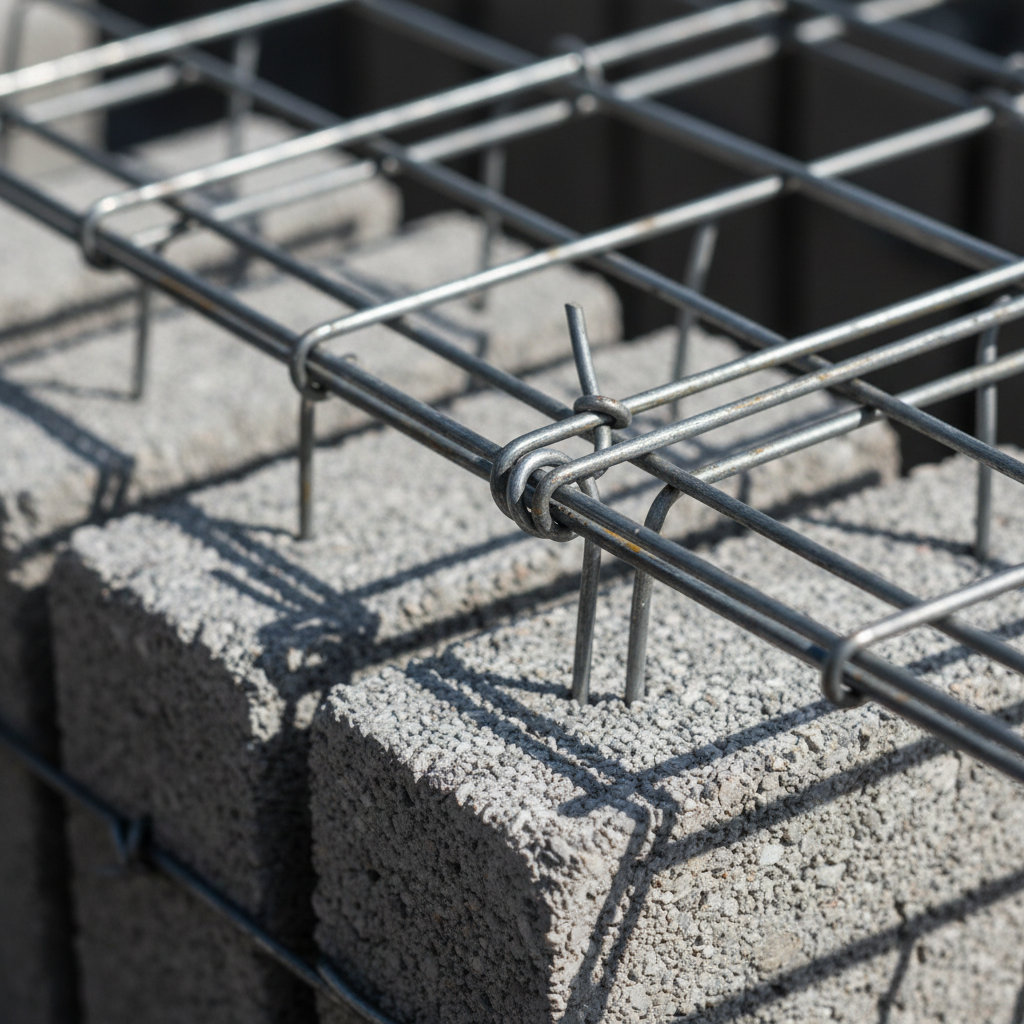
Most projects use welded wire mesh sheets in 6×6 spacing with gauges such as 6/6, 9/9, or 10/10. Choose heavier gauges for higher loads or thicker slabs, lap at least one square, support with chairs, and coordinate joint spacing around 12–15 ft or 24–36 times slab thickness.
Common welded wire mesh options
- 6×6 at 6/6: Heavier wire pair for light commercial bays, loading areas, and retail back-of-house zones.
- 6×6 at 9/9: Balanced option for sidewalks, garage slabs, and residential drive bays.
- 6×6 at 10/10: Lighter gauge for toppings and non-traffic slabs where shrinkage control is the primary goal.
We keep these in stock so Ontario crews can mobilize quickly. For practical selection guidance shaped by real job constraints, see our welded wire mesh reinforcement guide.
When to supplement mesh with rebar
- Point loads and edges: Add perimeter bars or dowels at door thresholds, columns, and around penetrations.
- Thicker, joint-free panels: For extended-joint or jointless designs, combine mesh with distributed bars and shrinkage-compensating strategies.
- Heavy rack or forklift lanes: Mesh controls crack width; bars handle concentrated bending. Pair them where traffic patterns demand.
We often recommend pairing sheet mesh with bar steel for curbs, trench edges, and equipment pads. If you’re weighing bar sizes, start with our 10M rebar use guide and then share your load patterns with our estimating team.
Placement and support approach
- Base prep: Compact subbase to spec; proof-roll to expose soft spots. A 4–6 in. granular base is common for light-duty slabs.
- Chairs and cover: Use chairs/dobies to target about 2 in. cover for slabs-on-grade; increase for corrosive environments.
- Staging: Pre-stage sheets; lap at least 6 in.; tie intersections on a grid (tighten at edges/penetrations). Avoid walking mesh into the subbase during the pour.
- Joint layout: Plan 12–15 ft panels (or 24–36 × slab thickness). Cut within the first 4–12 hours depending on mix, temperature, and finishing progress.
For a broader primer on rebar vs. mesh and where each shines, reference our concrete rebar guide and rebar and wire mesh overview.
Best Practices for Design and Installation
The best results come from four controls: compacted base, supported mesh at the right elevation, timely jointing, and consistent curing. Add perimeter bars where needed and coordinate saw-cut timing in the pour plan so crack control is proactive, not reactive.
Field checklist you can use tomorrow
- Subbase: Compact to spec; proof-roll; level to within target tolerances. Moisture-condition dry bases before placement.
- Reinforcement support: Chairs every 3–4 ft; wire-tie laps; lift-and-pull technique is not a substitute for proper supports.
- Jointing: Pre-mark saw cuts; target spacing at 24–36 × slab thickness; cut within 4–12 hours based on bleed and set.
- Curing: Start immediately after finishing; maintain moisture for ≥7 days with curing compound or wet coverings.
- Edges and openings: Add bars at edges, doors, and around trenches; maintain cover and ties at closer spacing.
- Verification: Photograph reinforcement elevation before the pour; record chair spacing, lap locations, and joint pattern.
Process table: from subgrade to saw cuts
| Step | What to Do | Why It Matters |
|---|---|---|
| 1. Prepare base | Compact, level, and moisture-condition as needed | Reduces differential settlement and curl |
| 2. Stage mesh | Lay sheets, lap ≥6 in., pre-tie intersections | Speeds placement, ensures continuity |
| 3. Support mesh | Chairs every 3–4 ft; verify ~2 in. cover | Keeps mesh in the tension zone |
| 4. Place concrete | Consolidate without displacing mesh | Maintains elevation and uniformity |
| 5. Finish and cure | Apply curing compound or wet cure ≥7 days | Limits early-age shrinkage cracking |
| 6. Saw cuts | Cut joints at 24–36 × slab thickness | Controls crack locations and widths |
For broader reinforcement basics and bar selection, our reinforcing bar guide and reinforcing steel overview outline common Ontario practices.
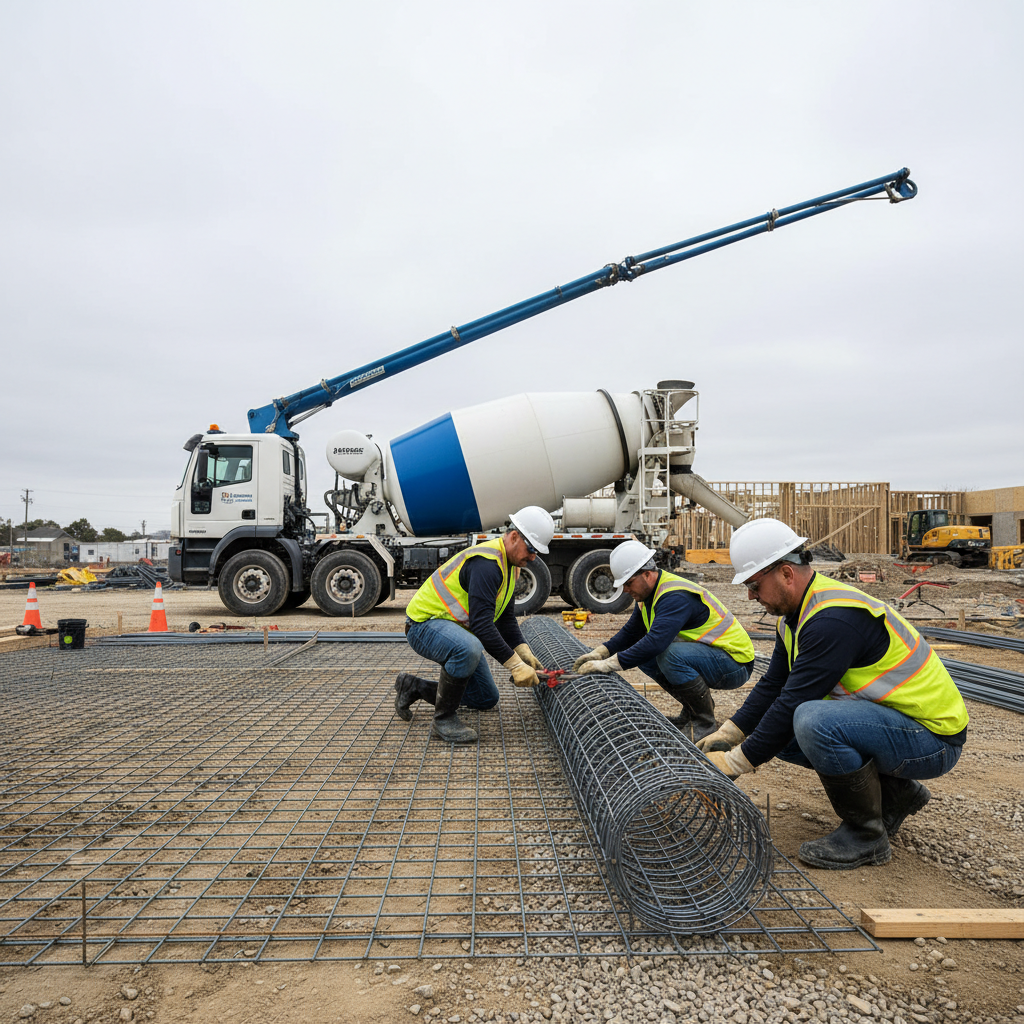
Talk through your slab plan with our in-house team. Dass Rebar can align mesh gauge, joint spacing, and perimeter bars with your live schedule. We provide estimating, detailing, fabrication, delivery, and on-site assembly across Ontario.
Tools and Resources You Can Leverage
Leverage in-house estimating, detailing, fabrication, delivery, and assembly to streamline reinforcement from takeoff to pour. Fast access to welded wire mesh (6×6 at 6/6, 9/9, 10/10) and bar steel reduces delays and change orders on active Ontario projects.
- In-house estimating: Share slab thickness, bay layout, and finish plan for a takeoff that aligns mesh gauge with performance.
- Detailing and shop drawings: We coordinate joint plans, laps, chairs, and edge bars so field crews aren’t guessing.
- Fabrication and delivery: Cut-and-bend bars where needed; truck mesh and rebar with our dedicated fleet to multiple GTA sites per day.
- On-site assembly: Our field teams assist with staging, tying, and fast issue resolution when site conditions change.
To compare reinforcement strategies by application, see our steel rebar primer and the rebar and wire mesh overview. For context on how reinforcement improves performance, this primer on how rebar strengthens concrete complements mesh-focused planning.
Case Studies and Practical Examples
Real-world results hinge on coordination: match mesh gauge to loading, keep it supported at elevation, and cut joints early. Projects that follow this sequence consistently report tighter cracks, smoother finishes, and fewer callbacks after occupancy.
Example 1: Light commercial showroom
- Challenge: 6,000 sq ft slab with high daylight heat gain caused early curling and random cracks on a previous phase.
- Approach: 6×6 at 9/9 mesh on chairs (~2 in. cover), joints at ~12 ft, early saw cuts at first practical window, 7-day curing compound regimen.
- Outcome: Tight, predictable joints with minimal random cracking; move-in flooring kept on track.
Example 2: Grocery back-of-house lane
- Challenge: Repeated pallet jack traffic concentrated along a narrow path near a cooler trench.
- Approach: 6×6 at 6/6 mesh plus perimeter 10M bars at the trench; doweled joints along the lane; staged sheets to avoid trip hazards.
- Outcome: Improved load distribution and fewer edge spalls adjacent to the trench over the first season.
Example 3: Residential garage slab
- Challenge: Freeze–thaw exposure and rock-salt tracking leading to surface distress at mid-panel cracks.
- Approach: 6×6 at 10/10 mesh for shrinkage control, joints at ~12 ft, curing with wet coverings for 7 days, sealed after 28 days.
- Outcome: Controlled crack widths that stayed tight through winter; no telegraphing under an epoxy coating.
Local considerations for 370 New Enterprise Way
- Seasonal timing: In Woodbridge’s freeze–thaw cycles, plan cold-weather admixtures and protect curing during late fall and early spring; schedule saw cuts before overnight temperature drops.
- Logistics: GTA traffic can compress pour windows; pre-stage mesh and confirm dedicated trucking the day prior to avoid delays.
- Compliance: For municipal work, align reinforcement with Ontario specs and MTO-approved materials; keep delivery tickets and mill certs on site.
Mesh vs. Rebar vs. Fibers: Where Each Fits
Use welded wire mesh to control crack widths and speed placement, rebar for concentrated loads and structural action, and fibers to reduce plastic shrinkage and improve surface toughness. Many floors combine at least two methods for balanced performance.
| Reinforcement | Best For | Controls | Placement Speed | Typical Uses |
|---|---|---|---|---|
| Welded wire mesh | General crack-width control | Shrinkage & temperature | Fast (sheet-based) | Slabs-on-grade, toppings, sidewalks |
| Rebar | Point loads, edges, structural demand | Bending & load paths | Moderate (tying required) | Curbs, columns, thickened slabs |
| Fibers | Plastic shrinkage, impact toughness | Early-age & surface | Very fast (in-mix) | Joint spacing tweaks, overlays |
When deciding between approaches, ask: What loads and finishes will this slab see in the first 90 days? That answer usually dictates mesh gauge, joint spacing, and whether to add bars or fibers. For edge and trench zones, bars are typically non-negotiable.
Frequently Asked Questions
These concise answers address common questions about mesh reinforced concrete, placement details, and when to combine mesh with rebar. Use them to align your team before the pre-pour meeting or toolbox talk.
Where should welded wire mesh sit within a slab?
Place mesh in the upper third of the slab thickness with about 2 inches of cover for ground slabs. Support it on chairs every 3–4 feet to keep it from sinking during placement. Avoid dragging it up with hooks during the pour—use proper supports instead.
How much lap do I need between mesh sheets?
Lap at least one full square—typically 6 inches for 6×6 mesh—and tie intersections at a regular spacing. Stagger laps between adjacent rows so they don’t create a continuous weak line across the slab.
Can mesh replace rebar at slab edges and openings?
No. Mesh controls crack widths but doesn’t replace the concentrated bending capacity of bars at edges, door thresholds, trenches, or columns. Use perimeter bars and dowels where point loads or discontinuities exist.
What’s the right joint spacing for mesh reinforced slabs?
A common rule is 24–36 times the slab thickness (in inches). For many light-duty floors, that lands around 12–15 feet between cuts. Cut joints within the first 4–12 hours, depending on mix behavior and temperature.
Do synthetic fibers make mesh unnecessary?
Fibers reduce plastic shrinkage and add surface toughness, but they don’t replace the distributed tensile steel that controls long-term crack widths. Many teams use fibers plus mesh, then add bars at edges and high-load zones.
Key Takeaways
Choose welded wire mesh to control shrinkage cracking, place it at the right elevation, and coordinate joint spacing and curing. Blend mesh with bars at edges or concentrated loads. This combination keeps slabs serviceable and reduces callbacks.
- Mesh reinforced concrete improves crack control and load sharing in slabs-on-grade.
- Support mesh on chairs; target about 2 in. cover and lap at least one square.
- Plan joints at ~12–15 ft or 24–36 × slab thickness; cut early.
- Combine mesh with bars at edges, trenches, and equipment pads.
- Use curing for ≥7 days to limit early-age cracking and surface distress.
Conclusion: Put Mesh to Work on Your Next Pour
Mesh reinforced concrete pays off when it’s supported, lapped, and paired with sound jointing and curing. With in-stock mesh and coordinated delivery, you can pour faster, keep cracks tight, and hand off floors ready for finishes.
We’ve found the winning formula is simple: compact base, supported mesh, early jointing, consistent curing, and targeted bars at edges. Dass Rebar backs that formula with in-house estimating, detailing, fabrication, delivery, and on-site assembly so you’re never waiting on material. If you’re working in 370 New Enterprise Way or anywhere across Ontario, we can stage mesh (6×6 at 6/6, 9/9, 10/10) and bars to match your pour sequence, with trucking that hits narrow windows.
Ready to align mesh gauge, joint spacing, and delivery dates? Share your slab plan and we’ll provide a coordinated reinforcement package built for your schedule.
Related topics to explore inside our site: For a deeper dive into welded sheets and placement, review our mesh reinforcement guide. If you need bar selection help, start with steel rebar basics and the reinforcing bar guide. When you’re evaluating bar sizes for edge work, bookmark the 10M rebar use guide.