
15M rebar is the Canadian metric reinforcing bar with a nominal 16 mm diameter (about 5/8 inch) and an area near 200 mm². It’s a workhorse for slabs, walls, footings, and grade beams. For Woodbridge projects, Dass Rebar stocks 15M, fabricates to spec, and delivers on schedule across Ontario.
By Navjot Dass — Dass Rebar
Last updated: 2026-06-30
Summary
15M rebar refers to a CSA-designated, 16 mm nominal diameter deformed bar roughly equivalent to US #5. This complete guide explains sizes, weights, grades (400W/500W), epoxy options, best practices, and a start-to-finish workflow—estimating, detailing, fabrication, delivery, and on-site assembly—optimized for Woodbridge and Ontario projects.
- Exact 15M specs: 16.0 mm nominal diameter, ≈200 mm² area, ≈1.57 kg/m mass
- Where 15M fits best: slabs, walls, footings, grade beams, and stairs
- How to plan: takeoff → shop drawings → fabrication → delivery → assembly
- Durability choices: black bar, epoxy-coated, or GFRP alternatives
- Local tips for Woodbridge logistics and winter pours
Quick table of contents
- What is 15M rebar?
- Why 15M rebar matters
- How 15M rebar works (end-to-end)
- Sizing, weight, and US equivalents
- Types, grades, and coatings
- Best practices
- Tools and resources
- Case studies and examples
- FAQ
- Conclusion + next steps
What Is 15M Rebar?
15M rebar is Canada’s metric reinforcing bar with a nominal 16.0 mm diameter and a cross-sectional area near 200 mm². Mass is about 1.57 kg/m (≈1.06 lb/ft). It’s commonly compared to US #5 (15.9 mm) but must follow the project’s specified standard and shop drawings.
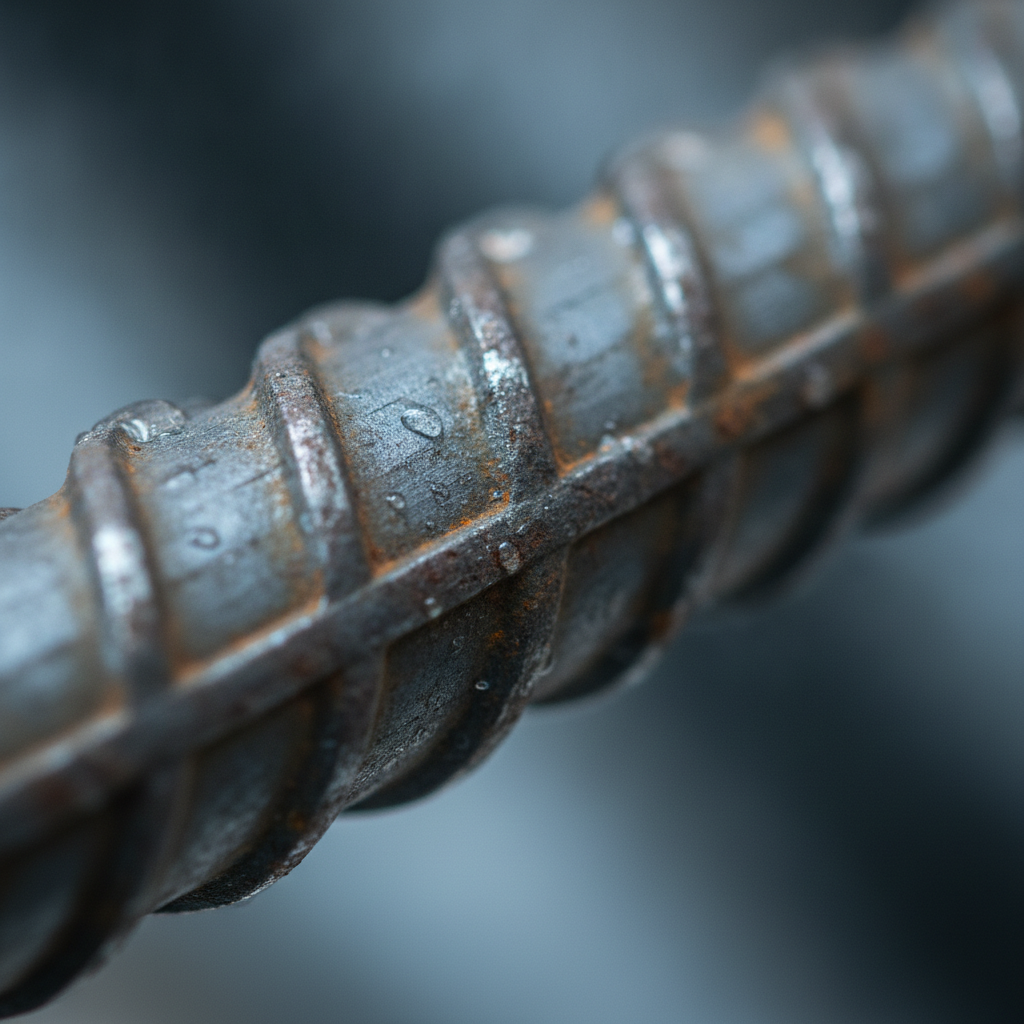
In the CSA system, M-sizes map to nominal diameters for design and detailing. The deformations (rib pattern) on 15M enhance bond with concrete, which limits slip, controls crack widths, and improves tension transfer. Because it balances strength and handling, 15M is one of the most specified bars in slabs, foundation walls, and footings across Ontario.
- Nominal diameter: 16.0 mm (≈0.63 in.)
- Area: ≈200 mm² (≈0.31 in²)
- Mass: ≈1.57 kg/m (≈1.06 lb/ft)
- Common stock lengths: 6 m and 12 m; custom cut-and-bend by schedule
- Typical use cases: Slab mats, vertical wall bars, footing reinforcement, grade beams, and stairs
For a broader refresher on reinforcement choices and workflows, see our complete rebar guide and our Ontario-focused concrete rebar overview. Both explain how size selection, lap splices, and cover interact with constructability and durability.
Why 15M Rebar Matters
15M hits the sweet spot: strong enough for tension demands yet easy to handle, tie, and bend. Properly spaced with adequate cover, it controls cracking, improves ductility, and supports reliable load transfer in slabs, walls, and foundations.
On many jobs, 10M feels light under service loads while 20M increases congestion. The 16 mm diameter of 15M effectively doubles the area of 10M, boosting tensile capacity without overwhelming the formwork or making laps unmanageable. Crews in Woodbridge frequently use 15M for slab mats, wall verticals, and footing cages because it permits tight spacings (for crack control) while remaining practical to place.
- Balanced capacity: ≈200 mm² area supports higher tension than 10M while keeping tools and ties manageable.
- Crack management: Spacings such as 12–18 in. on center limit crack widths in slabs and walls.
- Constructability: 15M bends cleanly to standard radii and can be sequenced to reduce site congestion.
- Durability options: Epoxy-coated 15M or GFRP alternatives mitigate corrosion where chloride exposure is expected.
For a refresher on why reinforcement works at all, explore how steel and concrete interact in our explainer on how rebar strengthens concrete. It covers tension, composite action, and bond—concepts that drive size and spacing choices like 15M at closer centers.
How 15M Rebar Works from Takeoff to Pour
Efficient 15M use depends on workflow: precise takeoffs, coordinated shop drawings, calibrated fabrication, reliable delivery, and disciplined field checks. Dass Rebar provides this end-to-end path in-house so your pour hits schedule with fewer RFIs and less rework.
- In-house estimating: Quantify bars, laps, bends, hooks, and waste allowances from IFCs and addenda.
- Detailing/shop drawings: Bar marks, bend radii, covers, splice lengths, and pour breaks coordinated to avoid clashes.
- Fabrication: 15M cut-and-bend to schedule; bundles labeled by zone and sequence for faster picks.
- Delivery: Dedicated trucking fleet times drops by pour sequence to match crane windows and laydown space.
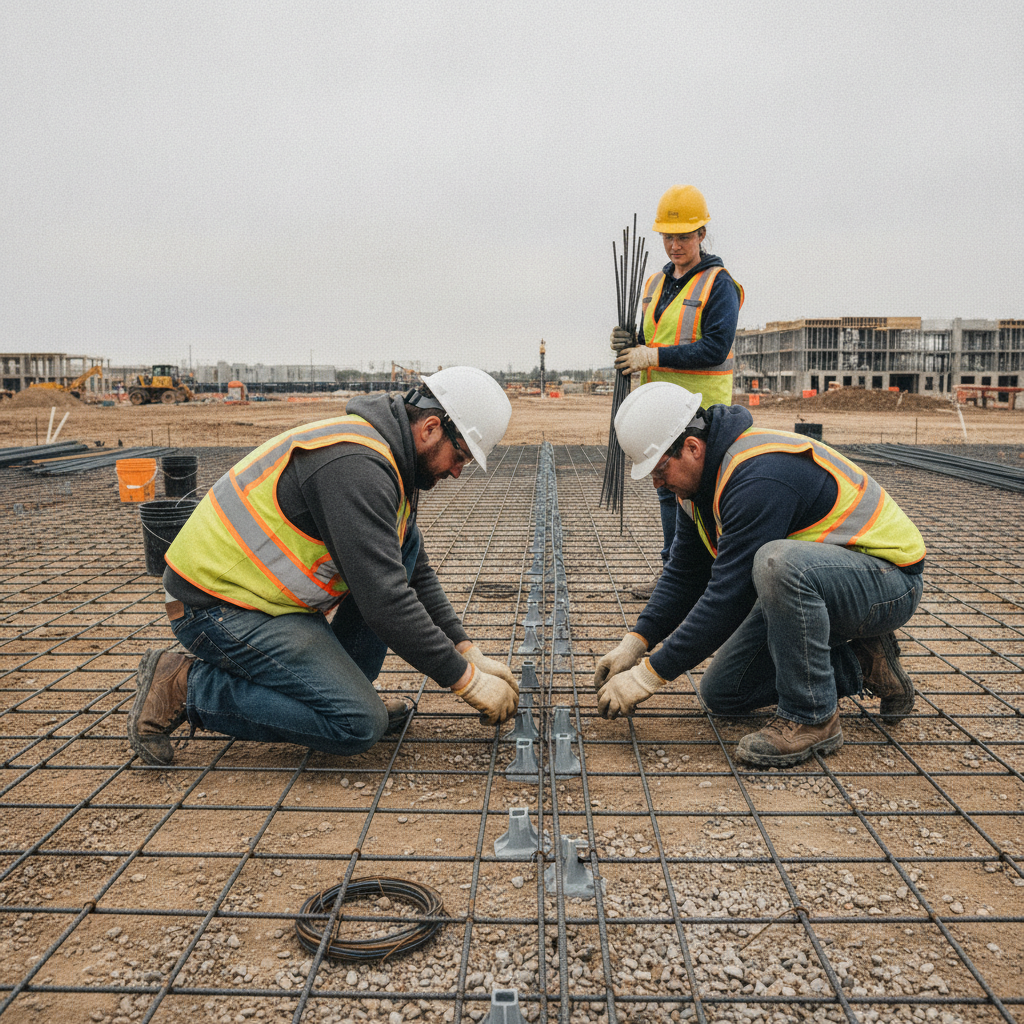
- Assembly: Place on chairs, tie intersections, verify cover, and sign off QC before concrete arrives.
Local considerations for Woodbridge
- Plan deliveries to avoid peak congestion near Queen St / Highway 50. Stage drops for each pour break.
- In winter, keep 15M dry and above freezing; cold bars can accumulate moisture and affect bond at placement.
- On tight sites around Fogal Rd / Highway 50, request pre-bundled, sequence-labeled 15M to minimize ground handling.
Want a deeper playbook? Our rebar supply guide shows how sequencing deliveries to pour breaks can reduce idle time and crane swings across multi-pour slabs.
Sizing, Weight, and US Equivalents
A 15M bar has a nominal 16.0 mm diameter, ≈200 mm² area, and ≈1.57 kg/m mass (≈1.06 lb/ft). US #5 (15.9 mm) is the closest counterpart. Stock lengths are typically 6 m and 12 m, with custom cut-and-bend schedules made to drawing.
| Metric Size | Nominal Ø | Area | Mass | Closest US Size | Typical Uses |
|---|---|---|---|---|---|
| 10M | 11.3 mm | ≈100 mm² | ≈0.785 kg/m | #4 | Light slabs, ties, stairs |
| 15M | 16.0 mm | ≈200 mm² | ≈1.57 kg/m | #5 | Slabs, walls, footings, beams |
| 20M | 19.5 mm | ≈300 mm² | ≈2.35 kg/m | #6 | Grade beams, columns, mats |
- Lap splices: Development lengths commonly range 40–60 bar diameters; always follow project notes.
- Concrete cover: Formed interior faces often 1.5–2 in.; earth-exposed faces often 3 in. or more—confirm spec.
- Bend radii: Standard 15M hooks/stirrups have minimum inside diameters per detailing schedule.
Not sure if you should step down to 10M or up to 20M? Compare constructability tradeoffs in our focused guides on 10M rebar uses and the 20M rebar guide.
Types, Grades, and Coatings
15M is typically supplied in Grade 400W or 500W. Black (uncoated) is standard; epoxy-coated 15M improves corrosion performance in chlorides. GFRP is a non-metallic alternative when specified. Dass Rebar stocks standard options and fabricates to schedule.
Grades
- 400W: Minimum yield near 400 MPa; versatile for most structural elements.
- 500W: Higher yield (≈500 MPa) enabling steel area reductions in some designs.
Coatings & alternatives
- Epoxy-coated 15M: Helps resist chloride-induced corrosion in decks, parkades, and splash zones.
- GFRP bars: Non-corroding, electrically non-conductive; used in aggressive or magnetically sensitive environments.
- Welded wire mesh (6×6 at 6/6, 9/9, 10/10): Complements 15M in slabs for shrinkage and temperature steel.
Our teams review exposure classes and drawings to recommend the right combination—black, epoxy-coated, mesh, or GFRP—so you meet durability targets without unintended congestion.
Best Practices for Specifying and Installing 15M
Coordinate bar size, spacing, cover, and splice lengths in shop drawings. In the field, support mats with chairs, align laps, and tie consistently. Pre-pour checks—bar marks, spacing, grade, and cover—prevent rework and keep schedules intact.
Specification & detailing
- Call out bar marks, spacings, laps, and covers in a single, coordinated set.
- Use standard hook shapes and minimum bend diameters for 15M stirrups and hooks.
- Flag pour breaks, construction joints, and embed conflicts for field teams.
Field placement
- Support steel with chairs/dobies to maintain cover—especially at slab edges and penetrations.
- Keep lap splices clean and aligned; avoid stacking laps at a single section to reduce congestion.
- Tie with 16–18 ga wire; increase tie density near supports and high-moment zones.
Quality control
- Verify bar size and grade against mill certs prior to placement.
- Check epoxy coating integrity; repair nicks per approved methods before concrete.
- Measure cover with gauges; document checks every few feet along critical edges.
For more practical field tips and step-by-step planning, our steel bars for concrete guide consolidates shop, site, and safety pointers that minimize rework.
Tools and Resources
Plan and place 15M faster with digital takeoffs, BIM-based detailing, calibrated benders/cutters, and clear safety protocols. Dass Rebar combines software workflows with shop-floor precision and a dedicated trucking fleet for reliable delivery windows.
- Digital takeoff: 2D/3D quantification to reduce misses and change-order risk.
- BIM coordination: Clash detection around sleeves, embeds, PT tendons, and penetrations.
- Fabrication: Calibrated cut-and-bend for repeatable 15M geometry and consistent hooks.
- Jobsite tools: Bar benders/cutters and automatic rebar tiers to speed intersections.
- Safety: Rebar caps, tie-off points, and housekeeping to mitigate impalement and trip hazards.
Coordinating reinforcement with other structural systems? See how cold-formed framing integrates with concrete scopes in this cold-formed steel framing guide and this overview of 16 gauge metal studs. Cross-trade alignment reduces conflicts and keeps pours on schedule.
Case Studies and Examples
Across Ontario builds, 15M reinforcement shows up in slabs, walls, and foundations. Coordinated estimating, detailing, fabrication, and delivery keep schedules intact—especially where access is tight and pours are sequenced aggressively.
- The Hawthorne Residences (Toronto): 15M top bars at columns and bottom mats across spans supported crack control without over-congesting drop panels.
- Hickory Terraces (Waterloo): Epoxy-coated 15M in exposure zones assisted durability objectives in parking and splash areas.
- The Grand at Universal City (Pickering): Sequenced 15M bundles enabled rapid crane picks and placement on a constrained site.
- Typical mid-rise slab: 15M @ 12–18 in. O.C. for main mats; 10M distribution steel and mesh for shrinkage/temperature where specified.
- Foundation wall: 15M verticals at regular spacing with 15M horizontals; attention to lap staggering at lift joints.
- Footings and grade beams: 15M continuous bottom bars with hooked ends; stirrups sized to shear demand.
- Stair flights: 15M stringer bars with tighter spacing near landings for serviceability.
- Mat foundation: Hybrid mats using 15M and 20M to balance ductility and stiffness.
- Shear walls: 15M boundary bars with increased confinement near coupling beams.
- Parkade slabs: 15M epoxy-coated in high-chloride splash zones to boost lifecycle performance.
- Retrofit overlays: 15M dowels drilled and epoxied to connect new topping slabs to existing concrete.
- Stairs-on-grade: 15M bars at risers with mesh sheets for crack distribution in treads.
- Exterior podiums: 15M top steel concentrated around planters and point loads to control localized cracking.
Patterns repeat across these examples: accurate takeoffs, clear bar marks, right-sized deliveries, and disciplined QA checks produce predictable pours and fewer field surprises.
Frequently Asked Questions: 15M Rebar
Common 15M questions include size, weight, best uses, and when to choose epoxy or GFRP. These direct answers help you specify, order, and place 15M with fewer RFIs and less on-site friction.
What size is 15M rebar?
15M has a nominal 16 mm diameter, an area near 200 mm², and a mass about 1.57 kg/m (≈1.06 lb/ft). It’s roughly equivalent to a US #5 bar (15.9 mm).
Where is 15M most commonly used?
You’ll see 15M in slabs, foundation walls, footings, grade beams, and stair reinforcement. It balances strength and handling, so crews place and tie it efficiently at common spacings.
When should I choose epoxy-coated 15M?
Select epoxy-coated 15M in chloride exposure (deicing salts), parking structures, and splash zones. The coating reduces corrosion risk and extends service life when cover and detailing are correct.
Is 15M interchangeable with US #5?
They’re very close in size (16.0 mm vs 15.9 mm), but don’t substitute across standards without engineer approval. Always follow the project’s specified bar list and detailing standard.
Conclusion and Next Steps
15M rebar is the dependable midrange bar for slabs, walls, and foundations. Align takeoffs, shop drawings, fabrication, delivery, and assembly to cut RFIs and rework. Dass Rebar brings these steps under one roof for predictable pours across Woodbridge and Ontario.
- Key takeaways: 16.0 mm nominal, ≈200 mm² area, ≈1.57 kg/m mass; ideal for slabs, walls, and footings.
- Action steps: Share IFCs, request coordinated shop drawings, sequence deliveries by pour, and verify cover/spacing pre-pour.
- Keep learning: Compare sizes in our steel reinforcement overview and plan procurement with our supply guide.
Ready to streamline your next placement? Connect with Dass Rebar in Woodbridge for estimating, detailing, fabrication, and delivery support aligned to your schedule.