
ASTM A706 is the ASTM specification for weldable, low-alloy deformed reinforcing bars used in concrete. It controls chemistry (carbon equivalent) and ductility so bars can be welded and detailed for seismic performance. Based in Woodbridge, Ontario, Dass Rebar supplies, details, fabricates, and delivers ASTM A706-compliant reinforcing to contractors across the province.
By Navjot Dass — Dass Rebar
Last updated: 2026-05-24
Overview and Table of Contents
This complete guide explains what ASTM A706 is, why engineers specify it, how it flows from estimating to installation, and how to compare it with ASTM A615. You’ll get practical checklists, examples from Ontario jobs, and links to tools so your team orders, fabricates, and installs A706 right the first time.
Use this guide to move from questions to action. We’ve organized it for fast scanning and deep answers when you need them.
- What ASTM A706 means and where it’s required
- Why A706 improves ductility and weldability vs. commodity bars
- How A706 runs through estimating, detailing, fabrication, delivery, and assembly
- Which grades, sizes, and coatings to choose (Grade 60, Grade 80, epoxy-coated)
- A706 vs A615: a side-by-side comparison you can cite
- Best practices, field tips, and documentation must-haves
- Ontario-focused examples you can adapt on your next pour
What Is ASTM A706?
ASTM A706 is the standard for weldable, low-alloy deformed steel bars for reinforced concrete. It limits carbon equivalent for reliable welding and specifies ductility for seismic detailing. Typical grades are 60 ksi and 80 ksi minimum yield, with requirements that support plastic hinge behavior and welded connections.
In plain terms, ASTM A706 defines reinforcing steel engineered for two things: dependable welding and predictable ductile response. Those traits matter in frames, walls, and connections that will see inelastic demand. The standard’s chemistry controls (notably a maximum carbon equivalent) make welding procedures more straightforward and reduce the risk of brittle behavior.
Key characteristics engineers and contractors rely on
- Weldability: Controlled chemistry, verified by carbon equivalent (CE) on mill test reports, supports low-hydrogen welding procedures.
- Ductility: Elongation and tensile/yield ratios are set to sustain plastic rotation in hinge regions and confinement zones.
- Strength grades: Commonly Grade 60 (60 ksi yield) and Grade 80 (80 ksi yield) to match design demands.
- Traceability: Heat numbers and bundle tags simplify inspection and documentation during shop and field QA/QC.
We see A706 called out on Ontario drawings when the engineer anticipates welding (dowels, inserts, couplers, or cage assemblies) or when seismic detailing governs. Our in-house estimating and detailing teams flag these notes early so the project orders compliant stock from day one.
Why ASTM A706 Matters
A706 matters because it blends weldability with ductility. When bars must be welded or detailed for seismic performance, A706’s chemistry controls and elongation targets reduce brittle failures, simplify WPS selection, and align with code provisions for inelastic behavior.
Specifying A706 is a proactive risk reducer. It’s the difference between rebar that merely “meets strength” and rebar that keeps its toughness when a frame yields or a connection is welded. That predictability accelerates shop planning, helps inspectors, and protects schedules.
Situations where A706 is the right call
- Welded connections: Dowels to plates, embedded items, preassembled cages, or site repairs.
- Seismic detailing: Plastic hinge regions, special moment frames, ductile walls, and coupling beams.
- Complex geometry: Tight hooks, multi-radius bends, and congested cores where controlled properties aid bending and fit-up.
- Inspection-driven jobs: Projects emphasizing documentation, mill certs, and heat traceability.
In our experience supporting GTA high-rises and municipal work, A706 helps teams avoid last-minute substitutions, rework, and RFI churn. It brings clarity to welding procedures and reduces the chance of brittle responses during service or extreme events.
How ASTM A706 Works from Spec to Site
A706 flows through a predictable pipeline: interpret specs, estimate quantities, produce shop drawings, fabricate to tolerance, deliver traceable bundles, and install with approved welding and inspection. Each step verifies weldability and preserves ductility from mill certs to final placement.
Here’s the practical workflow we run for contractors across Ontario, from bid day to pour day.
1) Interpret drawings and specifications
- Scan general notes and structural sheets for “ASTM A706” and “weldable rebar” language.
- Confirm grade (60 or 80), bar size range (10M, 15M, 20M or imperial # sizes), and coating requirements.
- Flag seismic hooks, confinement ties, and coupler notes for detailing.
If you want a quick refresher on core rebar concepts we reference during takeoff, see our concise steel rebar guide.
2) In-house estimating and takeoffs
- Map all barlists to A706 grades and coatings; segregate any A615 calls that remain.
- Quantify laps, hooks, and bend allowances to avoid under-ordering in congested cores.
- Produce alternates if the EOR will accept epoxy-coated A706 in exposure-prone zones.
Our estimators coordinate closely with detailers so bar marks and splice logic stay consistent. For context on scheduling impacts, our reinforcing steel guide outlines how early clarity trims weeks from lead time.
3) Rebar detailing and shop drawings
- Apply seismic detailing rules to hooks, ties, and bar development zones.
- Set bend radii appropriate to grade/size; document bar lists with clear marks and heat traceability lines.
- Coordinate embedded items and welded connections with approved WPS notes.
When you’re coordinating tight cores, our reinforcing bar guide shows typical bar geometries we use to clean up congestion before fabrication.
4) Fabrication (cut & bend) and traceability
- Cut and bend to tolerance; maintain coating integrity if epoxy-coated A706 is specified.
- Preserve heat/lot identity through tags and bundle segregation.
- Stage loads by pour sequence to reduce site handling and damage.
For fundamentals on shop-to-site flow, browse our rebar supply guide and our Ontario concrete rebar guide.
5) Delivery and on-site assembly
- Use dedicated fleet logistics to hit early-morning crane windows and minimize laydown conflicts.
- Deliver by heat/bundle to streamline inspection and MTR collection.
- Execute welding per qualified WPS with low-hydrogen electrodes; protect epoxy from heat and arc strikes.
Teams often ask which sizes to stock for quick turns. Our short read on 10M rebar uses helps right-size common holds for GTA jobs.
Local considerations for Woodbridge and the GTA
- Plan epoxy-coated A706 for exposure to deicing salts on parking podiums and ramps; winter freeze-thaw cycles are tough on unprotected steel.
- Book early-morning deliveries around GTA traffic patterns and crane windows; our dedicated fleet helps you lock predictable slots.
- For municipal/infrastructure jobs, keep MTRs and heat tags organized; inspectors expect clean chain-of-custody on weldable bars.
Types, Grades, and Coatings
ASTM A706 is available primarily in Grade 60 and Grade 80 with deformed profiles across common bar sizes. For corrosion protection, epoxy-coated A706 is often specified in exposure zones subject to salts or moisture. Metric sizes like 10M and 15M are common in Ontario workflows.
Choosing grade and coating is a design and constructability decision. Grade 60 remains the workhorse for most members, while Grade 80 can reduce congestion or development lengths in highly loaded regions. Where chloride exposure is likely, epoxy-coated A706 balances weldability with protection; just follow coating handling rules.
What we typically stock or source quickly
- Grades: Grade 60 and Grade 80 to match structural notes.
- Sizes: 10M and 15M for fast-turn requests; additional sizes on request with coordinated lead times.
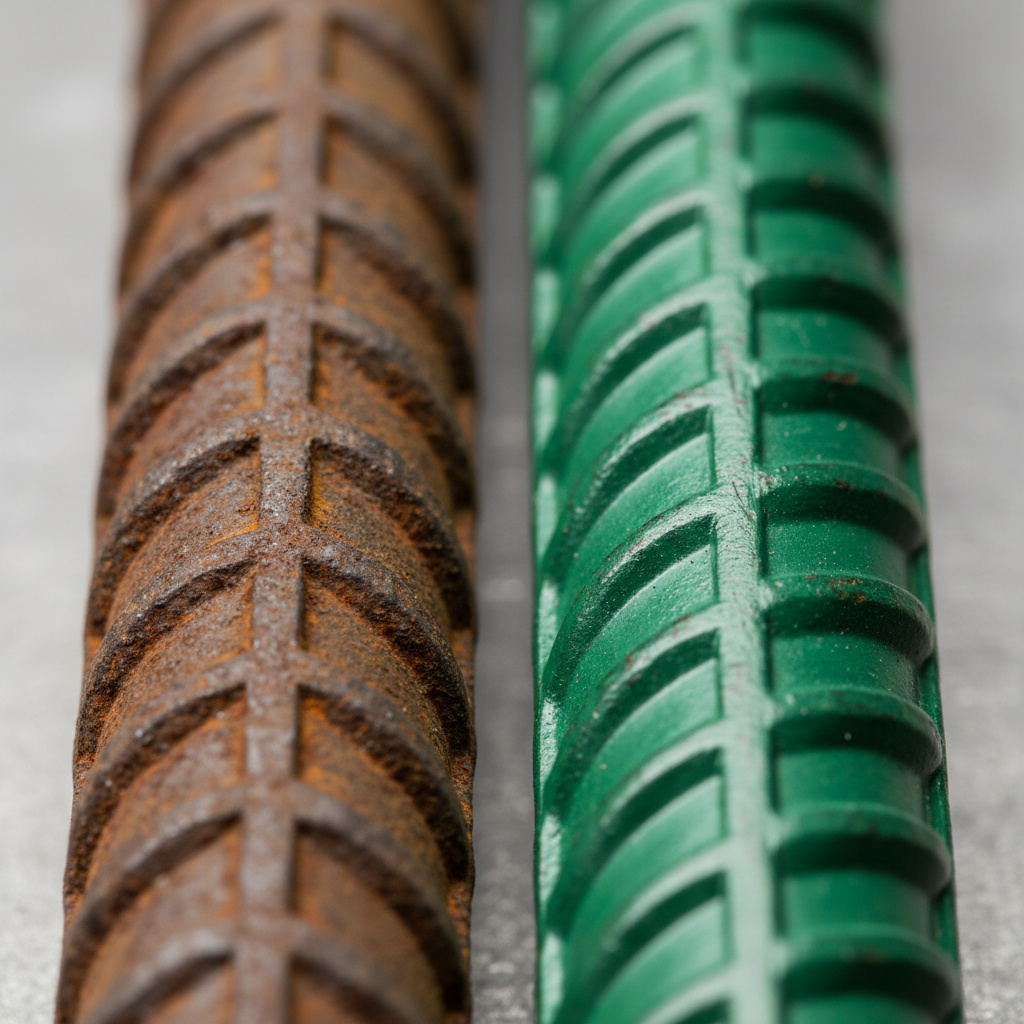
- Coatings: Black bar for interior members; epoxy-coated for parking, podiums, and splash zones.
Our team will confirm bar availability against your pour schedule during estimating and project management. That coordination reduces partial shipments and last-minute substitutions that can ripple through a critical path.
A706 vs A615: Key Differences
A706 controls chemistry and ductility for weldability and seismic use; A615 is a commodity strength-based spec without those weldability controls. If welding or ductility is required, choose A706. If neither is required, A615 may be permitted subject to engineer approval.
We’re often asked, “Can we substitute A615?” The short answer: not without the engineer’s written approval. Here’s a concise comparison you can share with your site and design teams.
| Criterion | ASTM A706 | ASTM A615 |
|---|---|---|
| Primary intent | Weldable, ductile reinforcing | General reinforcing by strength grade |
| Chemistry controls | Limits carbon equivalent for weldability | No specific CE limit |
| Ductility targets | Higher elongation, tensile/yield ratio controls | Less stringent ductility requirements |
| Typical grades | Grade 60, Grade 80 | Grade 40, 60, 75 (varies) |
| Seismic suitability | Commonly specified for plastic hinge regions | May be restricted without added checks |
| Common use cases | Welded dowels, ductile frames/walls | General slabs, beams, and footings |
If a detail calls for field welding, the safest default is A706 with a qualified WPS and low-hydrogen electrodes. For non-welded, non-seismic members, your engineer may allow A615—but always confirm in writing to avoid inspection issues.

Best Practices for Specifying and Building with A706
Treat A706 as a system: verify CE on MTRs, lock the grade early, coordinate WPS details, protect coatings, and preserve heat traceability. These steps minimize RFIs, speed inspection, and keep ductility and weldability intact through installation.
Specification and submittal
- Call out “ASTM A706 Grade 60/80 weldable” in general notes and member schedules where welding or seismic ductility is required.
- Require mill certificates showing chemistry and carbon equivalent; set acceptance criteria in the submittal.
- Confirm coating type and color (green epoxy is common) and add handling/repair notes.
Detailing and fabrication
- Use bend radii and hook configurations aligned with the grade/size to avoid coating damage and meet ductility targets.
- Keep bar marks consistent across sheets; include heat/lot references on lists and tags.
- Stage fabrication by pour break and crane sequence to reduce rehandling and losses.
Field installation and welding
- Use low-hydrogen electrodes and approved WPS; clean the weld area, remove epoxy locally where required, and repair per coating spec.
- Maintain preheat/interpass temperatures per WPS, especially in cold weather.
- Document welds and inspections; keep MTRs handy for the inspector.
For structural teams coordinating light-gauge framing around concrete edges, these framing references help align trades and avoid conflicts at pour stops and embeds. See a primer on 16 gauge metal studs, guidance on heavy gauge framing, and a deeper dive into steel frame bracing.
Tools and Resources
Equip your team with submittal templates, WPS coordination notes, epoxy handling checklists, and bar mark libraries. A tight toolkit shortens reviews, reduces RFIs, and keeps A706 properties intact from shop to site.
What we provide during preconstruction
- Estimating aids: Takeoff checklists for A706 vs. A615 segregation, lap tables, and hook schedules.
- Detailing libraries: Standard bend shapes, seismic hooks, and bar mark conventions that speed approvals.
- Submittal packages: Mill test reports, coating data, and traceability documentation in one bundle.
- Delivery & QA: Bundle tags by heat, manifesting tied to pours, and epoxy repair kits onsite as needed.
If you’re building your own internal knowledge base, our rebar detailing guide and rebar fabrication overview are helpful starting points for new hires and cross-trained staff.
Case Studies and Ontario Examples
Ontario projects turn to A706 when welding or ductility is non-negotiable. High-rise cores, transfer slabs, and municipal structures routinely specify A706 for welded dowels, tight confinement, and predictable inelastic behavior—areas where commodity bars create inspection and welding risks.
High-rise core with welded embeds
- Challenge: Podium-to-tower transitions required welded dowels to plates and tight confinement at coupling beams.
- Approach: We detailed A706 Grade 60 bars with seismic hooks; shop verified CE on MTRs; field welding followed a qualified WPS.
- Outcome: Inspections moved quickly due to clean traceability and pre-approved welding notes; no rework on welded connections.
Municipal retaining structure with exposure
- Challenge: Chloride exposure from deicing runoff near roadway demanded corrosion protection without losing weldability on cages.
- Approach: Epoxy-coated A706 with handling/repair kits and staged deliveries by lift sequence.
- Outcome: Fit-up and weld repairs were documented cleanly; coating integrity passed inspection.
Transfer slab congestion
- Challenge: Heavy reinforcement density risked clashes and excessive lap lengths.
- Approach: Selective use of A706 Grade 80 reduced bar count and development lengths; bar marks rationalized congestion.
- Outcome: Placement crews reported better access and vibration quality around congested regions.
These patterns show up regularly across GTA and Ontario sites. The common thread is early clarity: snapshots of grade, coating, and welding scope during estimating set the whole team up for a smoother build.
Frequently Asked Questions
Common questions focus on substitution, welding details, and coating choices. The short answers: don’t swap A615 for A706 without approval, follow a qualified WPS for welding, and use epoxy-coated A706 where chlorides or moisture exposure are expected.
Can I substitute ASTM A615 for ASTM A706?
Not without the engineer’s written approval. A706 includes chemistry and ductility controls designed for welding and seismic performance. If those requirements exist, A706 is typically non-substitutable. Always follow the project specifications and obtain approval before any change.
Is epoxy-coated A706 weldable?
Yes, the underlying A706 steel is weldable. However, welding requires surface preparation, local coating removal where applicable, an approved WPS, and coating repair after welding. Protect surrounding epoxy from heat and arc strikes and document repairs for inspection.
When should I use A706 Grade 80 instead of Grade 60?
Use Grade 80 when reducing bar count, development lengths, or congestion will improve constructability and still satisfy detailing rules. It’s common in heavily loaded transfer zones and cores. Confirm availability and splice strategy early during estimating with your supplier.
What documentation do inspectors expect for A706?
Inspectors typically ask for mill test reports showing chemistry, carbon equivalent, and mechanical properties; bundle tags with heat numbers; and submittals covering coatings and WPS notes. Keeping these documents tied to pour sequences speeds approvals.
Key Takeaways
Choose ASTM A706 when welding or seismic ductility is in scope. Lock grade and coating early, verify carbon equivalent on MTRs, coordinate WPS, and preserve heat traceability from shop to site. These steps protect schedules and inspection outcomes.
- ASTM A706 = weldable, ductile rebar with chemistry and ductility controls.
- Specify A706 for welded dowels, ductile frames/walls, and tight cores.
- Grade 60 is common; Grade 80 helps reduce congestion where allowed.
- Use epoxy-coated A706 in chloride exposure zones; repair coatings after welding.
- Keep MTRs, WPS, and heat tags organized for smooth inspections.
Conclusion
ASTM A706 is your go-to spec when connections must be welded or members must yield without brittle failure. Pair the right grade and coating with disciplined submittals, fabrication, and field welding to deliver resilient structures and cleaner inspections.
At Dass Rebar, we support the entire flow—estimating, detailing, fabrication, delivery, and assembly—so your A706 intent on paper becomes high-performing concrete in the field. If you’re planning a project in the GTA or anywhere in Ontario, we’re ready to help align drawings, submittals, and logistics.
Next steps
- Send your drawings for an A706 compliance review and takeoff.
- Ask for our submittal package template with MTR and WPS placeholders.
- Lock delivery windows with our dedicated fleet to hit your pour dates.
Ready to simplify A706 on your next job? Book a discovery session in Woodbridge.
Related Topics for Ontario Projects
Coordinating adjacent scopes reduces site friction. Explore detailing patterns, fabrication tolerances, and framing interfaces to keep edges clean and inspections fast across Ontario jobs.
- Rebar detailing patterns that reduce core congestion
- Fabrication tolerances that aid fast fit-up at embeds
- Framing interfaces at slab edges and pour stops
- QA workflows that tie MTRs to pours for quick sign-off